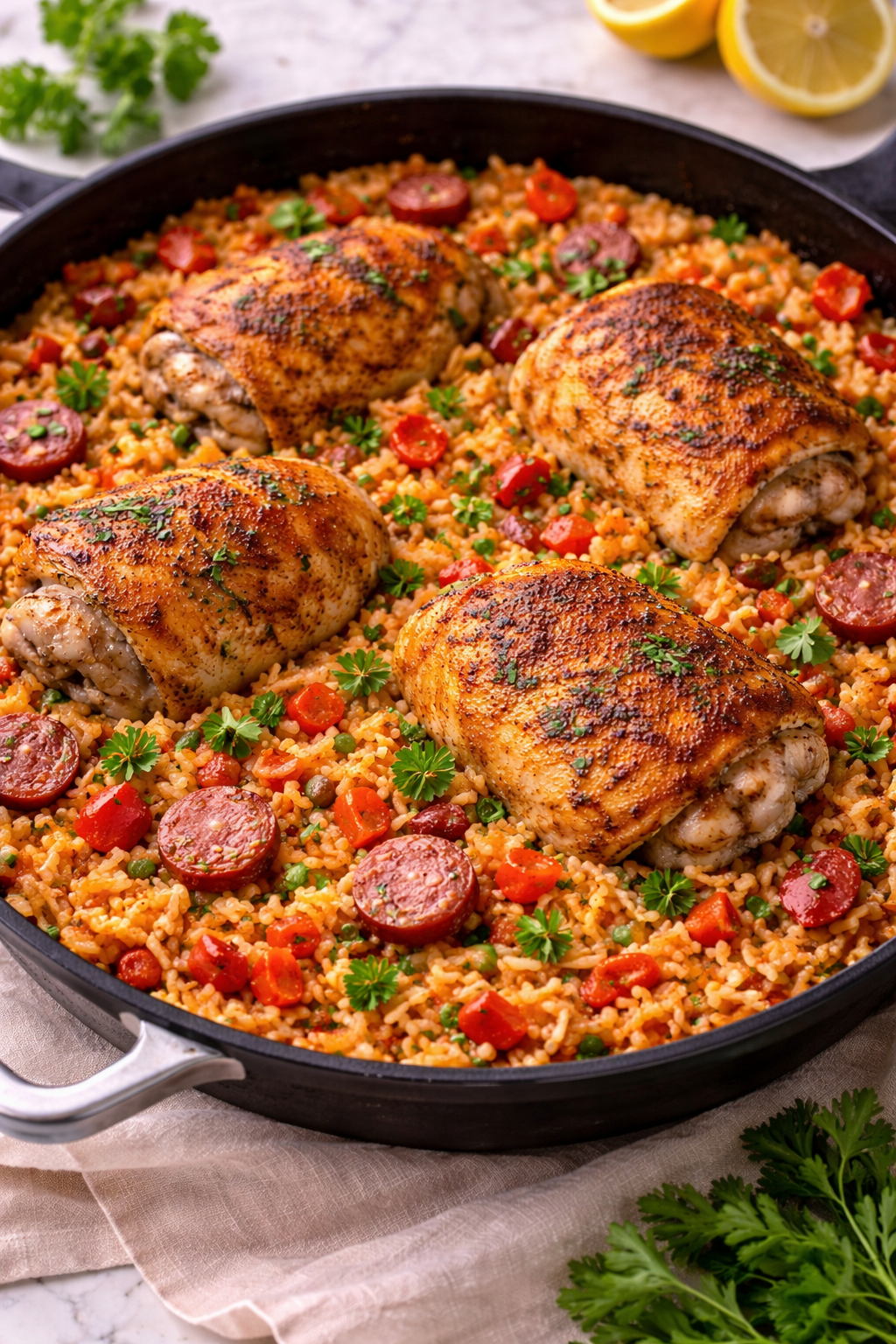
You’re standing at the stove on a random Tuesday, and you want something that actually feels impressive without the stress.
Not some boring weeknight rotation. Not something that takes two hours and a dozen dirty dishes.
Spanish chicken rice is that answer.
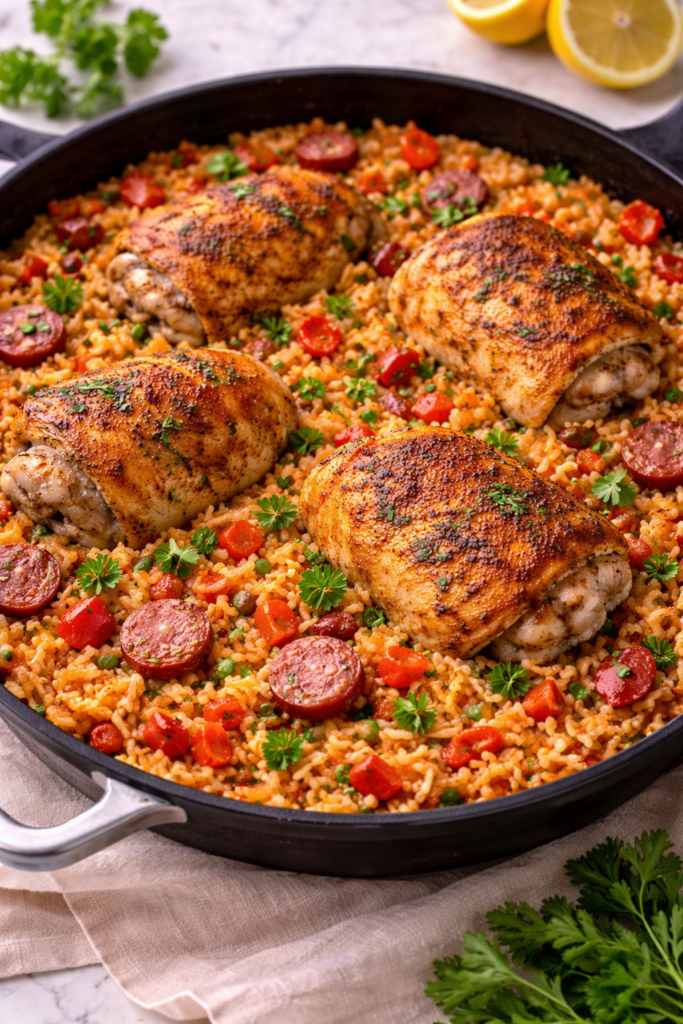
It’s tender chicken, perfectly cooked saffron rice, bell peppers, and this deep, savory depth that somehow makes your kitchen smell like a restaurant. One pan. About 45 minutes. Everyone leaves the table quietly for a second after the first bite.
And here’s what surprises people: it’s simpler than it looks. There’s no fancy technique hiding here. Just the right ingredients in the right order, and knowing when to step back and let the pan do the work.
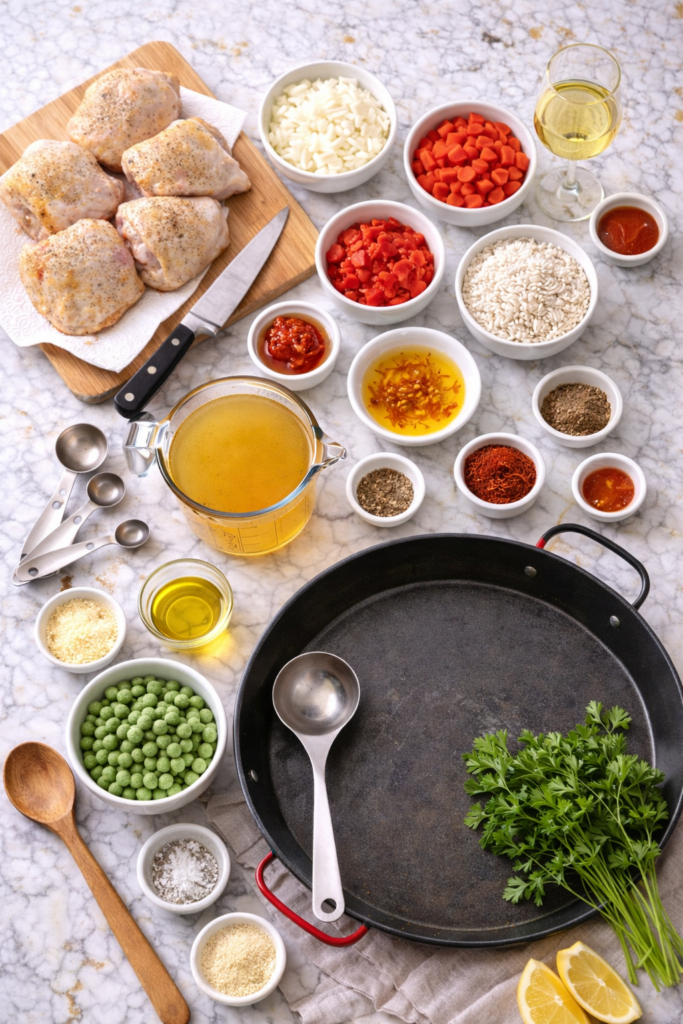
What You’ll Need
For the Chicken
- 2 lbs (900g) bone-in, skin-on chicken thighs, patted dry
- 1 teaspoon salt
- 1/2 teaspoon black pepper
- 1/2 teaspoon smoked paprika
- 2 tablespoons olive oil
For the Rice Base
- 1 medium yellow onion, finely diced
- 4 cloves garlic, minced
- 1 red bell pepper, diced into bite-sized pieces
- 1 cup diced tomatoes (fresh or canned, drained)
- 2 tablespoons tomato paste
- 3 cups chicken broth (low-sodium, good quality)
- 1.5 cups short-grain rice (bomba or paella rice)
- 1 teaspoon saffron threads
- 1/2 cup dry white wine (or extra broth)
- 1 teaspoon smoked paprika
- 1 teaspoon dried oregano
- 1/4 teaspoon cayenne pepper (optional, for heat)
For Finishing
- 1 cup frozen peas
- 1/4 cup fresh parsley, chopped
- Lemon wedges, for serving
- Fleur de sel (or kosher salt) to taste
Tools You’ll Need
- Large paella pan or 12-14 inch skillet (shallow sides preferred)
- Large pot for broth
- Sharp chef’s knife and cutting board
- Wooden spoon or silicone spatula
- Measuring cups and spoons
- Small bowl for blooming saffron
- Tongs
- Instant-read thermometer (optional but helpful)
Pro Tips
1. Don’t skip blooming the saffron. Steep those threads in warm broth for 10 minutes before adding to the pan. This releases the color, flavor, and aroma that makes Spanish rice actually Spanish. Raw saffron in the rice stays muddy and muted.
2. Use chicken thighs, not breasts. Thighs have more fat and stay moist even if you accidentally overcook them. Breasts are lean and turn stringy fast. Thighs are forgiving and taste better.
3. Resist the urge to stir constantly. This isn’t risotto. You want the rice to develop a light golden crust on the bottom (called socarrat). Let it sit undisturbed for 20-25 minutes after you add the rice. One stir when you add the rice. That’s it.
4. Toast your rice before adding liquid. Stir it in the oil and aromatics for 2-3 minutes until it turns slightly golden. This creates a nutty flavor base that raw rice never gets. It’s a small step that changes everything.
5. Taste for seasoning at the end, not before. The saffron, paprika, and broth concentrate as liquid evaporates. What seems underseasoned halfway through tastes perfect at the finish.
Substitutions and Variations
| Original | Swap For | Notes |
|---|---|---|
| Chicken thighs | Shrimp or rabbit | Shrimp cooks faster (5-7 min). Rabbit is authentic and lean. |
| Saffron | Turmeric (1/2 tsp) | Won’t taste the same but adds color and warmth. |
| Smoked paprika | Regular paprika | Milder flavor, less smoke. Use same amount. |
| Short-grain rice | Bomba or arborio | Bomba holds shape best. Arborio gets creamier. |
| Frozen peas | Artichoke hearts or green beans | Add in last 5 minutes, same timing. |
| White wine | Extra broth | Loses acidity but still delicious. |
| Fresh parsley | Fresh cilantro | Cilantro brings different brightness. |
Want it spicier? Double the cayenne or add fresh red chili flakes at the end.
Want it saffron-forward? Use 1.5 teaspoons instead of 1. Saffron lovers won’t complain.
Make Ahead Tips
- The rice and aromatics prep: Dice everything the morning of and store in separate containers. Saves 15 minutes at dinner time.
- Bloom the saffron ahead: You can bloom it 1-2 hours before and let it sit. It actually gets more potent.
- Cook it partially ahead: Brown the chicken and build the base up to adding the rice. Refrigerate for up to 8 hours. Bring to room temperature before adding rice and broth.
- Full dish reheats okay: Make it completely, cool it, and reheat gently on the stovetop with a splash of broth. It won’t be quite as good as fresh but it’s still solid for leftovers.
How to Make Spanish Chicken Rice
Step 1: Sear the Chicken
- Pat chicken thighs completely dry with paper towels. Moisture is the enemy of browning.
- Season with salt, pepper, and smoked paprika on both sides.
- Heat olive oil in your paella pan over medium-high heat until shimmering.
- Sear chicken skin-side down for 6-8 minutes until the skin is golden brown and crispy. You’re not cooking it through yet, just building flavor.
- Flip and sear the other side for 3-4 minutes until lightly golden. Remove to a plate and set aside.
Step 2: Build the Flavor Base
- Pour out all but 2 tablespoons of the chicken fat from the pan. (That liquid gold stays in there.)
- Reduce heat to medium and add the diced onion. Cook for 4-5 minutes until soft and turning translucent.
- Add garlic and cook for 1 minute until fragrant, stirring constantly.
- Add the diced red pepper and cook for 2-3 minutes until starting to soften.
- Stir in tomato paste and cook for 1 minute to deepen the flavor.
Step 3: Toast the Rice
- Add the rice and stir constantly for 2-3 minutes until the grains are coated in oil and start to turn slightly golden. You’ll hear it clicking against the pan.
- Pour in the white wine and scrape the bottom of the pan with a wooden spoon to get all those stuck-on bits. Let it cook down for 2 minutes until the wine is mostly absorbed.
Step 4: Add the Liquid
- Stir in the bloomed saffron and its soaking liquid.
- Pour in the chicken broth and stir once. Add the smoked paprika and oregano.
- Bring to a gentle simmer.
Step 5: The Hands-Off Part
- Nestle the seared chicken thighs back into the rice, skin-side up.
- Do not stir. Cover loosely with foil or a lid and simmer for 20-25 minutes until the rice is tender and the liquid is almost fully absorbed.
- The rice on the bottom will develop a light golden crust. This is correct. Listen for a gentle crackling sound.
Step 6: Finish Strong
- Remove from heat and scatter the frozen peas over the top. Let it sit covered for 5 minutes so the peas warm through gently.
- Check that the chicken registers 165°F (74°C) on an instant-read thermometer in the thickest part of the thigh (not touching bone).
- Taste the rice. Adjust salt if needed. Most of the time it’s perfect as-is.
- Garnish with fresh parsley and serve with lemon wedges on the side.
Nutritional Breakdown (Per Serving)
Based on 4 servings:
| Nutrient | Amount Per Serving |
|---|---|
| Calories | ~620 |
| Protein | ~42g |
| Carbohydrates | ~58g |
| Fat | ~18g |
| Fiber | ~3g |
| Sodium | ~680mg (varies by broth brand) |
Saffron contains compounds with anti-inflammatory properties. The tomatoes add lycopene. The chicken provides lean protein and B vitamins. This is real food that actually nourishes you.
What to Serve With It
- A simple green salad with sherry vinaigrette to cut through the richness
- Crusty bread for soaking up the last bits of rice and sauce
- Steamed broccoli or roasted asparagus for color and vegetables
- Spanish wine like Albariño or a light Rioja
- Lemon wedges are non-negotiable for brightness
Leftovers and Storage
- Fridge: Store in an airtight container for up to 3 days. The rice stays surprisingly good, though it firms up.
- Freezer: The chicken and rice freeze well separately for up to 2 months. Freeze the rice in portions so you can reheat what you need.
- Reheating: Warm gently on the stovetop over medium-low heat with a splash of broth. Stir occasionally. Skip the microwave if you can; it makes the rice tough.
- Pro move: Add fresh herbs and a squeeze of lemon juice when reheating. It brings the dish back to life.
FAQ
Can I use boneless chicken? You can, but bone-in thighs are genuinely better here. They stay moist and add more flavor to the broth. Boneless breasts will dry out.
What if I don’t have saffron? A half teaspoon of turmeric gives you color and warmth but not the specific saffron flavor. The dish is still delicious, just different. Or skip it entirely and add more smoked paprika.
My rice turned out mushy. The broth probably had too much salt or you used long-grain rice instead of short-grain. Short-grain varieties (bomba, arborio, sushi rice) are much more forgiving. Next time, taste the broth before adding it to the pan.
Can this go in a slow cooker? Not really. The rice cooking method doesn’t work well in a slow cooker. You’d end up with mush. This is meant for stovetop and it’s worth the 45 minutes.
Is this the same as paella? Very similar but not identical. True paella uses paella rice and is traditionally made in a wide, shallow pan over an open flame. Spanish chicken rice is close enough that most people won’t know the difference, and it’s easier to make at home on a regular stove.
Can I add seafood? Shrimp works great. Add it in the last 5 minutes of cooking so it doesn’t overcook. Skip it if you’re adding chicken, or use one or the other.
My saffron tastes musty or off. Old saffron loses its flavor. Check the date and buy from a quality spice supplier. It’s expensive but a little goes a long way, and fresh saffron makes a massive difference.
Wrapping Up
Spanish chicken rice earns a spot on your dinner rotation because it tastes like you spent hours cooking when you actually spent less than an hour.
It’s the kind of dish that makes regular Tuesday feel special. The rice has depth. The chicken stays tender. The kitchen smells incredible while it’s cooking.
The magic isn’t in complex technique. It’s in letting the right ingredients do their thing without interference.
Give this a try this week and tell me how it goes in the comments. What did your kitchen smell like while it was cooking? Did you change anything up? Any questions that came up while you were making it?
I really do love hearing what works for you.