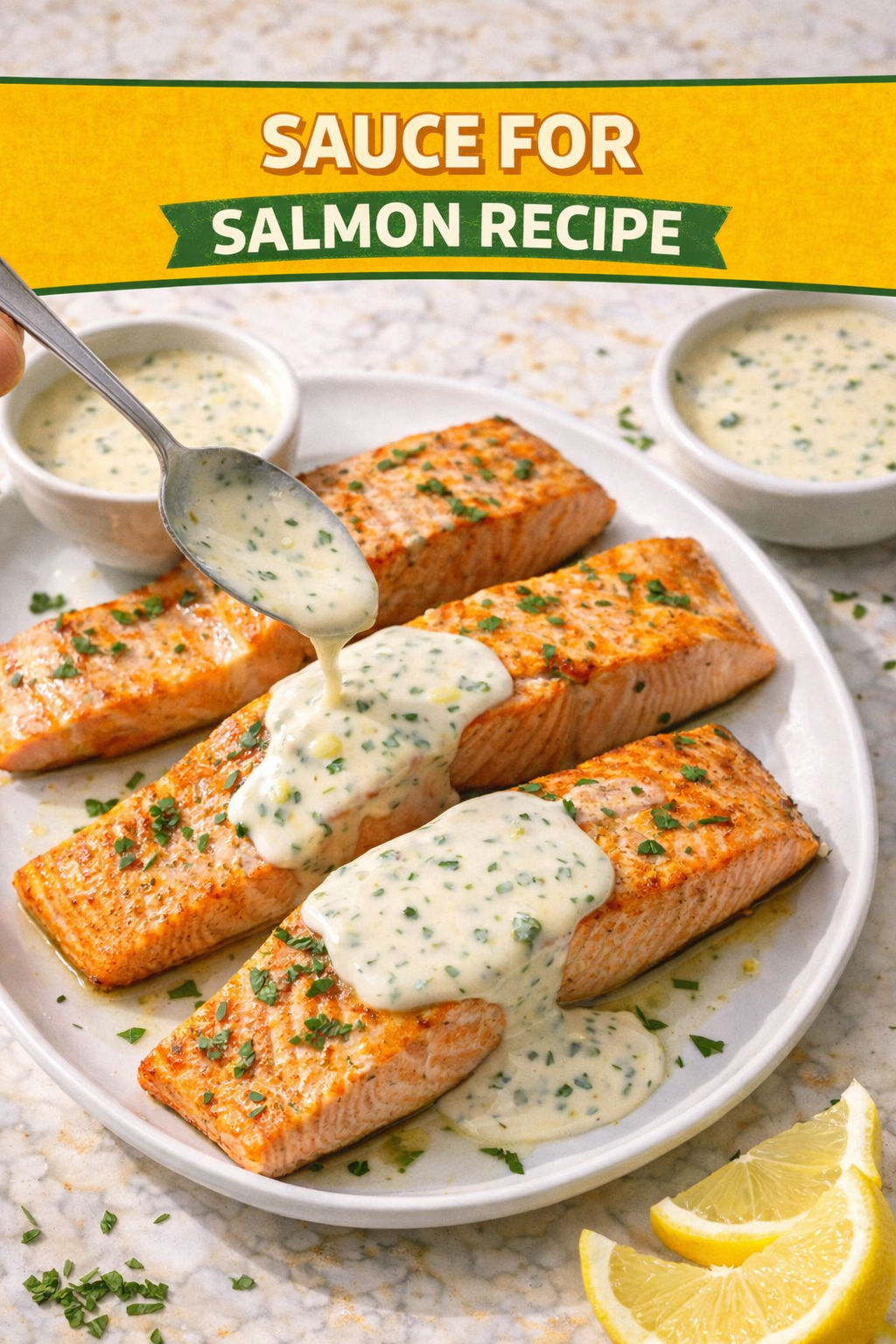
I’ll be honest with you. I used to make salmon the same way every single time.
Salt, pepper, maybe some lemon juice. It was… fine. But fine doesn’t get you excited to cook dinner after a long day.
Then I discovered this sauce.
It’s the kind of sauce that makes people ask for the recipe. The kind that transforms a basic piece of fish into something you’d actually crave. I’ve made it at least twenty times in the last few months, and my husband still asks for it constantly.
The best part? You probably already have everything you need in your pantry.
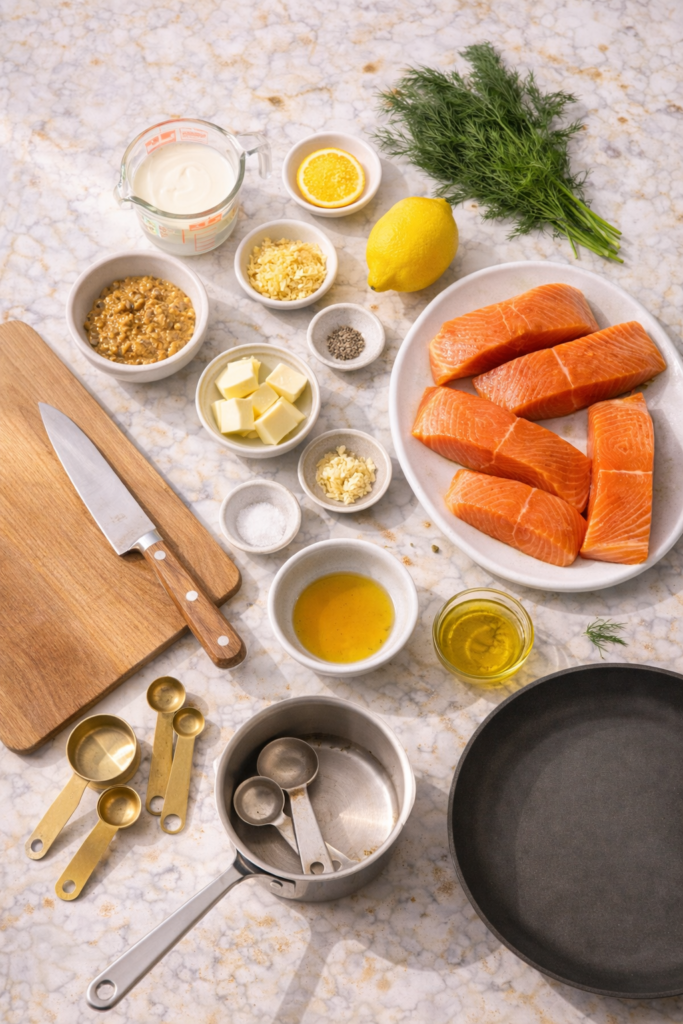
What You’ll Need
For the sauce:
- 1/2 cup (120ml) heavy cream
- 1/4 cup (60ml) whole grain mustard
- 3 tablespoons fresh dill (or 1 tablespoon dried)
- 2 tablespoons butter
- 3 cloves garlic, minced
- Zest of one lemon
- 2 tablespoons lemon juice (fresh)
- 1 tablespoon honey
- Salt and pepper to taste
- Pinch of red pepper flakes (optional)
For the salmon:
- 4 salmon fillets (6 oz each)
- 2 tablespoons olive oil
- Salt and pepper
The Tools You Actually Need
You don’t need anything fancy here, which is part of why I love this recipe.
- One medium saucepan (that’s it for the sauce)
- A small mixing bowl
- Measuring spoons and cups
- A whisk
- Cutting board and knife
- Skillet or baking pan for the salmon
- Zester or microplane (or just use the small holes on your grater)
Pro Tips From My Kitchen
Use fresh lemon juice, not bottled. This makes a huge difference in the flavor. Bottled tastes flat and weird. Fresh lemon has this brightness that makes the whole sauce sing. Spend the extra minute squeezing it yourself.
Don’t skip the honey. I know you’re looking at this and thinking “honey in a savory sauce?” Trust me. Just a tiny bit balances out the tanginess from the mustard and lemon. It’s not sweet at all, just this perfect harmony.
Add the cream slowly while whisking. If you dump it all in at once, you might end up with a broken sauce. Slow and steady wins the race here. You want it silky smooth, not separated and weird.
Fresh dill really matters. Dried dill is fine in a pinch, but fresh dill makes this sauce actually taste like something special. If you can find it, grab it.
Instructions
Make the sauce (this part takes about 10 minutes):
- Melt your butter in a medium saucepan over medium heat.
- Add minced garlic and sauté for about 1 minute until it smells incredible. Don’t let it brown or it’ll get bitter.
- Stir in your whole grain mustard. Mix it around for about 30 seconds until it’s combined with the butter and garlic.
- Slowly pour in your heavy cream while whisking constantly. Keep whisking until it’s smooth and slightly thickened (about 2-3 minutes).
- Add lemon zest, lemon juice, and honey. Whisk to combine.
- Stir in your fresh dill. If you’re using dried, add it earlier with the mustard.
- Taste it. Add salt and pepper. If you want a little kick, add those red pepper flakes now.
- Keep it on low heat while you cook the salmon. It should be warm and silky when you pour it over.
Cook the salmon (about 12-15 minutes):
- Pat your salmon dry with a paper towel. This helps it get golden and crispy.
- Heat olive oil in a skillet over medium-high heat. You want it hot but not smoking.
- Season each fillet with salt and pepper on both sides.
- Place salmon skin-side up in the hot pan. Cook for about 4-5 minutes until the bottom is golden and crispy.
- Flip and cook for another 3-4 minutes. The salmon should flake easily with a fork when it’s done.
If you’re not sure if it’s cooked through, cut into the thickest part and look. It should be opaque but still slightly moist inside.
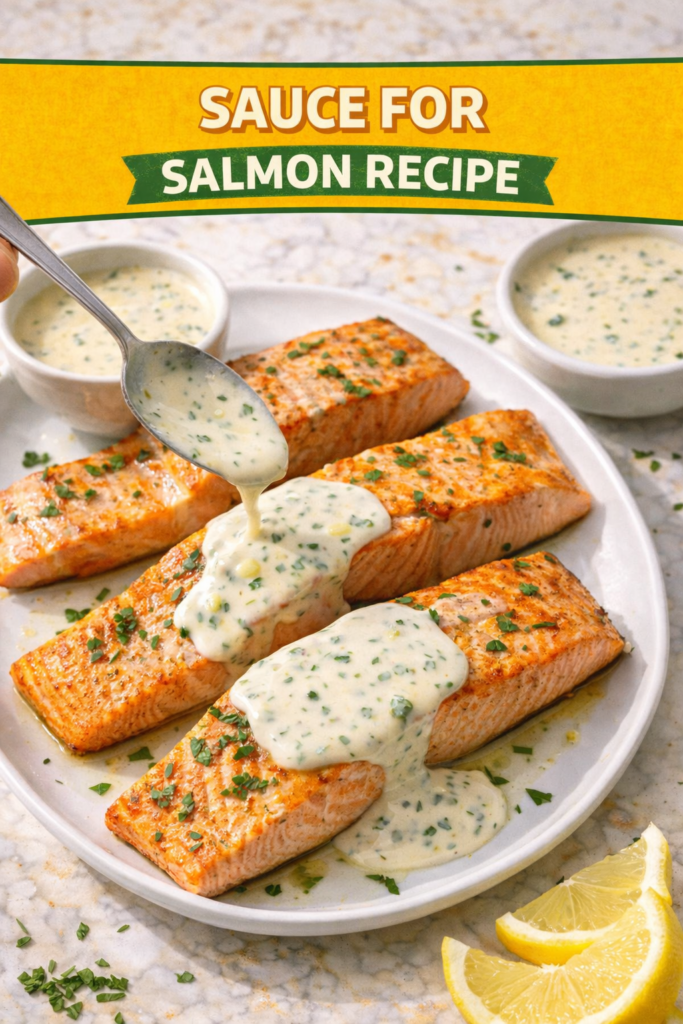
Serve immediately and pour that beautiful sauce all over it.
Substitutions & Variations
No whole grain mustard? Use regular Dijon mustard instead. You might lose a tiny bit of texture, but it’ll still taste great. Use the same amount.
Not a dill person? Try fresh tarragon or chives instead. Both are amazing with salmon. Use the same amount.
Allergic to dairy? Swap the heavy cream for full-fat coconut milk. It won’t taste the same, but it’s actually delicious in its own way. The sauce will be slightly thinner, so maybe reduce it by a minute or two longer.
Want to make it spicier? Add more red pepper flakes or a small splash of hot sauce at the very end.
Prefer a lighter sauce? Use half-and-half instead of heavy cream. It won’t be quite as rich, but it’s lighter and still delicious.
Want to make it creamier? Add an extra 2 tablespoons of heavy cream or a dollop of sour cream at the end.
Make-Ahead Tips
You can make this sauce up to 2 days ahead. Just store it in an airtight container in the fridge.
When you’re ready to eat, warm it gently in a saucepan over low heat, stirring occasionally. It might look a little separated when you first reheat it, but whisking it for a minute will bring it back together.
Don’t try to reheat it in the microwave. The texture gets weird. Low heat on the stovetop is your friend.
Additional Details That Actually Matter
| Nutritional Info (per serving of sauce) | Amount |
|---|---|
| Calories | 220 |
| Fat | 22g |
| Protein | 1g |
| Carbs | 4g |
| Fiber | 0g |
The salmon itself adds about 280 calories and 34g of protein per 6oz fillet.
For different diets:
- Paleo: This sauce is basically paleo-friendly as-is. Just use grass-fed butter if you can find it.
- Keto: Perfect for keto. High fat, low carb. The honey is your only carb source, and it’s minimal.
- Whole30: The sauce isn’t compliant because of the honey, but you could make a version with a tiny bit of maple syrup if you’re flexible on that rule.
What pairs well with this:
Serve this salmon with something light because the sauce is rich. I usually make roasted asparagus or a simple green salad. Mashed potatoes are also incredible with it if you want something more indulgent. Plain rice works too if you want to soak up every last drop of sauce.
White wine pairs perfectly with this. A crisp Sauvignon Blanc or even a light Pinot Grigio.
Leftovers & Storage
Store any leftover salmon in an airtight container in the fridge for up to 3 days.
The sauce stores separately in a glass container for up to 4 days.
Here’s the thing about salmon leftovers: they’re actually great the next day. Don’t stress about them going bad immediately. Just keep them cold.
You can reheat the salmon gently in a 250°F oven for about 5 minutes, or just eat it cold over a salad. Both are good.
Questions You Probably Have
Can I use frozen salmon?
Yes, but thaw it completely first. Pat it dry really well because frozen salmon releases more water. The drying step becomes even more important.
What if my sauce breaks and looks separated?
It happens. Just take it off the heat and whisk it really well. If that doesn’t work, pour it into a blender and blend it smooth. Or start fresh—it only takes 10 minutes anyway.
Can I make this sauce without the mustard?
You could, but honestly you’d be missing the whole point. The mustard is what makes this sauce special. It’s not overpowering, just this subtle flavor that makes people say “what’s in this?”
Is the skin supposed to stay on the salmon?
It’s totally up to you. I keep it on because it gets crispy and I love it that way. If you prefer to remove it, go ahead. The cooking time stays about the same.
Why do you whisk the cream in slowly?
Because when cream hits hot liquid too fast, the proteins can separate and you end up with a grainy, broken sauce instead of something silky. Slow means smooth. Fast means separated. That’s the rule.
Can I make this with other fish?
Absolutely. Try it with halibut, cod, or even shrimp. The sauce works with almost everything.
Wrapping Up
This sauce genuinely changed how I cook at home.
It’s the kind of recipe that proves you don’t need complicated ingredients or a ton of time to make something impressive. Twenty minutes from start to finish. That’s faster than ordering takeout.
I started making this because I was bored with my regular salmon rotation. Now my friends ask for it when they come over. My husband requests it constantly. I’ve written it down so many times I might as well keep a copy in my pocket.
Make it this week. Try it with salmon, try it with whatever fish you have on hand, even try it with chicken if you want. Then come back and let me know what you thought in the comments. Did you change anything? What would you pair it with? I honestly read every single comment and love hearing what you created in your own kitchen.