You’ve probably bought frozen dough or ordered pizza more times than you’d like to admit.
And I’m not here to judge that. But the moment you make pizza dough from scratch, something shifts. It tastes so much better than anything you’ve gotten from a delivery box. The crust actually has flavor. It’s crispy on the outside, chewy on the inside, and honestly, it makes you wonder why you didn’t start doing this years ago.
Here’s the thing nobody tells you: this entire recipe comes together in less than 10 minutes of actual work. The rest is just sitting around waiting, which means you can literally make this while watching TV or checking emails.
And the wild part? Once you nail this dough, you’re not locked into one style of pizza. You can go thick and fluffy, thin and crispy, deep dish, focaccia-style. All from the same base recipe with just tiny adjustments.
I’m going to walk you through exactly how to make it, plus some tricks that make the difference between dough that’s just okay and dough that people actually ask you to make again.
What You’ll Need
For the Dough
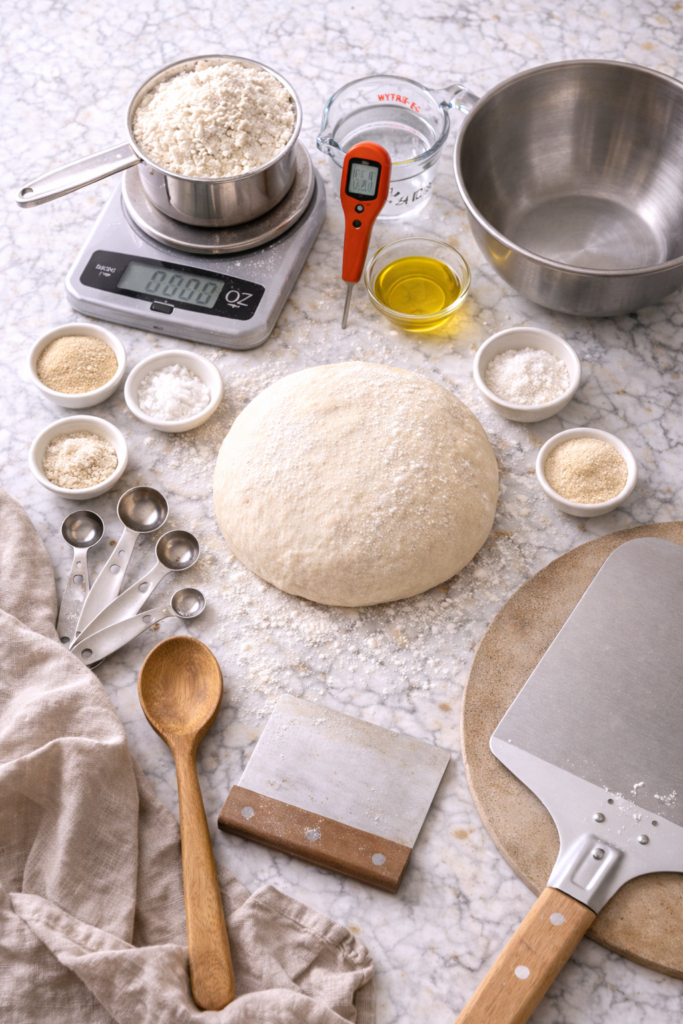
- 3 cups (360g) all-purpose flour (bread flour works too, gives slightly chewier crust)
- 1 tablespoon instant yeast (or 2 1/4 teaspoons active dry yeast)
- 1 1/2 teaspoons salt
- 1 tablespoon sugar
- 2 tablespoons olive oil (plus more for the bowl and stretching)
- 1 cup warm water (around 110°F, or about body temperature)
That’s literally it.
Five ingredients that you probably already have in your kitchen right now.
Tools You’ll Need
- Large mixing bowl
- Wooden spoon or stand mixer (optional, but makes life easier)
- Kitchen scale (highly recommended, but not required)
- Measuring cups and spoons
- Clean kitchen towel or plastic wrap
- Pizza stone or baking sheet
- Bench scraper or dough knife (optional but helpful)
Pro Tips
1. Your water temperature matters more than you think. Too hot and you’ll kill the yeast. Too cold and nothing happens. Around 110°F (or just warm enough that you can hold your finger in it for 10 seconds) is the sweet spot. If you don’t have a thermometer, just use the inside-wrist test like you’re checking a baby’s bottle.
2. Let the dough rise longer at room temperature, not in the fridge. Most recipes tell you to cold ferment overnight, and that’s fine if you plan ahead. But if you want pizza tonight, give it 2-3 hours on the counter in a warm spot. The flavor actually develops better this way, and the dough is easier to stretch.
3. Don’t skip the salt. It does more than just add flavor. Salt strengthens the gluten structure, which means your dough won’t tear as easily when you’re stretching it. Add it after the yeast and liquid are mixed (adding salt directly to dry yeast can slow fermentation).
4. Use a scale if you have one. Flour absorbs moisture differently depending on humidity. A kitchen scale takes all the guesswork out. If you’re measuring by cups, spoon the flour into the cup and level it off instead of scooping directly from the bag.
5. Oil your hands when stretching. Not the dough. Your hands. This sounds weird but it prevents sticking way better than flouring, and you won’t accidentally dry out your dough with extra flour that can make the crust tough.
Substitutions and Variations
| Original | Swap For | Notes |
|---|---|---|
| All-purpose flour | Bread flour | Creates chewier, airier crust with better rise |
| All-purpose flour | Whole wheat flour (use half) | Nuttier flavor, denser crumb, absorbs more water |
| Instant yeast | Active dry yeast | Use same amount, may take slightly longer to rise |
| Olive oil | Avocado or vegetable oil | Works fine, slightly different flavor profile |
| Water | Milk (half the amount) | Creates richer, slightly softer crust, browns faster |
Want to get fancy? Add 1/2 teaspoon Italian seasoning or garlic powder to the dry ingredients for flavored dough. Or add 2 tablespoons honey instead of sugar for a slightly sweet, caramelized crust.
Make Ahead Tips
Fridge fermentation (most common method): Mix the dough, let it rest for 30 minutes at room temperature, then stick it in the fridge for 8-48 hours. Cold fermentation actually improves flavor. Just take it out 30 minutes before you want to use it so it’s easier to stretch.
Freezer option: After the initial 2-3 hour rise, divide into portions, wrap tightly in plastic wrap and aluminum foil, then freeze for up to 3 months. Thaw overnight in the fridge, then bring to room temperature before stretching.
Dough balls: If you’re meal prepping, portion the dough into balls right after the first rise, oil them lightly, and refrigerate in an airtight container for up to 5 days.
How to Make Pizza Dough
Step 1: Mix Your Base
- Pour the warm water into your bowl. Add the yeast and sugar, stir gently, and let it sit for about 2 minutes. You’ll see it start to foam up a bit.
- This is called “blooming” the yeast. It makes sure your yeast is actually alive and ready to go.
- Add the olive oil to the yeast mixture and stir it in.
- Add the flour and salt. Mix with a wooden spoon or your hands until everything comes together into a shaggy dough. It doesn’t need to be smooth yet. Just make sure there are no dry flour bits left in the bottom of the bowl.
Step 2: Knead the Dough
- Turn the dough out onto a clean counter (no need to flour it yet).
- Knead for about 8-10 minutes by hand. Push the dough away from you with the heel of your hand, fold it back over itself, rotate 90 degrees, and repeat. It should go from rough and sticky to smooth and slightly elastic.
- If you’re using a stand mixer, use the dough hook on medium speed for about 5 minutes instead.
- The dough is ready when it springs back slowly when you poke it, and doesn’t tear easily.
Step 3: First Rise
- Lightly oil a bowl (reuse the mixing bowl if you want). Put your dough in there and turn it over so it’s coated with oil on all sides.
- Cover the bowl with a damp kitchen towel or plastic wrap.
- Let it sit at room temperature for 2-3 hours. You’re looking for it to roughly double in size. It doesn’t have to be exact.
- If your kitchen is cool, this might take longer. If it’s warm, it could be faster. Just go by how it looks, not the clock.
Step 4: Shape and Second Rise (Optional but Recommended)
- Turn the dough out onto a lightly oiled counter. Divide it into 2 portions for larger pizzas or 4 for smaller personal pizzas.
- For each portion, gently stretch it into a rough circle about 4 inches across, then fold the edges underneath to create a ball. This doesn’t need to be perfect.
- Place the balls on a baking sheet, cover with plastic wrap or a damp towel, and let them rest for another 30 minutes to an hour. This is called the second rise and it helps with the final texture.
- If you’re in a hurry, you can skip this and go straight to stretching. The pizza will still be good, just slightly denser.
Step 5: Stretch and Bake
- Preheat your oven to 500°F. If you have a pizza stone, put it in the oven now so it heats up.
- Take one dough ball and oil your hands lightly. Gently stretch it from the center outward, rotating it as you go. You’re looking for about 1/4 inch thick.
- If it springs back and won’t stretch, let it rest for 5 minutes and try again. The gluten needs a breather.
- Transfer the stretched dough to a pizza peel or baking sheet. Add your toppings (less is more, trust me).
- Bake for 12-15 minutes until the crust is golden brown and crispy on the bottom. The edges should be slightly darker than the center.
- Let it cool for a minute or two before cutting. That’s it. You made pizza dough.
Nutritional Breakdown (Per Serving)
Based on 2 large pizzas (4 servings):
| Nutrient | Amount Per Serving |
|---|---|
| Calories | ~280 |
| Protein | ~8g |
| Carbohydrates | ~52g |
| Fat | ~4g |
| Fiber | ~2g |
| Sodium | ~440mg |
Pretty reasonable for a pizza crust, especially when you’re not drowning it in store-bought stuff.
What to Serve With It
- Simple arugula salad with lemon and olive oil to cut through the richness
- Roasted vegetables on the side
- Garlic knots made from leftover dough scraps
- Full-bodied red wine like a Chianti or Sangiovese
- Sparkling water if you want to stay hydrated while eating bread
Leftovers and Storage
Baked pizza: Store in an airtight container at room temperature for 2 days, or the fridge for up to 5 days. Reheat in a 350°F oven for about 8 minutes to crisp it back up. The microwave will make it chewy and sad.
Raw dough in the fridge: Keep it in an airtight container for up to 5 days. It actually tastes better on day 3 or 4 than it does fresh.
Raw dough in the freezer: Wrap individual dough balls in plastic wrap and aluminum foil. They’ll keep for up to 3 months. Thaw overnight in the fridge, then bring to room temp before stretching.
Pro move: Freeze dough balls in portions so you can make fresh pizza whenever the craving hits. Just thaw, stretch, top, and bake.
FAQ
Can I use instant yeast and active dry yeast interchangeably?
Pretty much. Instant yeast is just ground finer, so it rehydrates faster. You can use the same amount of both. Active dry might take a few minutes longer to rise, but it’ll get there.
My dough keeps tearing when I stretch it. What am I doing wrong?
You’re either not kneading it long enough, or you’re stretching it too aggressively too soon. Knead for the full 8-10 minutes, and if it springs back and fights you, let it rest for 5 minutes under a towel. Gluten needs rest breaks just like we do.
Can I use cold water instead of warm?
Cold water will work, but the yeast will take way longer to activate. It’s not worth it. Just use warm water. It literally takes 30 seconds to heat up.
What if my dough rises too fast?
You probably have a warm kitchen. That’s fine. Just put it in the fridge to slow things down. Cold fermentation is actually better anyway, so this isn’t a problem.
Can I make this without a stand mixer?
Totally. Kneading by hand takes about 10 minutes instead of 5, but it actually helps you get a feel for when the dough is ready. There’s something kind of nice about doing it the old-fashioned way.
Why does my crust come out dense?
Most likely you’re not giving it enough rise time, or you’re using water that’s too cold. Make sure your water is warm (around 110°F) and give the dough at least 2-3 hours to rise. Rushing it makes dense pizza.
Can I add toppings directly into the dough?
You can, but I don’t recommend it for your first try. Wet ingredients like cheese and tomato sauce can throw off the hydration and mess with the rise. Make the dough plain, then top it before baking.
Wrapping Up
This recipe is going to change how you think about pizza.
Once you realize you can make dough that tastes better than anything you’ve been buying for literally just the cost of flour and yeast, you’ll never go back. And honestly, that’s the whole point. It’s not complicated. It’s not fancy. It’s just good food that you made with your own hands.
The first time might feel a little weird stretching dough. That’s normal. By the third or fourth time, you’ll be doing it without thinking.
Try this this weekend. Make a pizza. See how much better it tastes when you actually know what went into the crust.
And then come back and tell me about it. What kind of pizza did you make? Did the dough come out how you wanted? Any trouble spots you ran into? Drop a comment below and let me know how it went.