Stop scrolling through recipe after recipe looking for a lemon curd that’s going to work.
This one hits different.
I’m talking about that perfect balance between tangy and sweet, thick enough to coat a spoon but smooth enough to glide across toast. The kind you’ll want to eat straight from the jar when no one’s watching (I won’t tell).
Lemon curd gets a bad reputation for being finicky. People think you need to be a pastry chef to pull it off without scrambling eggs or ending up with something that tastes like sweetened lemon juice.
Not true.
This recipe is foolproof, uses ingredients you probably already have, and takes less than 20 minutes from start to finish. I’ve made it at least thirty times, tweaked it until it was perfect, and now I’m sharing every single tip that’ll make you look like you know what you’re doing.
Let’s get into it.
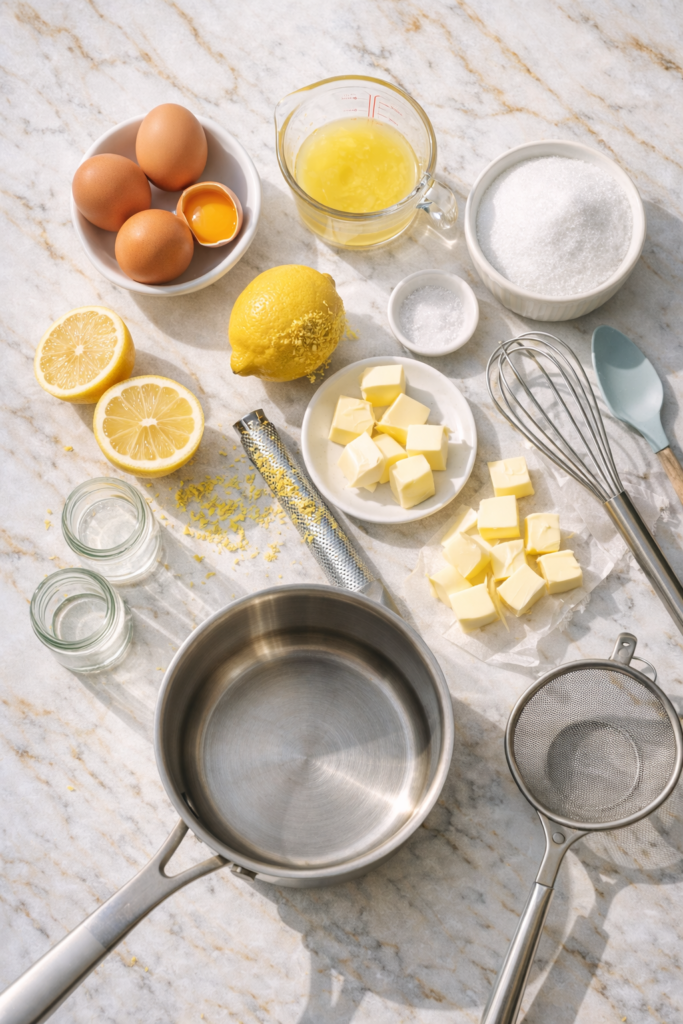
What You’ll Need
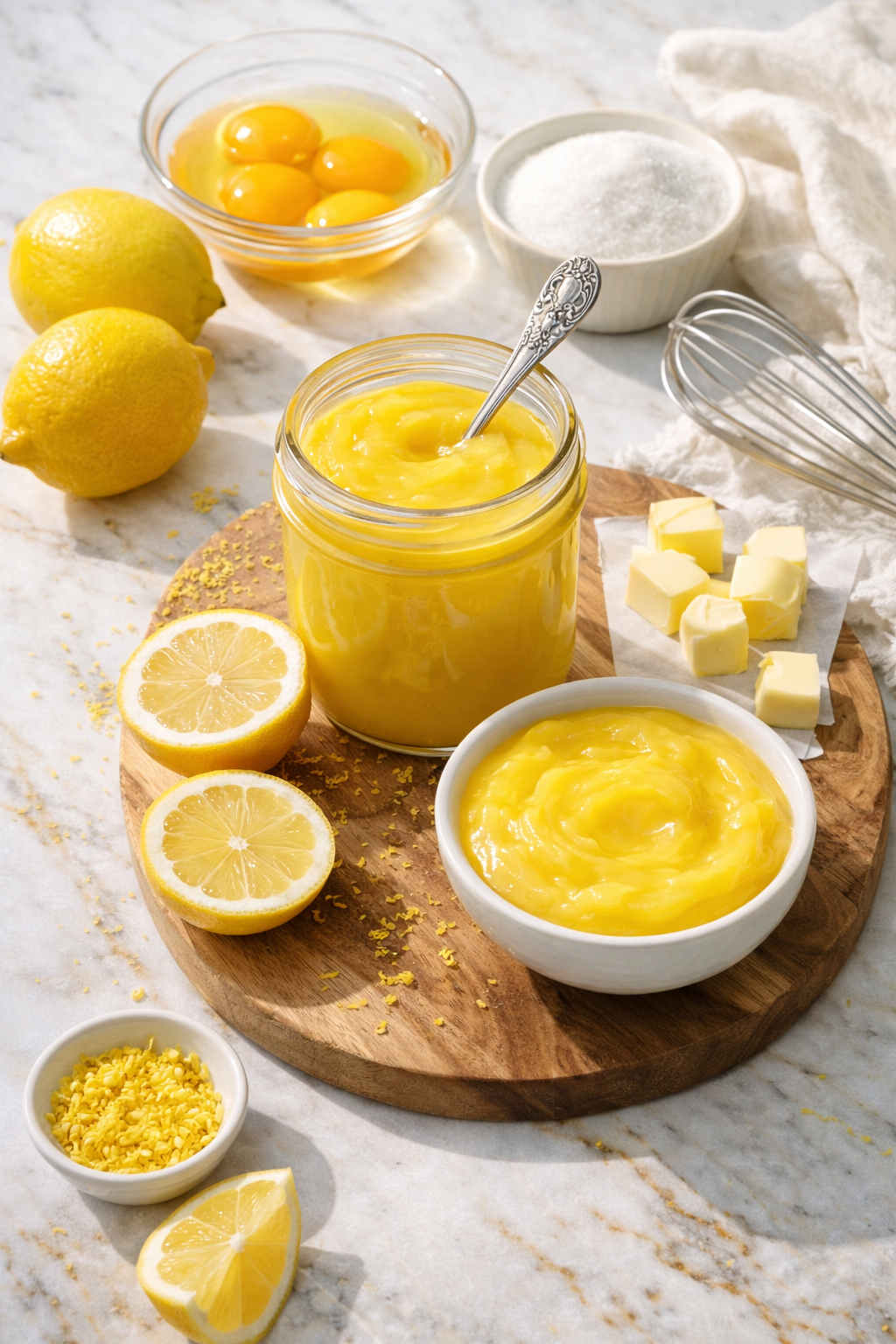
For the Lemon Curd:
- 4 large egg yolks (save those whites for meringue later)
- ½ cup fresh lemon juice (about 3-4 lemons, depending on size)
- 1 tablespoon lemon zest (from about 2 lemons)
- ¾ cup granulated sugar
- ⅛ teaspoon salt
- 6 tablespoons unsalted butter, cut into small pieces and at room temperature
- 1 whole egg (yes, in addition to the yolks)
Tools You’ll Need:
- Medium saucepan (not nonstick)
- Fine-mesh strainer
- Whisk (not a fork, trust me)
- Microplane or zester
- Citrus juicer (or just your hands and some elbow grease)
- Small glass jars or airtight container for storage
- Rubber spatula
Pro Tips
1. Room temperature butter is non-negotiable.
Cold butter won’t emulsify properly and you’ll end up with greasy curd instead of that silky texture you’re after. Cut your butter into small cubes and let it sit out for 30 minutes before you start.
2. Don’t skip the straining step.
Even if you think your curd looks perfect, strain it. This removes any bits of cooked egg (it happens to everyone) and the lemon zest pieces that can make the texture grainy. Takes 30 seconds and makes all the difference.
3. Zest before you juice.
Trying to zest a juiced lemon is basically impossible. Do yourself a favor and zest first, then juice. Your knuckles will thank you.
4. Low and slow wins the race.
The second you crank up that heat to “speed things along,” you’ve scrambled your eggs. Keep it on medium-low and be patient. It’ll thicken, I promise.
5. Use fresh lemons only.
Bottled lemon juice doesn’t have the same bright, fresh flavor. The oils in the zest add another layer of lemon flavor that makes this curd actually taste like lemons, not like artificial lemon candy.
Substitutions and Variations
Lime Curd: Swap lemon juice and zest for lime. Same measurements, same process. Tastes like key lime pie in a jar.
Orange Curd: Use orange juice and zest. You might want to add a tablespoon of lemon juice to balance the sweetness since oranges aren’t as tart.
Meyer Lemon Curd: If you can get your hands on Meyer lemons, use them. They’re sweeter and more floral. You might want to reduce the sugar to ⅔ cup.
Dairy-Free Version: Replace butter with vegan butter or coconut oil. The texture will be slightly different but still delicious.
Less Sweet: Cut the sugar down to ⅔ cup if you prefer a more tart curd.
Lavender Lemon Curd: Add 1 teaspoon of dried culinary lavender to the mixture while it cooks, then strain it out. Fancy without trying too hard.
Make Ahead Tips
Lemon curd actually gets better after sitting in the fridge for a day. The flavors meld together and it thickens up even more.
Make it up to a week in advance and store it in the fridge. Just give it a good stir before using since it can separate slightly.
You can also freeze lemon curd for up to 3 months. Thaw it in the fridge overnight and whisk it smooth before using.
How to Make Lemon Curd
Step 1: Prep your lemons.
Zest your lemons first using a microplane or fine grater. You want just the yellow part, not the white pith underneath (that’s bitter). Then juice them until you have ½ cup of fresh juice. Strain out any seeds.
Step 2: Whisk the base.
In your saucepan, whisk together the egg yolks, whole egg, sugar, lemon juice, lemon zest, and salt. Whisk it really well so everything is fully combined and the sugar starts to dissolve.
Step 3: Cook it low and slow.
Place the saucepan over medium-low heat. Keep whisking constantly. And I mean constantly. You’re not just stirring occasionally, you’re actively whisking the entire time.
After about 8-10 minutes, the mixture will start to thicken. It should coat the back of a spoon and when you run your finger through it, it leaves a clear line. If it’s taking longer, that’s fine. Don’t rush it by turning up the heat.
Step 4: Add the butter.
Once your curd has thickened, remove it from the heat. Add the butter pieces a few at a time, whisking until each addition is fully melted before adding more.
The butter makes it glossy and adds that rich, silky texture. This is what separates okay lemon curd from the really good stuff.
Step 5: Strain it.
Pour the curd through a fine-mesh strainer into a bowl. Use a rubber spatula to push it through and scrape the bottom of the strainer. This removes any cooked egg bits and the zest pieces for an ultra-smooth texture.
Step 6: Cool it down.
Press plastic wrap directly onto the surface of the curd (this prevents a skin from forming) and let it cool to room temperature. Then refrigerate for at least 2 hours before using.
It’ll continue to thicken as it cools, so if it seems a bit loose when warm, don’t panic.
Leftovers and Storage
Store your lemon curd in clean glass jars or an airtight container in the fridge for up to 2 weeks.
If you see any mold or it starts to smell off, toss it. But if you’re eating it as fast as I do, that won’t be an issue.
For longer storage, freeze it in small portions. I like using ice cube trays so I can pop out just what I need. Thaw in the fridge overnight.
Pro tip: Label your containers with the date. Future you will appreciate it.
Ways to Use Lemon Curd
Spread it on toast, scones, or English muffins for breakfast. Layer it between cake layers. Fill tart shells. Swirl it into yogurt or oatmeal.
Use it as a filling for crepes or thumbprint cookies. Dollop it on pancakes or waffles. Mix it into whipped cream for a lemon cream filling.
Fold it into buttercream frosting. Top cheesecake with it. Eat it by the spoonful standing in front of the fridge at midnight.
Your options are endless and all of them are correct.
Additional Details
Nutritional Information (per 2 tablespoon serving):
- Calories: 110
- Total Fat: 6g
- Saturated Fat: 3.5g
- Cholesterol: 75mg
- Sodium: 25mg
- Total Carbohydrates: 13g
- Sugars: 12g
- Protein: 1g
Prep Time: 10 minutes
Cook Time: 10 minutes
Total Time: 20 minutes (plus cooling time)
Yield: About 1½ cups
Pairing Suggestions:
This lemon curd pairs beautifully with fresh berries, especially blueberries and raspberries. The tartness cuts through rich desserts like pound cake or shortbread.
Try it with buttery pastries for breakfast, or use it as a filling for layer cakes. It’s also incredible stirred into plain Greek yogurt with some granola on top.
For a fancy dessert, serve it alongside pavlova or use it to fill cream puffs. The bright lemon flavor works with just about anything that needs a little zing.
FAQ
Can I use a double boiler instead of direct heat?
Absolutely. A double boiler gives you more control and reduces the risk of scrambling the eggs. It’ll take a bit longer (15-20 minutes) but it’s more foolproof if you’re nervous.
Why did my lemon curd curdle?
Too much heat too fast. Next time, keep the temperature lower and whisk constantly. If it does curdle, strain it well and it might still be salvageable.
How thick should lemon curd be?
It should coat the back of a spoon but still be pourable when warm. It thickens considerably as it cools, so don’t worry if it seems a bit thin at first.
Can I make this without the whole egg?
You can use just egg yolks (6 total) but the texture will be richer and thicker. The whole egg helps create a lighter, more spreadable consistency.
My lemon curd is too sweet. Can I fix it?
Add a tiny bit more lemon juice (1 tablespoon at a time) and a pinch of salt. Both will help balance the sweetness.
Can I double this recipe?
Yes, but use a larger saucepan and expect it to take a bit longer to thicken. Keep whisking constantly.
What’s the white stuff floating on top?
That’s usually air bubbles or a bit of foam. Just skim it off or stir it back in. If you’re concerned, strain the curd again.
Does lemon curd need to be refrigerated?
Yes, always. It contains eggs and dairy, so it needs to stay cold.
Wrapping Up
There you have it.
A lemon curd recipe that actually works, doesn’t require a culinary degree, and tastes better than anything you’d buy at the store.
Make a batch this weekend. Keep it in your fridge. Use it on everything. You’ll wonder how you lived without it.
Now I want to hear from you. What are you going to use your lemon curd for first? Toast? Cake? Straight from the jar? Drop a comment below and let me know how it turns out. 🍋