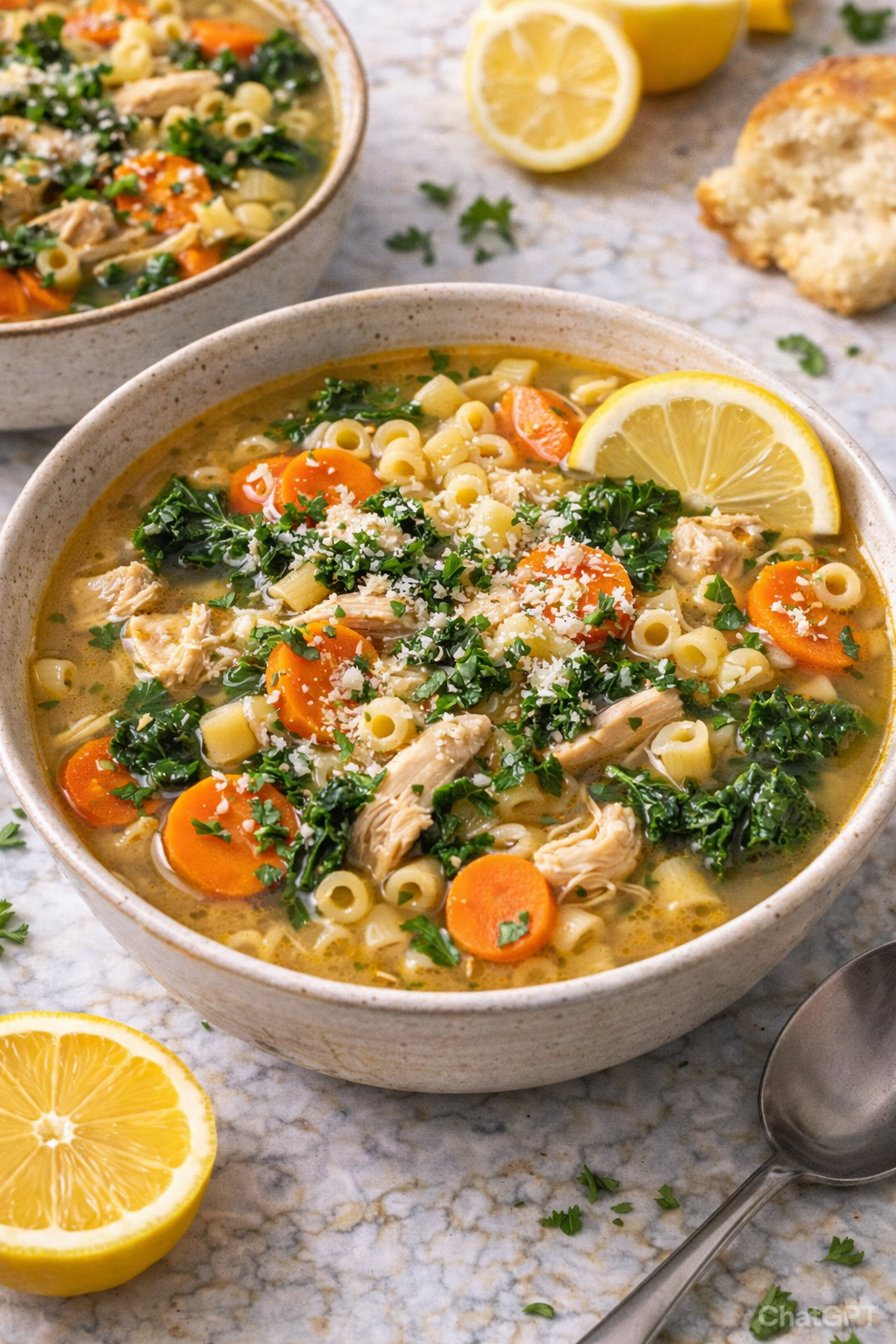
You know that soup that makes you feel like everything is going to be okay? This is it.
Italian Penicillin Soup, or Stracciatella al brodo, is basically Italy’s answer to chicken noodle soup — except it’s richer, silkier, and honestly way more satisfying.
The name alone should tell you something. Italians have been calling this their cure-all for centuries, and once you taste it, you’ll completely understand why.
What Makes This Soup So Special?
Here’s the thing that surprises most people: it’s incredibly simple.
We’re talking a handful of ingredients, one pot, and about 30 minutes of actual cook time. No complicated techniques. No fancy equipment.
The magic is in the method. You whisk eggs with Parmesan and then slowly drizzle the mixture into simmering broth, which creates these gorgeous, feathery egg ribbons throughout the soup. It looks stunning and it tastes even better.
Fun fact: The word “stracciatella” comes from the Italian word stracciare, meaning “to tear” or “to shred.” That’s exactly what happens to the egg mixture when it hits the hot broth.
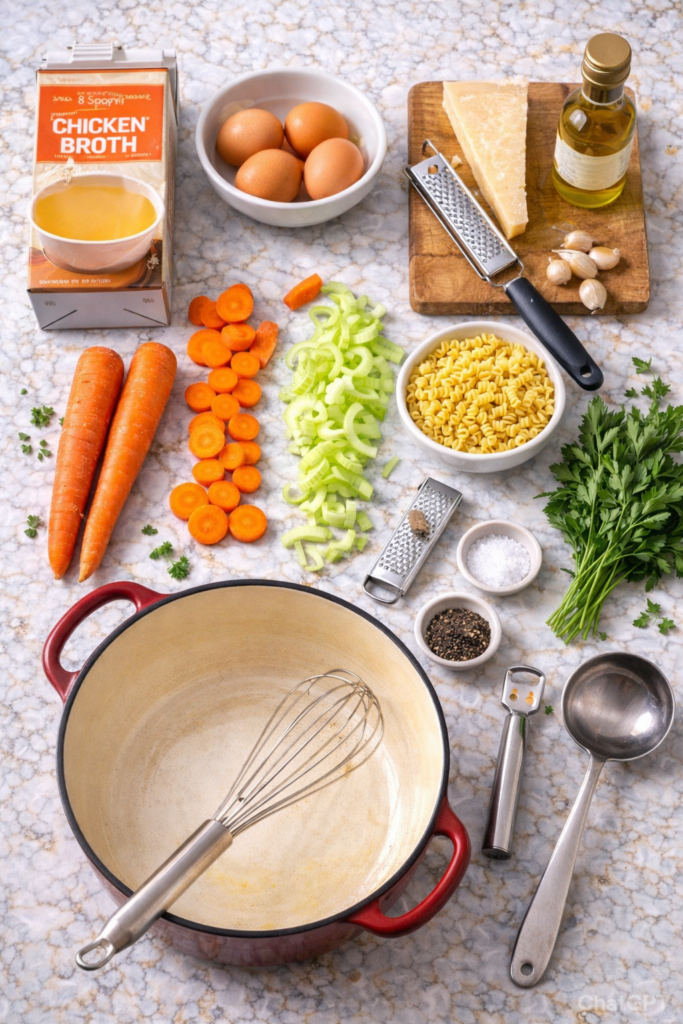
What You’ll Need
For the Broth
- 8 cups good quality chicken broth (homemade is best, but store-bought works)
- 2 medium carrots, peeled and cut into small rounds
- 2 stalks celery, thinly sliced
- 1 small yellow onion, finely diced
- 4 cloves garlic, minced
- 2 tablespoons olive oil
- 1 teaspoon sea salt (adjust to taste)
- 1/2 teaspoon black pepper
- 1 small Parmesan rind (optional but so worth it)
For the Egg Mixture
- 4 large eggs
- 3/4 cup freshly grated Parmesan cheese, plus more for serving
- 2 tablespoons fresh flat-leaf parsley, finely chopped
- 1/4 teaspoon freshly grated nutmeg
- Pinch of salt
To Finish
- 1 cup small pasta (ditalini, orzo, or pastina)
- Freshly grated Parmesan for serving
- Crusty bread for serving
Tools You’ll Need
- Large pot or Dutch oven
- Whisk
- Fork (for the egg mixture)
- Fine grater or microplane (for the Parmesan and nutmeg)
- Ladle
- Measuring cups and spoons
- Cutting board and sharp knife
Pro Tips
These are the things that will take your soup from good to really good.
- Use the best broth you can find. This soup lives and dies by its broth. If you have the time to make homemade chicken broth, do it. If not, look for a low-sodium option and season it yourself so you have more control over the flavor.
- Whisk the eggs aggressively before adding them. The more you beat them with the Parmesan, the silkier those egg ribbons will be. You want everything to be completely smooth before it hits the broth.
- Pour the egg mixture in a slow, steady stream while constantly stirring the broth. If you dump it in all at once, you’ll get big clumps instead of those delicate, feathery strands. Think of it like tempering chocolate.
- Add the Parmesan rind to the simmering broth. It melts into the liquid as it cooks and adds this deep, savory depth that’s almost impossible to replicate any other way. Save your Parmesan rinds in the freezer for recipes like this.
- Don’t overcook the pasta. Add it a few minutes before you’re ready to serve, and pull it off the heat when it still has a tiny bit of bite. It’ll continue cooking in the hot broth.
Substitutions and Variations
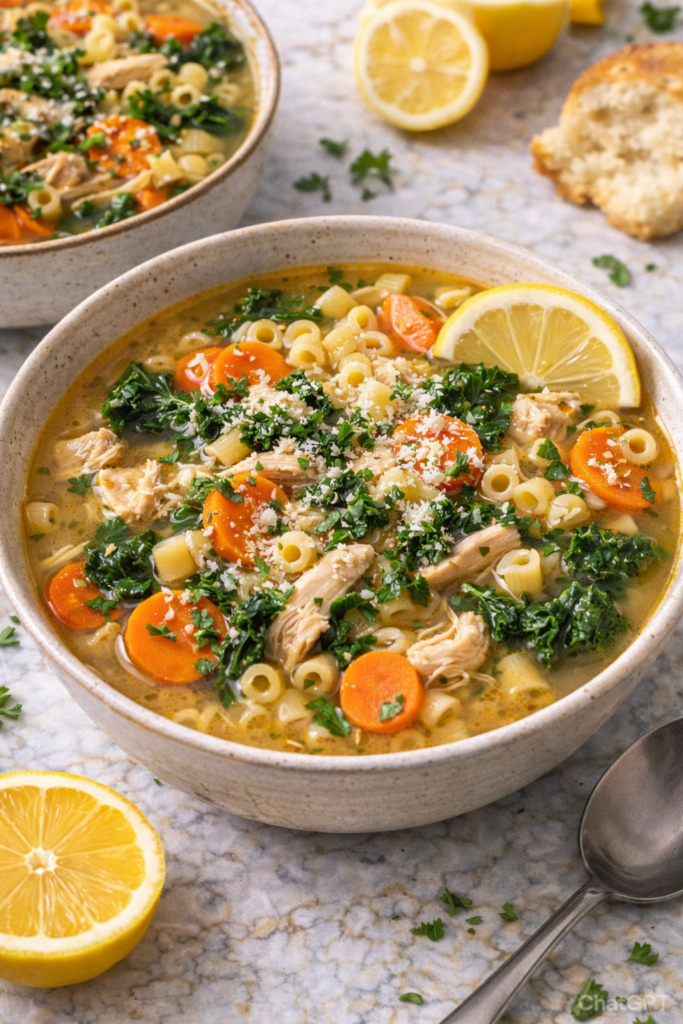
This soup is very forgiving, and there are a few ways to make it work for different preferences.
| Original Ingredient | Substitution |
|---|---|
| Chicken broth | Vegetable broth (vegetarian-friendly) |
| Parmesan | Pecorino Romano for a sharper flavor |
| Ditalini pasta | Orzo, pastina, or no pasta at all |
| Fresh parsley | Fresh basil or a mix of both |
| Nutmeg | Skip it if you don’t have it, though it adds a subtle warmth |
Want to bulk it up? Add shredded rotisserie chicken or a can of small white beans (like cannellini) during the last few minutes of cooking.
Want it spicier? A pinch of red pepper flakes stirred into the broth changes the whole vibe.
Make-Ahead Tips
The broth is the perfect thing to make in advance.
You can cook the vegetable broth base up to 3 days ahead and store it in the fridge. When you’re ready to eat, bring it back to a simmer, then add the pasta and egg mixture fresh.
Just don’t add the egg ribbons ahead of time. They need to go in right before serving for the best texture.
Nutritional Breakdown
One serving of this soup (roughly 1.5 cups) is surprisingly light.
| Nutrient | Per Serving |
|---|---|
| Calories | ~220 kcal |
| Protein | ~14g |
| Carbohydrates | ~18g |
| Fat | ~9g |
| Sodium | ~750mg (varies by broth) |
It’s high in protein from the eggs and Parmesan, which makes it a genuinely satisfying meal despite how light it looks.
For lower sodium: Use a homemade or unsalted broth and skip any added salt until you’ve tasted it.
For gluten-free: Swap the pasta for rice or certified gluten-free pasta.
How to Make Italian Penicillin Soup
Step 1: Build the Broth Base
Heat the olive oil in a large pot over medium heat.
Add the diced onion, carrots, and celery. Cook for about 5 to 7 minutes, stirring occasionally, until the vegetables soften and the onion turns translucent.
Add the garlic and cook for another minute until fragrant.
Step 2: Simmer the Broth
Pour in the chicken broth. Add the Parmesan rind if using, along with the salt and pepper.
Bring everything to a gentle boil, then reduce the heat and let it simmer for about 15 minutes. You’ll notice the broth starting to take on a slightly golden, deeper color.
Step 3: Cook the Pasta
Add the pasta directly into the simmering broth and cook until just al dente, usually 7 to 9 minutes depending on the type.
Step 4: Prepare the Egg Mixture
While the pasta cooks, whisk together the eggs, grated Parmesan, chopped parsley, nutmeg, and a small pinch of salt in a bowl.
Whisk it well. You want the mixture to be completely smooth.
Step 5: Create the Egg Ribbons
This is the step that transforms the soup.
Keep the broth at a gentle simmer (not a full boil). Using a fork or whisk, stir the broth in a circular motion to create a little whirlpool.
Slowly pour the egg mixture in a thin, steady stream directly into the moving broth. Keep stirring gently as you pour. In about 30 seconds, you’ll see those beautiful, feathery egg ribbons forming throughout the soup.
Pull the pot from the heat immediately after all the egg mixture is incorporated.
Step 6: Taste and Serve
Remove the Parmesan rind if you used one.
Taste the soup and adjust salt and pepper if needed. Ladle into bowls, top with a generous amount of freshly grated Parmesan, and serve with crusty bread on the side.
Leftovers and Storage
The soup keeps well in the fridge for up to 3 days in an airtight container.
A heads up: the pasta will absorb a lot of the broth as it sits, so the soup will thicken quite a bit overnight. When reheating, add a splash of extra broth or water to loosen it back up.
The egg ribbons also firm up a little in the fridge. The flavor is still great, but the texture is better on day one.
Can you freeze it? Technically yes, but the egg ribbons and pasta don’t thaw particularly well. If you want to freeze it, make the broth base without the pasta and eggs, freeze that, and then add the pasta and egg mixture fresh when you’re ready to eat.
FAQ
Is this the same as Italian wedding soup?
They’re similar but different. Italian wedding soup typically includes meatballs, leafy greens like escarole, and pasta. Stracciatella is simpler. It’s all about the egg ribbons in a clear, flavorful broth.
What’s the best pasta shape to use?
Ditalini is traditional and works really well because the small tubes hold up nicely in the broth. Orzo is another great option. You can even use pastina (tiny star-shaped pasta) if you want something a bit more delicate.
My egg ribbons came out chunky instead of feathery. What happened?
A few things can cause this. The broth might have been at a full boil instead of a gentle simmer, or you added the egg mixture too quickly. Next time, make sure the broth is just barely simmering and pour very slowly while stirring constantly.
Can I use carton egg whites instead of whole eggs?
You can, but the soup will be lighter in flavor and color. Whole eggs give you that rich, golden hue and a creamier texture.
What kind of Parmesan should I use?
Always go for Parmigiano-Reggiano if you can find it. The pre-grated stuff in a green can won’t melt properly into the egg mixture and the flavor difference is noticeable. Freshly grated makes a real difference here.
Does this actually help when you’re sick?
That’s the legend, and honestly, a warm, protein-rich, easy-to-digest broth soup is genuinely one of the better things you can eat when you’re under the weather. There’s a reason every culture has their version.
Meal Pairing Suggestions
This soup works well on its own, but if you want to build it out into a full Italian-inspired meal:
- Antipasto: A simple arugula salad with shaved Parmesan and lemon vinaigrette
- Secondi: Roasted chicken thighs with lemon and herbs
- Dessert: Something light like panna cotta or a scoop of lemon sorbet
Wrapping Up
If you’ve never made stracciatella before, this is your sign.
It’s fast, it’s cheap, it’s the kind of soup that feels like it took way more effort than it did. And it genuinely makes you feel better on a cold day or when you’re run down, which is not something you can say about most things.
Make it once and it’ll become part of your regular rotation. That’s almost a guarantee.
Give it a try this week and come back and leave a comment below. I’d love to hear how it turned out, what you changed, and whether you ended up eating two bowls like I always do. 😄