You’ve had teriyaki sauce from a bottle. You probably have one in your fridge right now.
And it’s fine. But once you make it from scratch, you’re going to feel genuinely embarrassed that you ever bought the store-bought version.
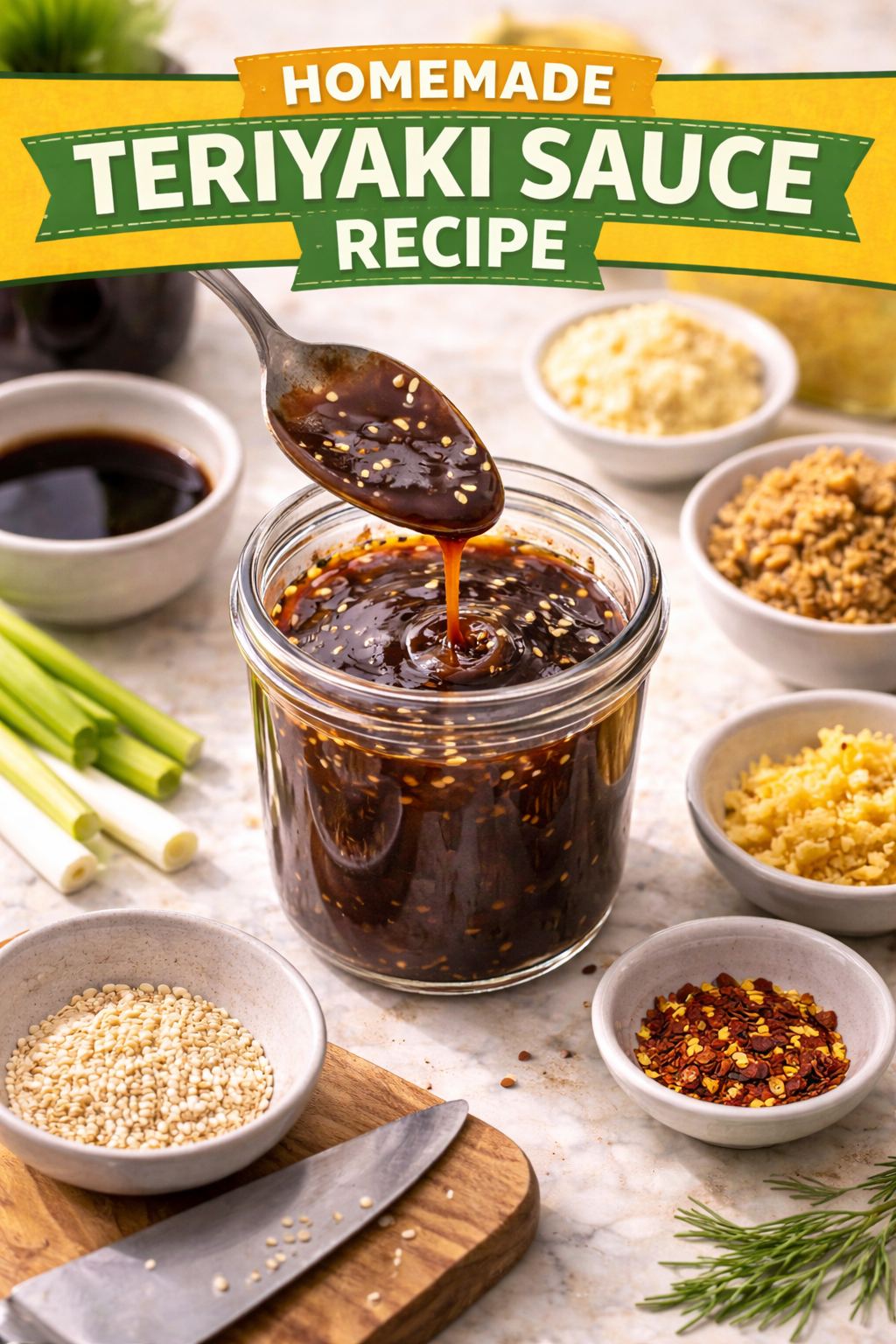
Four ingredients. Ten minutes. A sauce so glossy and rich it coats the back of a spoon perfectly every single time.
There’s one ratio trick near the end that makes the difference between a sauce that tastes homemade and one that tastes restaurant-quality. Keep reading.
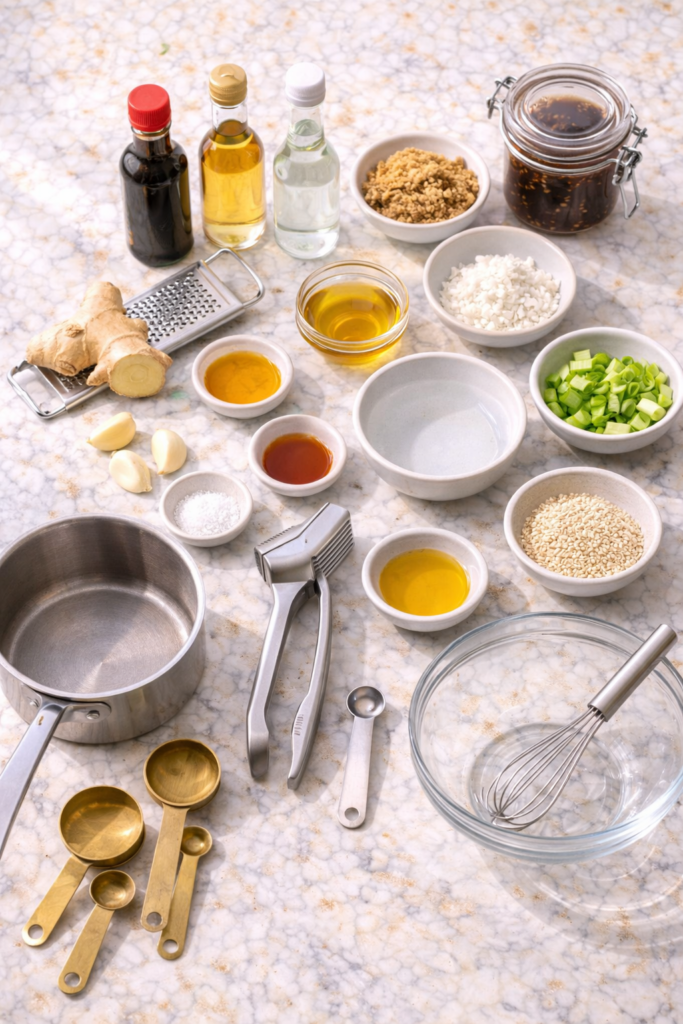
What You’ll Need
For the Sauce
- 1/2 cup soy sauce (low-sodium recommended)
- 1/2 cup mirin (Japanese sweet rice wine)
- 1/4 cup sake (or dry sherry as a swap)
- 3 tablespoons brown sugar (light or dark)
- 1 tablespoon honey (optional, for extra gloss)
- 2 teaspoons fresh ginger, grated
- 2 cloves garlic, minced
- 1 tablespoon cornstarch mixed with 2 tablespoons cold water (for thickening)
- 1 teaspoon sesame oil (added at the very end)
For Serving
- Sesame seeds for garnish
- Sliced green onions for garnish
Tools You’ll Need
- Small saucepan
- Whisk
- Microplane or fine grater (for ginger)
- Garlic press or sharp knife
- Measuring cups and spoons
- Small bowl for cornstarch slurry
- Airtight glass jar or bottle for storing
Pro Tips
1. Use mirin, not sugar water. Mirin is what gives authentic teriyaki its signature glossy shine and subtle sweetness. Swapping it for plain sugar and water makes the sauce taste flat. Find it in the Asian aisle of most grocery stores.
2. Grate the ginger fresh. Pre-minced jarred ginger just doesn’t hit the same. Fresh ginger has a brightness that dried or jarred versions can’t replicate. A microplane makes this super easy.
3. Add the sesame oil off the heat. Sesame oil burns fast and loses its flavor when exposed to high heat. Stir it in right after you take the pan off the burner.
4. Don’t skip the cornstarch slurry. This is what takes your sauce from watery to that thick, glossy, restaurant-style consistency. Mix cornstarch with cold water first (never hot), then whisk it in slowly.
5. Let it cool before you store it. The sauce thickens even more as it cools. If it’s too thick after refrigerating, a quick 20-second microwave and a stir brings it right back.
Substitutions and Variations
| Original | Swap For | Notes |
|---|---|---|
| Mirin | Dry sherry + 1 tsp sugar | Close enough, slightly less sweet |
| Sake | Dry sherry or rice vinegar | Use half the amount if using vinegar |
| Brown sugar | Coconut sugar or honey | Coconut sugar adds a slight caramel note |
| Soy sauce | Tamari | Great gluten-free option, same ratio |
| Fresh ginger | 1/2 tsp ground ginger | Fresh is better, but this works |
| Cornstarch | Arrowroot powder | 1:1 swap, good for paleo diets |
Want it spicy? Add 1 teaspoon sriracha or 1/2 teaspoon red pepper flakes while the sauce simmers.
For a citrusy twist, squeeze in 1 tablespoon fresh orange juice at the end. It adds brightness and pairs incredibly well with salmon.
Make Ahead Tips
This sauce was practically designed to be made ahead.
- In the fridge: Keeps perfectly in an airtight jar for up to 2 weeks.
- In the freezer: Freeze in small portions (an ice cube tray works well) for up to 3 months. Thaw overnight in the fridge.
- Batch tip: Double or triple the recipe. It takes the same amount of time and you’ll have it ready for every rice bowl, stir-fry, and grilling night for weeks.
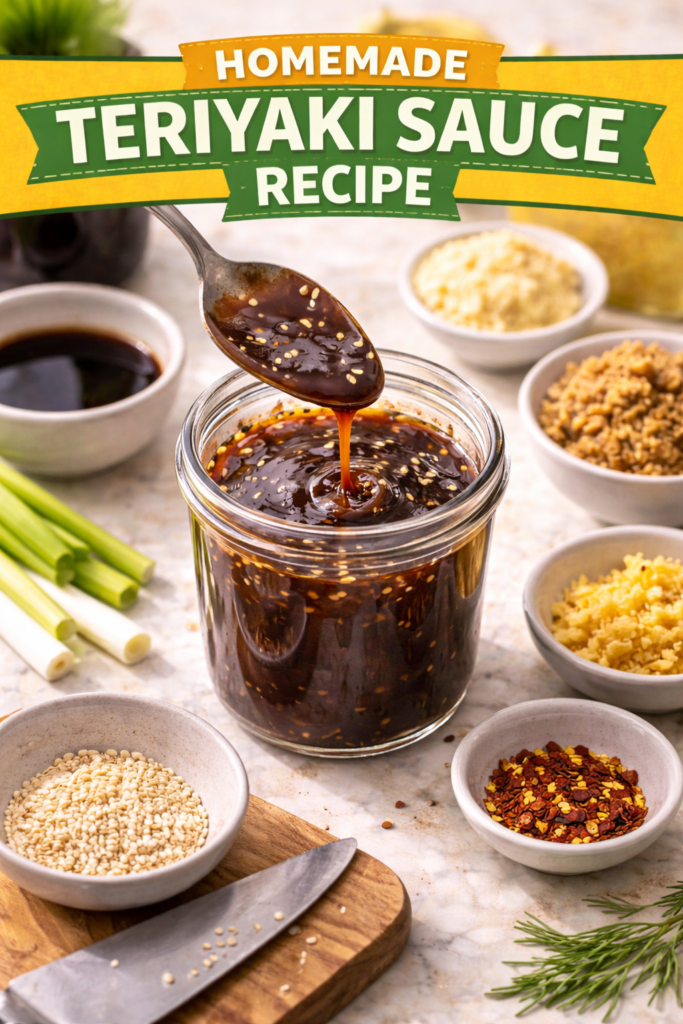
How to Make Homemade Teriyaki Sauce
Step 1: Combine the Base Ingredients
- Add soy sauce, mirin, sake, brown sugar, honey, ginger, and garlic to a small saucepan.
- Whisk everything together until the sugar starts to dissolve.
- Place over medium heat and bring to a gentle simmer, stirring occasionally.
Step 2: Simmer and Reduce
- Let the sauce simmer for 5-7 minutes, stirring every minute or so.
- The mixture will reduce slightly and the garlic and ginger will mellow and sweeten. The smell at this point is honestly incredible.
Step 3: Thicken the Sauce
- In a small bowl, whisk together the cornstarch and cold water until completely smooth.
- While the sauce is simmering, slowly pour the cornstarch slurry in while whisking constantly.
- Cook for another 1-2 minutes until the sauce thickens and coats the back of a spoon.
Step 4: Finish and Store
- Remove from heat immediately.
- Stir in the sesame oil.
- Let it cool for 5 minutes before transferring to a jar or using immediately.
That’s it. Under 15 minutes, start to finish.
Nutritional Breakdown (Per 2-Tablespoon Serving)
Based on approximately 12 servings per batch:
| Nutrient | Amount |
|---|---|
| Calories | ~45 |
| Protein | ~1g |
| Carbohydrates | ~9g |
| Fat | ~0.5g |
| Sodium | ~480mg (varies with soy sauce brand) |
| Sugar | ~7g |
Using low-sodium soy sauce cuts the sodium significantly without changing the flavor much. Tamari keeps it gluten-free with zero compromise on taste.
What to Serve With It
Honestly, the list is shorter if you name what you can’t put teriyaki sauce on.
- Chicken thighs or breasts – marinate for 30 minutes, grill or pan-sear
- Salmon fillets – brush on during the last 2 minutes of cooking
- Stir-fried vegetables – broccoli, snap peas, bok choy
- Rice bowls – drizzle over steamed white or brown rice
- Noodle dishes – udon or soba noodles tossed right in the pan
- Tofu – press it dry, pan-fry until crispy, then coat in the sauce
- Meatballs – use as a glaze, serve as an appetizer
Pair your meal with a cold Sapporo, jasmine green tea, or a crisp Pinot Gris.
Leftovers and Storage
- Fridge: Store in an airtight glass jar for up to 2 weeks. The sauce may thicken in the cold; a quick stir after a 20-second microwave fixes it.
- Freezer: Pour into silicone ice cube trays, freeze solid, then transfer to a freezer bag. Each cube is roughly 2 tablespoons. Good for up to 3 months.
- Reheating: Warm over low heat on the stovetop or in 20-second microwave bursts, stirring between each.
- Marinating leftovers: Do not reuse sauce that has been in contact with raw meat. Set some aside before marinating if you want extra for serving.
FAQ
Can I use this as a marinade and a sauce? Yes, but set aside the portion for serving before using it to marinate raw protein. Never use marinade that’s touched raw chicken or meat as a finishing sauce.
My sauce came out too thin. Now what? Make another small cornstarch slurry (1 teaspoon cornstarch + 1 tablespoon cold water) and whisk it in while the sauce is warm over low heat. It’ll thicken within a minute.
My sauce came out too thick. Add a splash of warm water or soy sauce, one teaspoon at a time, and stir until it loosens to your liking.
Is this gluten-free? Not with regular soy sauce. Swap it 1:1 with tamari or certified gluten-free soy sauce and it’s completely gluten-free. Mirin and sake are also naturally gluten-free.
Can I skip the sake? You can, but it adds a subtle depth that’s hard to replicate. Dry sherry is the closest swap. If you skip it entirely, reduce the soy sauce slightly or add an extra tablespoon of mirin.
Does it taste like store-bought? It really doesn’t, and that’s a good thing. Store-bought versions tend to be sweeter and more one-dimensional. This one has layers: sweet, salty, a little savory, with a warm ginger finish.
How long can I marinate with it? For chicken, 30 minutes to 2 hours is the sweet spot. Salmon only needs 15-20 minutes (any longer and the soy sauce starts to break down the texture). Tofu can marinate overnight.
Wrapping Up
This sauce takes less time to make than a grocery store run, and it will completely change how you cook weeknight dinners.
Once you have a jar of this in your fridge, you’re always 20 minutes away from a really good meal. Chicken, salmon, tofu, noodles – everything gets better with it.
Give it a try this week and drop a comment below with how yours turned out. What did you put it on first? Any swaps you made? I love hearing what’s working in your kitchen.