When I discovered how easy it is to make creamy salmon at home, I stopped ordering it at restaurants. Not because the restaurant versions weren’t good, but because mine tasted better. And took about fifteen minutes.
I’m serious.
There’s something about a perfectly cooked salmon fillet swimming in a rich, buttery cream sauce that just feels indulgent. You’d think it requires some fancy culinary degree or a kitchen that costs more than your car, but it doesn’t. In fact, the fewer ingredients you use, the better it turns out.
I’ve made this recipe probably a hundred times over the last two years, and I’ve only gotten faster. My husband now requests it at least twice a week (which I’m slightly proud of and also slightly tired of, if I’m being honest). The texture of the salmon, the way it flakes apart with your fork, the sauce that clings to every bite… it’s the kind of meal that makes you feel like you’re eating something special.
Let me walk you through how to nail this.
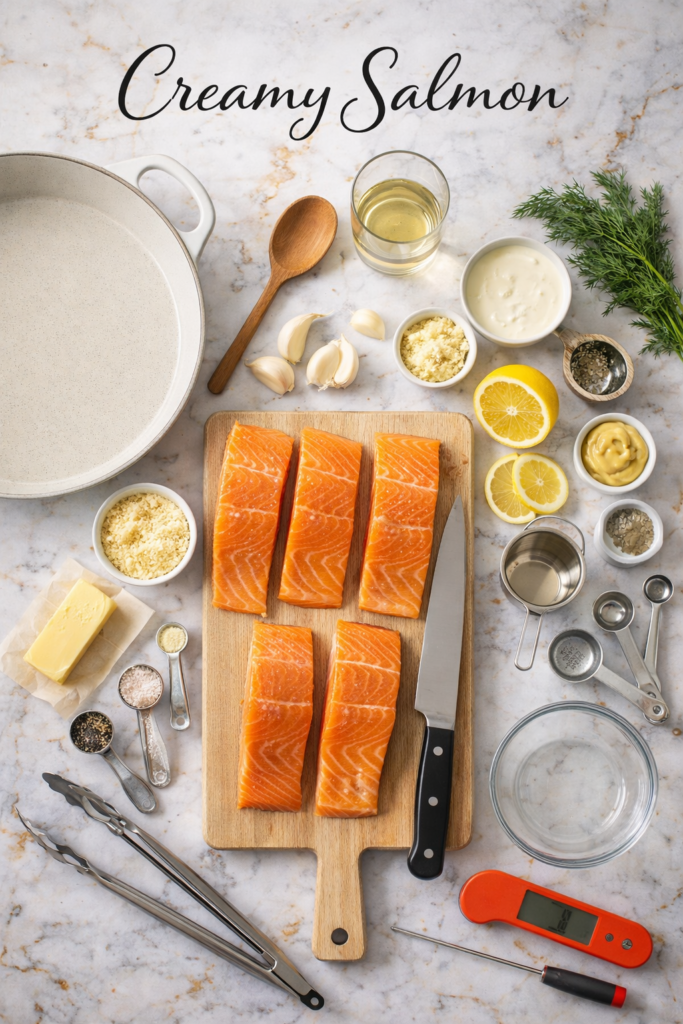
What You’ll Need
| Ingredient | Amount |
|---|---|
| Fresh salmon fillets | 4 (6 oz each) |
| Unsalted butter | 4 tablespoons |
| Fresh garlic, minced | 3 cloves |
| Heavy cream | 1 cup |
| Dry white wine | 1/2 cup |
| Fresh lemon juice | 2 tablespoons |
| Dijon mustard | 1 teaspoon |
| Salt | To taste |
| Black pepper | To taste |
| Fresh dill | 2 tablespoons (chopped) |
| Parmesan cheese, grated | 1/4 cup |
Optional Add-Ins:
- Capers (1/4 cup) for briny depth
- Sun-dried tomatoes (1/4 cup) for sweetness
- Fresh thyme sprigs for earthy notes
- Spinach or asparagus for vegetables
Tools You’ll Need
- One large skillet (12-inch is ideal)
- Wooden spoon for stirring
- Tongs for flipping salmon
- Instant-read meat thermometer
- Cutting board and sharp knife
- Measuring spoons and cups
- Small bowl for mixing seasonings
How to Make It (Step-by-Step)
Step 1: Prep Your Salmon
Pat your salmon fillets dry with paper towels. This is crucial because wet salmon won’t get that beautiful golden crust. Season both sides generously with salt and pepper. You want that seasoning visible on the surface, not just a light dusting.
Let them sit for about five minutes while you prep everything else.
Step 2: Sear the Salmon
Heat two tablespoons of butter in your skillet over medium-high heat. Wait until the butter foams and smells nutty (about one minute).
Place salmon fillets skin-side down in the skillet. Don’t move them. I know it’s tempting, but let them sit for four minutes. This creates that gorgeous golden crust on the skin.
Flip carefully using tongs and cook for another three to four minutes on the other side. Your salmon should be cooked through (internal temperature of 145°F). Remove the salmon to a plate and set aside.
Step 3: Make the Cream Sauce
In the same skillet, melt the remaining two tablespoons of butter over medium heat.
Add minced garlic and let it cook for about one minute until fragrant. Don’t let it burn; you just want it to become aromatic.
Pour in the white wine and let it simmer for two to three minutes. This burns off the alcohol and concentrates the flavor. You’ll see the liquid reduce by about half.
Pour in the heavy cream and whisk everything together. Add the Dijon mustard, lemon juice, and that grated Parmesan. Stir until smooth.
Let this simmer for three to four minutes until it thickens slightly. The sauce should coat the back of a spoon.
Step 4: Bring It Together
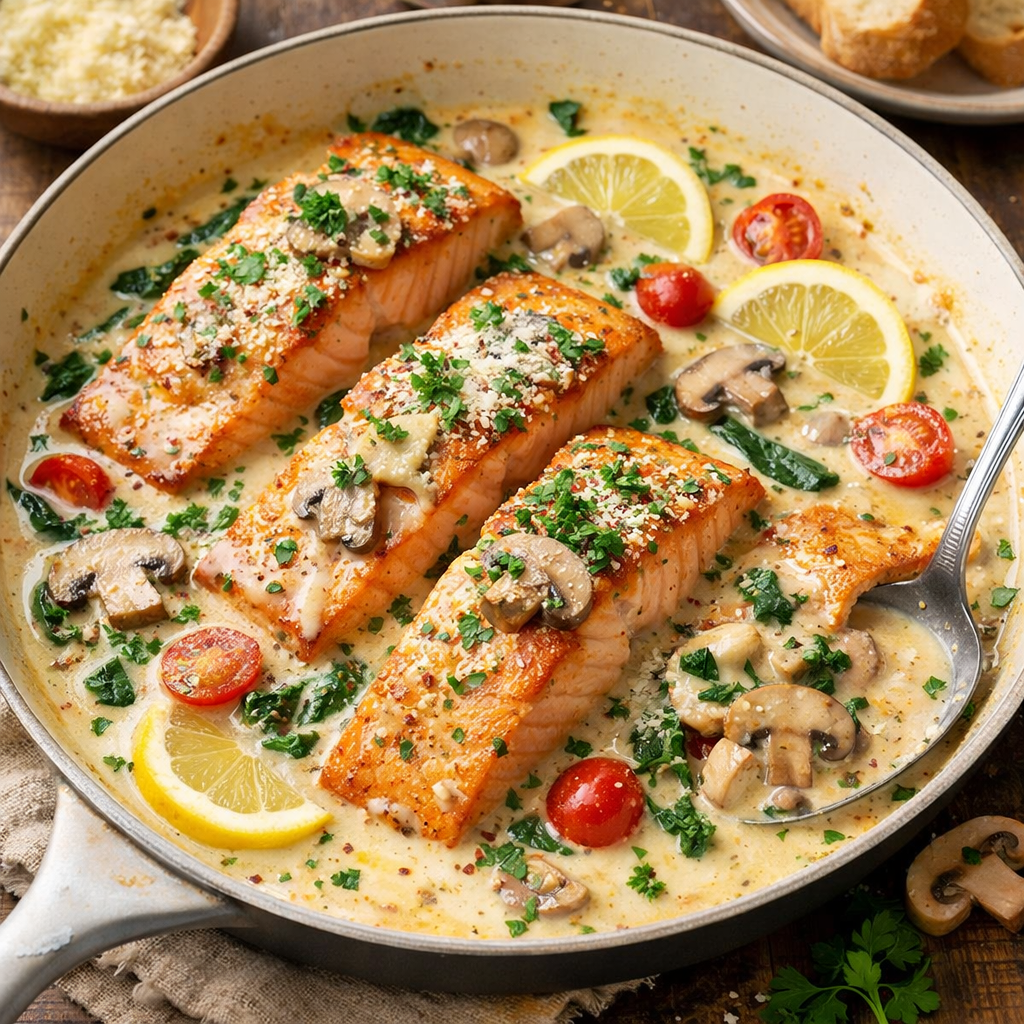
Return the salmon fillets to the skillet, skin-side up. Spoon that creamy sauce over each fillet.
Add fresh dill and any other additions you’re using (capers, sun-dried tomatoes, etc.).
Let everything warm through for about two minutes. The salmon will continue cooking gently in the sauce.
Taste the sauce and adjust seasoning as needed. Sometimes you need a tiny pinch more salt or squeeze of lemon. Trust your palate here.
Pro Tips from the Kitchen
Tip 1: Room Temperature Salmon Cooks More Evenly Take your salmon out of the fridge about 15 minutes before cooking. This ensures the inside cooks at the same rate as the outside, preventing that overcooked exterior with a raw center situation.
Tip 2: Don’t Skip the Searing Step That golden crust isn’t just for looks. It creates a flavorful barrier that keeps the salmon moist and adds depth to the dish. If you skip straight to poaching in cream, you lose something special.
Tip 3: White Wine Matters (But Not Expensive Wine) Use a wine you’d actually drink. If it tastes like vinegar in the glass, it’ll taste like vinegar in your sauce. A crisp Sauvignon Blanc or Pinot Grigio works beautifully here.
Tip 4: Use Fresh Lemon, Not Bottled This might sound fussy, but fresh lemon juice brightens everything up. Bottled juice has a metallic undertone that doesn’t disappear even when cooked.
Tip 5: Cook Salmon Skin-Side Down First The skin protects the delicate flesh underneath while it’s cooking and prevents it from drying out. Plus, that crispy skin is arguably the best part.
Substitutions & Variations
| Variation | How to Adapt |
|---|---|
| Dairy-Free | Use coconut cream (full fat) instead of heavy cream. It’s naturally sweet and creates an amazing sauce. |
| Lighter Version | Replace heavy cream with half-and-half or Greek yogurt (add yogurt at the end, don’t boil). |
| Herb-Focused | Swap dill for tarragon, parsley, or chervil depending on what you have. |
| Protein Upgrade | Add capers, sun-dried tomatoes, or fresh spinach to the sauce for texture. |
| Wine Alternative | Use vegetable or chicken broth if you don’t have wine. You lose some acidity but gain richness. |
| Lemon Swap | Try fresh lime juice for a completely different but equally delicious flavor profile. |
Make-Ahead Tips
The Sauce Can Be Made Earlier Prepare your cream sauce up to four hours in advance. Store it in the fridge and reheat gently on low heat before adding the salmon. Don’t let it boil or it might break.
Prep Your Ingredients Mince garlic, measure cream and wine, chop dill, and grate Parmesan in the morning. Having everything prepped means dinner takes literally 15 minutes when you walk in the door.
Marinate Salmon Optional While not necessary, you can marinate salmon for 20-30 minutes in a mix of lemon juice, olive oil, and herbs before cooking. This adds extra flavor depth.
Meal Pairing Suggestions
This creamy salmon begs for something to soak up all that sauce.
Rice: Buttered rice pilaf is the obvious choice. It cradles the sauce and lets you get every drop.
Pasta: Fettuccine or pappardelle tossed with a bit of the salmon sauce creates a complete meal. You can even pour extra sauce right over the pasta.
Vegetables: Roasted asparagus, sautéed spinach, or steamed green beans add freshness and cut through the richness of the cream.
Bread: A crusty baguette for soaking up sauce. No apologies needed.
Wine: A crisp white wine that matches what you used in the sauce (Sauvignon Blanc, Pinot Grigio, or Chablis).
Nutritional Breakdown (Per Serving)
| Component | Amount |
|---|---|
| Calories | 445 |
| Protein | 38g |
| Fat | 26g |
| Carbohydrates | 3g |
| Fiber | 0g |
| Omega-3 Fatty Acids | 2.1g |
Salmon is basically a superfood that tastes decadent. You’re getting incredible omega-3s, vitamin D, selenium, and protein while eating something that feels like a treat.
Leftovers & Storage
This dish actually gets better the next day once the flavors have had time to settle and marry together.
Refrigerator: Store in an airtight container for up to three days. The sauce will thicken slightly as it cools, which is fine and actually delicious.
Reheating: Warm gently in a skillet over low heat or in a 325°F oven for about 10 minutes. Never microwave creamy sauces if you can help it; the texture gets weird.
Freezing: This doesn’t freeze beautifully because the texture of the salmon changes. I’d skip the freezer on this one.
Repurposing: Flake the leftover salmon and toss it with pasta and extra cream sauce for a completely different meal. Seriously, it’s better than making it fresh.
FAQ
Q: Can I use frozen salmon? A: Yes, but thaw it completely first. Frozen salmon releases water as it thaws, which prevents that perfect golden crust from forming. Thaw in the fridge overnight for best results.
Q: My salmon turned out dry. What went wrong? A: You likely cooked it too long. Salmon cooks fast. Check the internal temperature at four minutes for the first side. Aim for 145°F and remove it immediately.
Q: Can I make this with salmon steaks instead of fillets? A: Absolutely. They take a few extra minutes because they’re thicker. Sear for five minutes per side, then finish in the cream sauce.
Q: What if I don’t like fish skin? A: You can use skinless fillets, but they’re more delicate. Sear the flesh side first for three minutes, then flip and cook another three minutes. Handle with extra care.
Q: Is this recipe actually 15 minutes from start to finish? A: If you prep ahead, yes. Ingredients to table is usually 16-18 minutes for me. If you’re mincing garlic and measuring ingredients as you go, add another five minutes.
Q: Can I substitute the Dijon mustard? A: You can, but I wouldn’t skip it entirely. Whole grain mustard works, or even a tiny bit of mayonnaise. The mustard adds subtle depth and helps emulsify the sauce.
Q: Why does my sauce sometimes break? A: Overheating. Never let the sauce boil once you’ve added the cream. Keep it at a gentle simmer. If it breaks, remove from heat, add a splash of cold cream, and whisk vigorously.
Wrapping Up
This creamy salmon recipe isn’t fancy or complicated, but it tastes like you spent hours in the kitchen. That’s the whole point.
You get perfectly seared salmon, a silky sauce that tastes restaurant-quality, and everything done in time for dinner on a weeknight. No stress, no mess, just really good food.
The best part about mastering this recipe? Once you make it a few times, you’ll stop following measurements and start cooking by feel. You’ll know exactly when that salmon is done, how thick you like your sauce, and which additions you prefer.
That’s when cooking stops feeling like a chore and starts feeling like something you actually enjoy doing.
Have you made creamy salmon before? Drop a comment below and tell me how it turned out. Did you make any changes to the recipe? Add any ingredients I didn’t mention? I’d love to hear what worked for you.