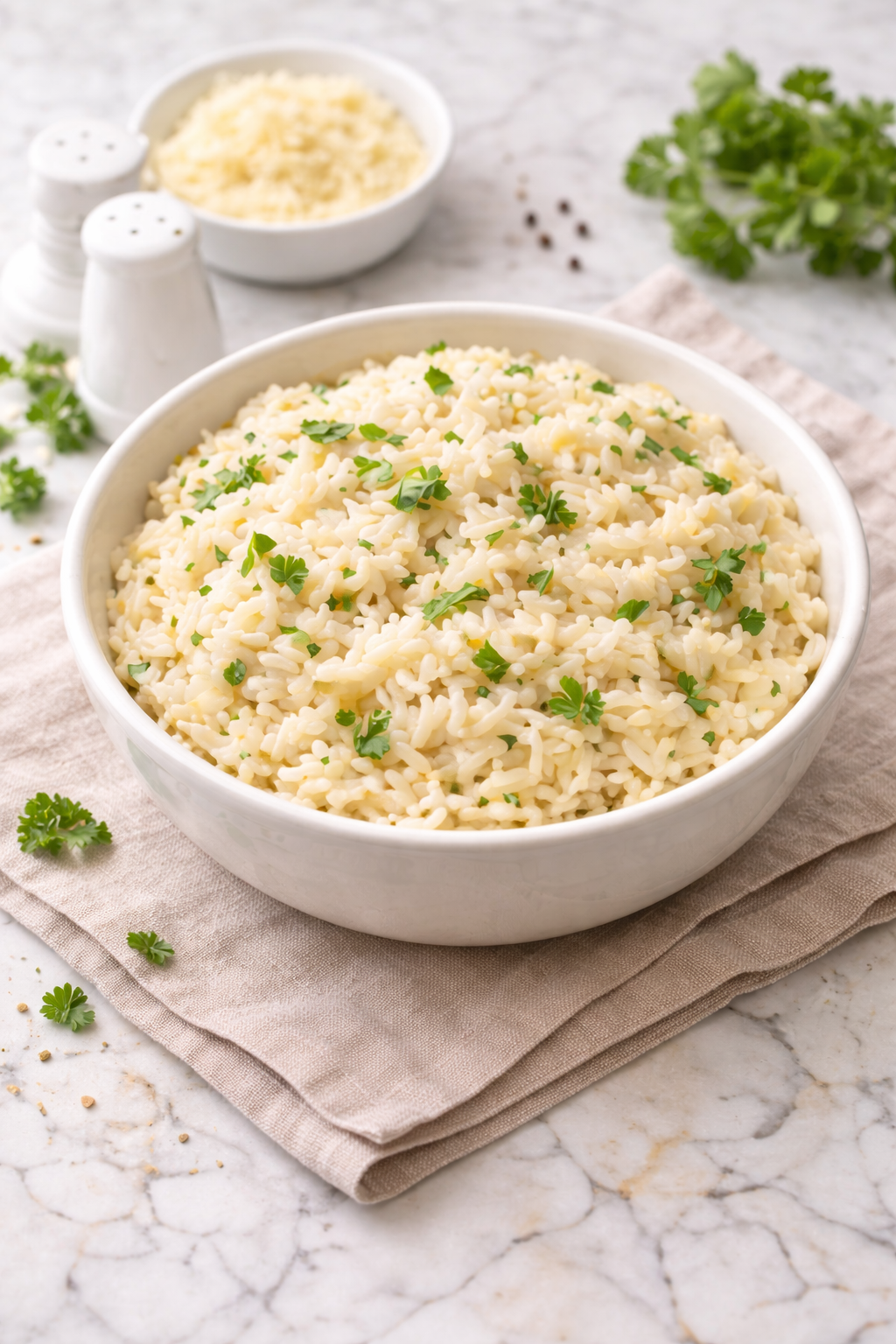
You know that feeling when you’re standing in your kitchen on a random weeknight and you want something that tastes indulgent? Something that makes people think you’ve been cooking for hours when really you just know a simple trick?
This creamy risotto is exactly that.
It’s silky, buttery, deeply satisfying, and honestly doesn’t require much more than constant stirring and patience. But here’s the thing: that’s actually the magic. The stirring is what releases the starch from the rice and turns it into this luxurious, creamy sauce without any cream at all.
The whole thing comes together in about 30 minutes. One pot. Real ingredients. And the kind of dish that makes you close your eyes after the first bite because it’s just that good.
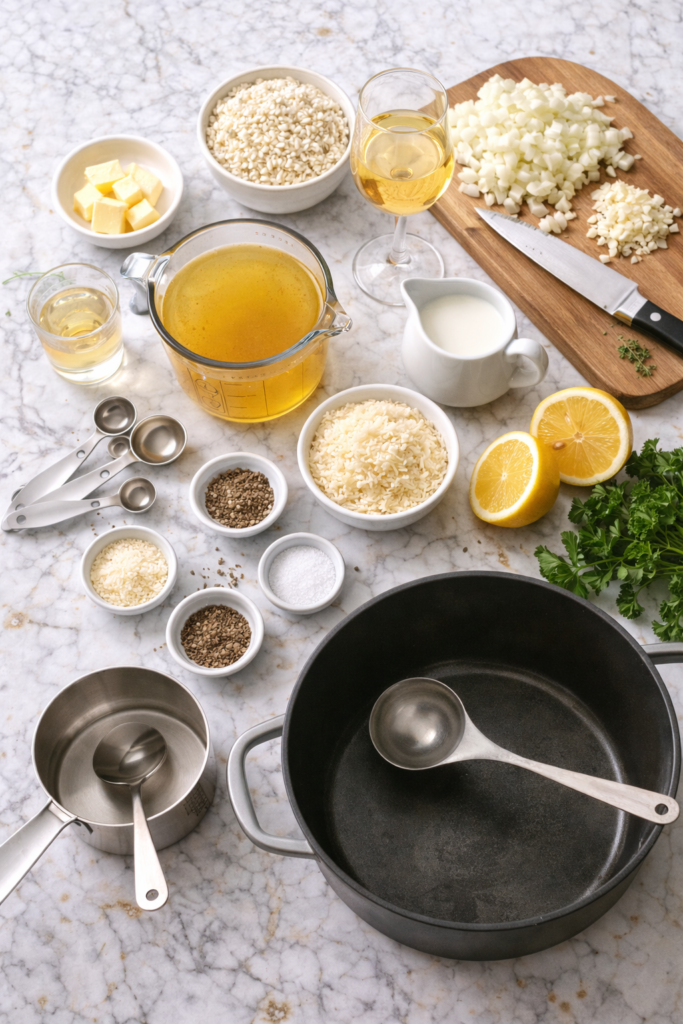
What You’ll Need
For the Risotto
- 3 tablespoons unsalted butter (divided)
- 2 tablespoons olive oil
- 1 medium yellow onion, finely diced
- 3 cloves garlic, minced
- 1.5 cups Arborio or Carnaroli rice
- 4 cups warm chicken or vegetable broth (keep it warm in a separate pot)
- 0.5 cup dry white wine
- 0.5 cup whole milk or heavy cream
- 0.5 cup Parmesan cheese, freshly grated
- Juice of 0.5 lemon
- 1 teaspoon salt
- 0.5 teaspoon black pepper
- Fresh parsley, chopped, for garnish
Tools You’ll Need
- Large heavy-bottomed saucepan (at least 3 quarts)
- Wooden spoon or silicone spatula
- Ladle
- Measuring cups and spoons
- Sharp knife and cutting board
- Microplane or fine grater (for Parmesan)
- Small pot for keeping broth warm
Pro Tips
1. Use the right rice. Arborio and Carnaroli rice are short-grain varieties that release starch as they cook. This is what creates that signature creamy texture. Don’t use long-grain rice here or you’ll end up with something that tastes like regular rice.
2. Keep your broth warm. Cold broth added to the rice will drop the temperature and interrupt the cooking process. Keep it simmering in a separate pot the entire time.
3. Stir constantly and mean it. This isn’t the time to step away and scroll through your phone. The constant stirring is what turns this into risotto instead of just rice. It takes the full 18 to 20 minutes.
4. Add broth slowly. Add about one ladle of broth at a time, waiting until it’s mostly absorbed before adding more. You’ll know it’s ready for the next addition when you can drag your spoon across the bottom of the pot and the rice stays separated for a second.
5. Finish with butter and cheese. This is the technique called “mantecare” (butter it). Turning off the heat and stirring in cold butter and Parmesan creates the silkiest, most luxurious texture. Don’t skip this step.
Substitutions and Variations
| Original | Swap For | Notes |
|---|---|---|
| Chicken broth | Vegetable broth | Works perfectly for vegetarian versions |
| Parmesan | Asiago or Pecorino Romano | Similar salty, nutty flavor |
| Butter | Olive oil | Keeps it dairy-free, less rich |
| White wine | Dry vermouth | Similar acidity and flavor |
| Plain risotto | Add mushrooms, peas, or asparagus | Stir in any vegetables in the last 5 minutes |
| Milk | Heavy cream | Makes it even richer (use less) |
For a risotto with more flavor, add 0.5 cup of sautéed mushrooms or fresh peas in the last 3 minutes of cooking.
Make Ahead Tips
- Broth: Make homemade broth up to 5 days ahead and keep it in the fridge. Just reheat it before you start cooking.
- Prep work: Dice your onion and garlic, grate your cheese, and measure everything the morning of. Risotto is best made fresh, but having everything ready speeds up the actual cooking.
- Partial cooking: You can start the risotto 15 minutes ahead, then finish it when you’re ready to eat. It’s not ideal, but it works in a pinch.
How to Make Creamy Risotto
Step 1: Start Strong
Heat 1 tablespoon of butter and the olive oil in your saucepan over medium heat.
Add the diced onion and cook for 4 to 5 minutes until it’s soft and turning translucent.
Add the minced garlic and cook for 1 more minute, stirring constantly.
Step 2: Toast the Rice
Add the rice to the pan and stir for 2 minutes.
You want to coat each grain with the butter and oil. This toasting step adds nutty flavor and helps the rice cook evenly.
Step 3: Add the Wine
Pour in the white wine and stir until it’s mostly absorbed.
This takes about 1 to 2 minutes. The wine adds acidity that wakes up all the flavors.
Step 4: The Constant Stir (This Is The Key)
Add one ladle of warm broth to the rice.
Stir constantly. This is where patience comes in. You’re not looking away from this pot for the next 18 to 20 minutes.
As the broth gets absorbed and the rice starts to look dry, add another ladle of broth.
Keep stirring the whole time. The movement is what coaxes the starch out of the rice and creates that creamy sauce.
Step 5: Taste for Doneness
After about 18 minutes, the rice should be creamy but still have a slight firmness (called “al dente”) when you bite it.
It shouldn’t be mushy or crunchy. If it still feels hard, add more broth one ladle at a time until it reaches that perfect texture.
You might not use all 4 cups of broth. That’s normal.
Step 6: The Finish (Mantecare)
Remove the pan from heat.
Stir in the remaining 2 tablespoons of cold butter, the milk, and the Parmesan cheese.
Stir vigorously for about 30 seconds until it becomes incredibly creamy and silky.
Add the lemon juice, salt, and pepper.
Taste and adjust seasoning as needed.
Step 7: Serve Immediately
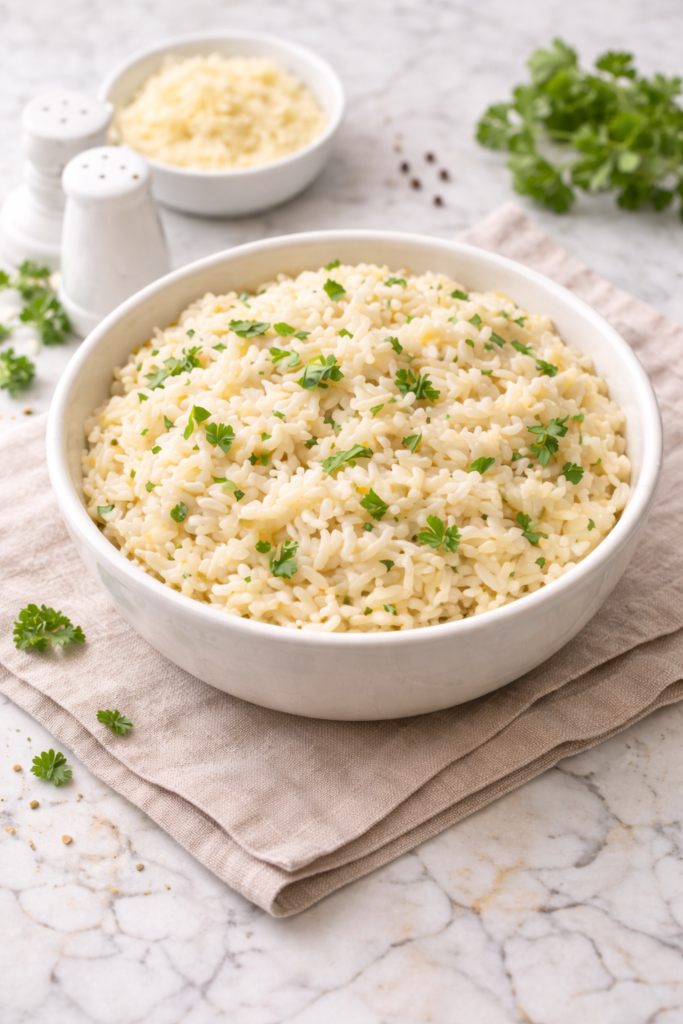
Divide into bowls and top with fresh parsley.
Serve right away while it’s warm and creamy.
Risotto waits for no one.
Nutritional Breakdown
Based on 4 servings:
| Nutrient | Amount Per Serving |
|---|---|
| Calories | ~420 |
| Protein | ~12g |
| Carbohydrates | ~48g |
| Fat | ~18g |
| Fiber | ~1g |
| Sodium | ~650mg |
The rice provides energy, while the butter and Parmesan add richness and satiety. The warm broth makes it easy on your digestive system.
What to Serve With It
- Simple side salad with arugula and a light vinaigrette
- Steamed green vegetables like asparagus or green beans
- Crusty bread for soaking up extra sauce
- Dry white wine like Pinot Grigio or Sauvignon Blanc
- Grilled chicken or fish to add protein
Leftovers and Storage
- Fridge: Store risotto in an airtight container for up to 2 days. It will thicken as it cools because the rice continues to absorb liquid.
- Reheating: Warm it gently on the stovetop over low heat, stirring frequently. Add a splash of warm broth or milk to loosen it back up to a creamy consistency.
- Risotto cakes: Leftover risotto is perfect for making crispy risotto cakes the next day. Spread it on a baking sheet to cool completely, cut into patties, and pan-fry until golden.
- Freezer: Risotto doesn’t freeze as well as other dishes because the texture changes, but you can freeze it for up to 1 month if needed. Thaw overnight in the fridge and reheat gently.
FAQ
Can I use brown rice or wild rice? No, these varieties don’t release starch the way Arborio does. Stick with the specific short-grain rice mentioned in the recipe.
My risotto came out watery. What went wrong? A few things could have happened: the broth temperature might have dropped the pan temperature, you might have added broth too quickly, or you didn’t stir constantly. Next time, keep everything hot and stir like your life depends on it. You can also cook it uncovered for an extra minute or two at the end to evaporate excess liquid.
Can I make this ahead and reheat it? Risotto is really best made fresh because it loses that silky texture as it sits. But if you need to make it ahead, stop about 5 minutes before it’s fully cooked, then finish it with the butter and cheese right before serving.
What if I don’t have white wine? You can skip it and use an extra cup of broth instead. You’ll lose a bit of acidity, so add a squeeze of lemon juice at the end. Dry vermouth works great as a substitute too.
Can I make this dairy-free? Use olive oil instead of butter and skip the milk and Parmesan. The risotto will still be creamy from the rice starch, but it won’t be as rich. Nutritional yeast adds a savory, cheesy flavor if you want it.
Is risotto hard to make? It’s really not. It just requires attention and patience. The stirring is the only “hard” part, and it’s really just constant movement. Once you make it once, you’ll realize it’s way simpler than you thought.
How do I know when to stop adding broth? When the rice is creamy and tender but still has a slight bite to it, you’re done. It should look like a flowing, creamy sauce, not a soup. If you push it around the bowl, it should slowly settle.
Wrapping Up
This creamy risotto is one of those dishes that tastes like you spent the entire evening cooking when you’ve really just spent 30 minutes stirring.
It’s fancy enough for company, simple enough for Tuesday night, and absolutely delicious either way.
The magic isn’t in fancy ingredients or complicated techniques. It’s in understanding what actually happens when you stir rice in warm broth. Once you get that, you can make risotto in your sleep.
Make this for yourself this week. Whether it’s a solo dinner or you’re cooking for people you love, this one is a keeper.
Drop a comment below and let me know how it turns out for you. Did you add any vegetables? Did you find the stirring meditative or annoying? Did you use the leftover risotto to make cakes?
I love hearing what happens in your kitchen.