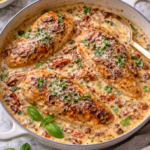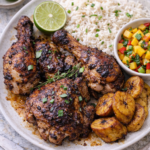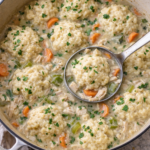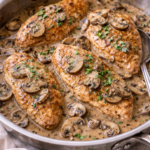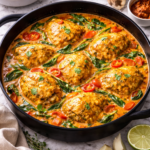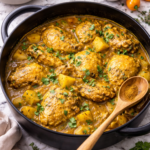
You know that feeling when you take one bite of something and immediately start planning when you’ll make it again?
That’s coconut curry chicken.
It’s creamy, deeply spiced, a little sweet, and has that kind of warmth that makes you slow down and actually enjoy your meal.
And the surprising part? It takes less than 45 minutes start to finish. No complicated techniques. No hard-to-find ingredients.
Just a pan, some pantry staples, and a recipe you’re going to keep coming back to.
What You’ll Need
For the Chicken Marinade:
- 1.5 lbs (680g) boneless, skinless chicken thighs, cut into bite-sized pieces
- 1 tsp turmeric
- 1 tsp cumin
- 1/2 tsp salt
- 1 tbsp olive oil
For the Curry:
- 2 tbsp coconut oil (or olive oil)
- 1 medium yellow onion, finely diced
- 5 garlic cloves, minced
- 1 tbsp fresh ginger, grated (or 1 tsp ground ginger)
- 2 tbsp red curry paste
- 1 tsp garam masala
- 1 tsp ground coriander
- 1 tsp smoked paprika
- 1/2 tsp cayenne pepper (adjust to your heat preference)
- 1 can (14 oz) full-fat coconut milk
- 1 can (14 oz) diced tomatoes
- 1 tsp sugar (to balance the acidity)
- Salt to taste
- Fresh cilantro and lime wedges to serve
- Cooked basmati rice or naan, for serving
Tools You’ll Need
- Large skillet or deep sauté pan (12-inch works perfectly)
- Wooden spoon or silicone spatula
- Sharp chef’s knife
- Cutting board
- Measuring spoons
- Grater or microplane (for the ginger)
- Ladle (for serving)
Pro Tips
These are the things that separate a good curry from an absolutely unforgettable one.
1. Use chicken thighs, not breasts. Thighs stay juicy and tender even if you accidentally cook them a minute too long. Breasts dry out fast in curries. Stick with thighs for the best texture every time.
2. Don’t skip the marinade, even for 10 minutes. Even a short marinade on the chicken makes a real difference. The turmeric and cumin get into the meat and add a layer of flavor you just can’t get by tossing raw chicken straight into the sauce.
3. Toast your curry paste before adding liquids. Give the red curry paste 60 to 90 seconds in the hot oil before you pour in anything else. It blooms the spices and wakes up all that flavor. This single step transforms the whole dish.
4. Full-fat coconut milk is non-negotiable. Light coconut milk will give you a watery, thin sauce. Full-fat gives you that luxurious, creamy consistency that makes this curry so good. Don’t swap it out.
5. Add the lime at the end. A squeeze of lime right before serving brightens the whole dish and cuts through the richness of the coconut milk. It’s a small thing that makes a big difference. 🍋
Substitutions and Variations
One of the things that makes this recipe so easy to love is how flexible it is.
| Swap This | For This |
|---|---|
| Chicken thighs | Shrimp, chickpeas, or tofu |
| Red curry paste | Green or yellow curry paste |
| Coconut milk | Canned coconut cream (richer) |
| Fresh ginger | 1 tsp ground ginger |
| Diced tomatoes | Crushed tomatoes or tomato puree |
| Cayenne | Fresh chili or just skip it |
Want it dairy-free? It already is. 🙌
Going vegetarian? Swap the chicken for 2 cans of chickpeas and reduce the cook time by about 10 minutes.
Craving more veggies? Toss in baby spinach, zucchini, or bell peppers in the last 5 minutes of cooking.
Make Ahead Tips
The flavor of this curry genuinely gets better overnight.
If you’re meal prepping, make the full batch, let it cool completely, and store it in an airtight container. The spices meld together as it sits and the sauce thickens slightly in a really good way.
You can also prep the marinade and let the chicken sit in it (covered) in the fridge for up to 24 hours before cooking. Future you will thank present you.
Nutritional Breakdown
This gives you a rough idea per serving (based on 4 servings, without rice):
| Nutrient | Per Serving |
|---|---|
| Calories | ~420 kcal |
| Protein | ~34g |
| Carbohydrates | ~12g |
| Fat | ~28g |
| Fiber | ~2g |
| Sugar | ~5g |
Note: These are estimates based on standard ingredient amounts. Values will change depending on exact brands, portion sizes, and whether you add rice or naan.
Diet-Friendly Notes:
- Gluten-free: Yes, as written (check your curry paste label)
- Dairy-free: Yes
- Paleo-friendly: Yes
- Whole30: Use compliant curry paste and check coconut milk ingredients
What to Pair It With:
- Fluffy basmati rice (the classic)
- Warm naan bread for dunking
- Roasted cauliflower or sautéed spinach on the side
- Crispy papadums for texture contrast
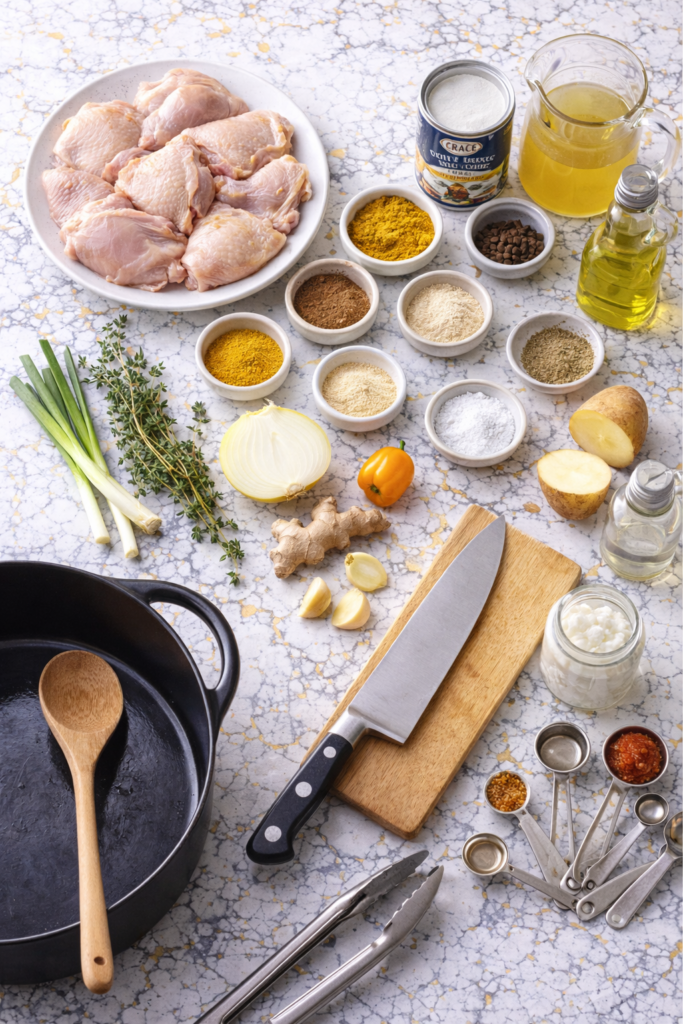
How to Make Coconut Curry Chicken
Step 1: Marinate the Chicken
In a bowl, combine the chicken pieces with turmeric, cumin, salt, and olive oil.
Toss to coat and let it sit for at least 10 minutes while you prep everything else.
Step 2: Build the Base
Heat coconut oil in your large skillet over medium-high heat.
Add the diced onion and cook for 5 to 6 minutes until it’s soft and just starting to turn golden.
Add the garlic and ginger. Stir and cook for another 60 seconds until fragrant.
Step 3: Toast the Curry Paste
Add the red curry paste directly to the pan.
Stir it into the onion mixture and let it cook for 60 to 90 seconds. You’ll smell it shift from raw to toasted. That’s exactly what you want.
Step 4: Add the Spices
Sprinkle in the garam masala, coriander, smoked paprika, and cayenne.
Stir everything together and cook for 30 seconds.
Step 5: Cook the Chicken
Add the marinated chicken to the pan in a single layer.
Let it sear for 2 to 3 minutes without stirring so it picks up some color, then stir and cook for another 2 minutes.
Step 6: Add the Sauce
Pour in the coconut milk and diced tomatoes.
Stir everything together, add the teaspoon of sugar, and bring to a gentle simmer.
Reduce the heat to medium-low and let it cook uncovered for 15 to 18 minutes, stirring occasionally, until the sauce has thickened and the chicken is fully cooked through.
Step 7: Taste and Finish
Taste the sauce. Adjust salt if needed.
Squeeze half a lime over the top, give it one final stir, and take it off the heat.
Serve over basmati rice, topped with fresh cilantro and lime wedges on the side.
Leftovers and Storage
Here’s the thing about this curry that makes it even more of a weeknight win.
Refrigerator: Store in an airtight container for up to 4 days. Reheat gently on the stovetop with a splash of water or coconut milk to loosen the sauce.
Freezer: This freezes beautifully. Let it cool completely, portion it into freezer-safe containers, and freeze for up to 3 months. Thaw overnight in the fridge before reheating.
Tip: Store the rice separately so it doesn’t absorb all the sauce while sitting in the fridge.
FAQ
Can I use chicken breasts instead of thighs? You can, but they’ll dry out faster. If you use breasts, cut them slightly larger and reduce the simmer time by about 5 minutes. Check for doneness early.
My curry is too thin. How do I fix it? Let it simmer uncovered for a few more minutes. The sauce will reduce and thicken naturally. You can also stir in a teaspoon of tomato paste to help.
My curry is too thick. What do I do? Add a splash of water or a little more coconut milk, stir, and let it warm through.
How spicy is this? Moderate. The cayenne gives it warmth but not overwhelming heat. If you’re sensitive to spice, start with 1/4 tsp and taste as you go. If you love heat, go up to a full teaspoon.
Can I use curry powder instead of red curry paste? Yes. Use 1.5 to 2 tablespoons of curry powder. The flavor profile will be slightly different (less bold, less bright) but it still works well.
Is this authentic Indian or Thai curry? This is a fusion-style recipe that borrows from both. It uses Thai red curry paste but incorporates Indian spices like garam masala and coriander. It’s not authentic to either cuisine specifically, but it’s genuinely delicious.
What if I can’t find red curry paste? Green curry paste works and gives a slightly fresher, more herbal flavor. Yellow curry paste gives a milder, sweeter result. Either one works well here.
Wrapping Up
If you make this once, you’re making it again. That’s just how it goes with coconut curry chicken.
It’s the kind of recipe that fits into a busy Tuesday as easily as it fits onto a dinner party table. It looks impressive, it tastes even better than it looks, and it honestly could not be simpler to pull off.
Go make it this week. And when you do, come back and drop a comment below. Tell me how it turned out, what you swapped, or any questions you ran into along the way.
I read every single one. 👇
AI Image Generator Prompt
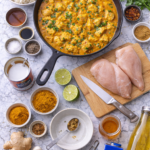
Flat lay, top-down shot on white marble counters with hints of gold veining, natural window lighting, shot with iPhone 15 Pro:
A styled flat lay featuring all ingredients for coconut curry chicken arranged beautifully on a white marble counter with subtle gold veining. Include: 1.5 lbs raw boneless skinless chicken thighs on a small white plate, a small bowl of turmeric, a small bowl of cumin, a small bowl of garam masala, a small bowl of ground coriander, a small bowl of smoked paprika, a small bowl of cayenne pepper, a small bowl of salt, one whole yellow onion halved to show interior, 5 whole garlic cloves, a knob of fresh ginger root, a tube or small container of red curry paste, one can of full-fat coconut milk, one can of diced tomatoes, a small bowl of sugar, a halved lime with lime wedges, a small bundle of fresh cilantro, a bottle of olive oil, a jar of coconut oil, a small bottle of cooked basmati rice in background. Tools also visible: a 12-inch stainless steel skillet, a wooden spoon, a sharp chef’s knife, a cutting board, a microplane grater, and a set of measuring spoons. Everything naturally spaced with a lifestyle editorial feel, slightly imperfect and lived-in, not overly staged. Warm golden-hour natural light from the left side.
jamaican curry chicken
11:36 AM
Orchestrated comprehensive blog post on Jamaican curry chicken
Orchestrated comprehensive blog post on Jamaican curry chicken
Here’s your full Jamaican curry chicken blog post:
The Jamaican Curry Chicken You’ll Be Making on Repeat
Most curry chicken recipes taste like they’re trying too hard.
Too many spices fighting each other. Sauce that’s more water than flavor. Chicken that’s technically cooked but somehow still boring.
Jamaican curry chicken is none of that.
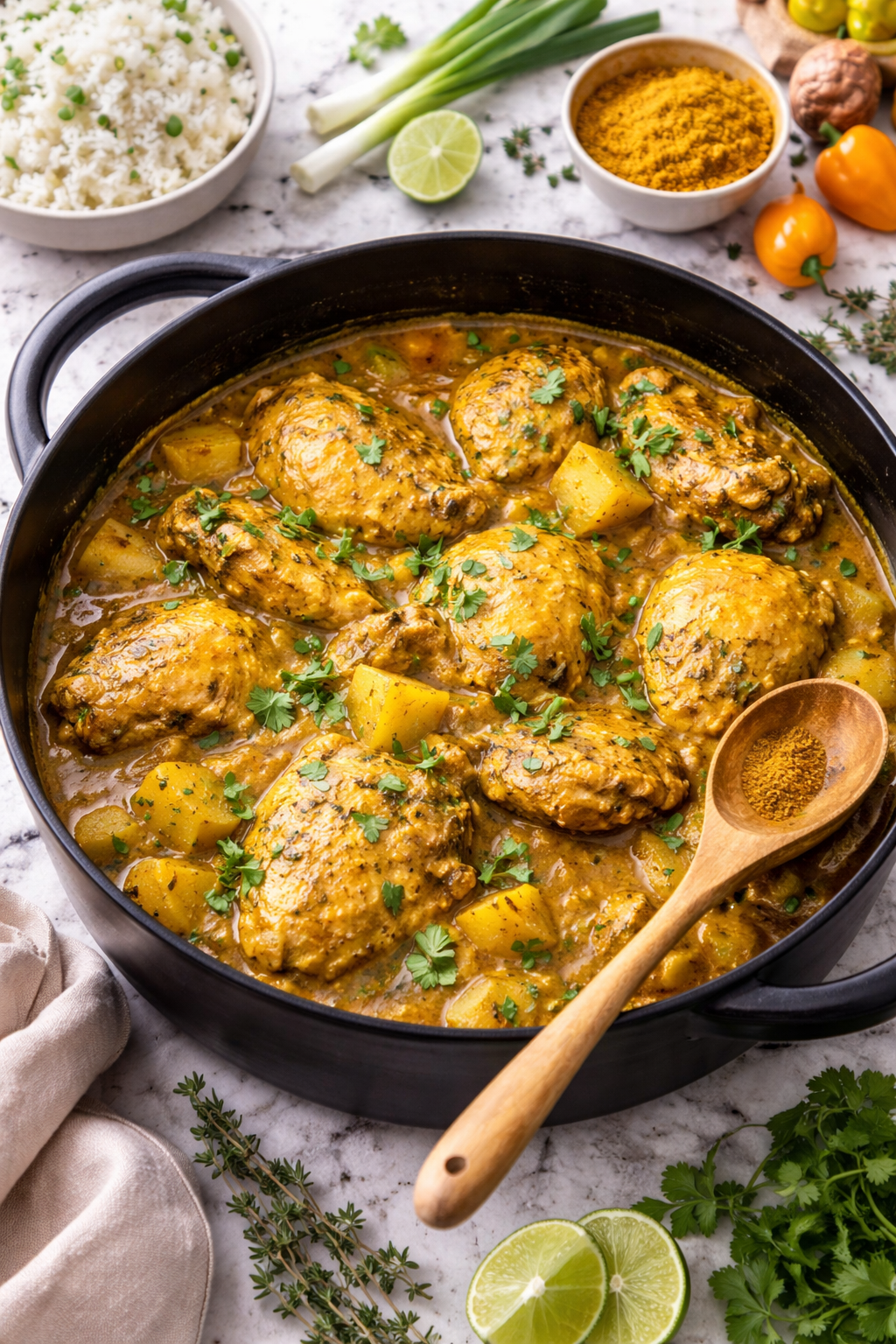
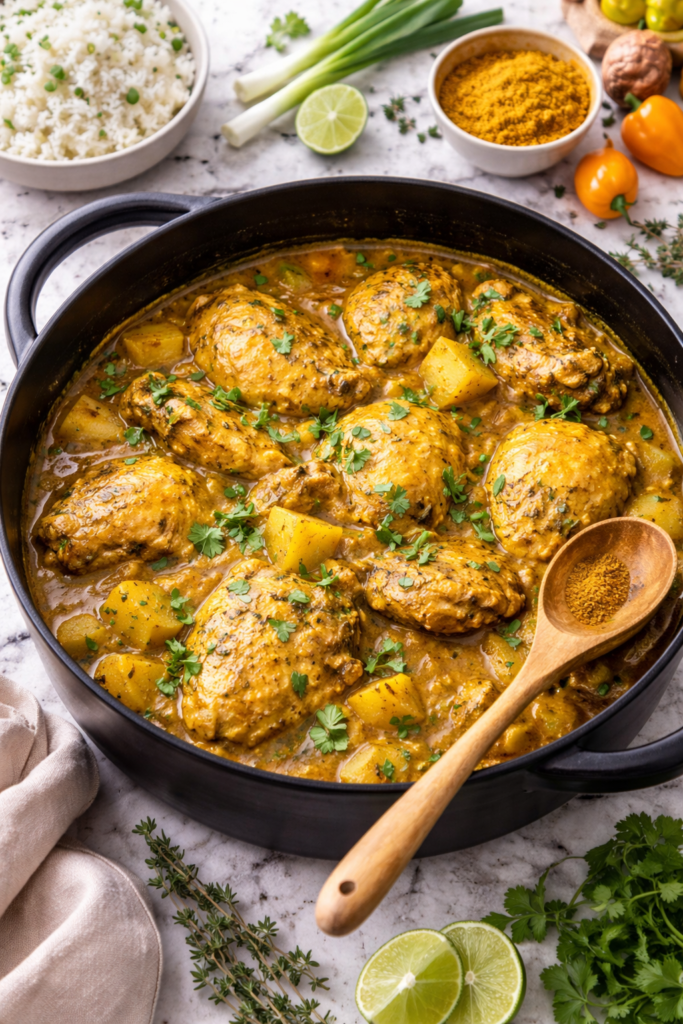
It’s bold, aromatic, has this deep golden color that looks like you spent all day in the kitchen, and it comes together in under an hour. The secret is in the technique, which we’ll get into, and a spice blend that does most of the heavy lifting for you.
Stay with me through the Pro Tips section. There’s one step in there that most people skip, and it’s the reason their curry tastes flat. You’ll want to know it.
What You’ll Need
For the Chicken Marinade:
- 2.5 lbs (1.1 kg) bone-in, skin-on chicken pieces (thighs and drumsticks work best)
- 2 tbsp Jamaican curry powder
- 1 tsp allspice (pimento)
- 1 tsp garlic powder
- 1 tsp onion powder
- 1/2 tsp black pepper
- 1/2 tsp salt
- 1 tbsp olive oil
For the Curry:
- 2 tbsp coconut oil
- 1 medium yellow onion, diced
- 5 garlic cloves, minced
- 1 tbsp fresh ginger, grated
- 3 sprigs fresh thyme
- 2 stalks green onion (scallion), roughly chopped
- 1 whole scotch bonnet pepper (left whole, do NOT cut it)
- 2 tbsp Jamaican curry powder (Grace or Chief brand are most authentic)
- 1 tsp ground allspice
- 1 medium potato, diced into 1-inch cubes
- 1 cup (240ml) coconut milk
- 1.5 cups (360ml) chicken broth
- Salt and black pepper to taste
- Fresh thyme and green onion to garnish
Tools You’ll Need
- Large heavy-bottomed pot or Dutch oven
- Sharp chef’s knife
- Cutting board
- Wooden spoon
- Measuring spoons and cups
- Microplane or grater (for ginger)
- Tongs (for searing the chicken)
- Ladle (for serving)
Pro Tips
These are the things that will take your curry from good to actually unforgettable.
1. Burn the curry powder first. This is the step most recipes don’t tell you about. Before you add any liquid or protein to the pot, you add your curry powder to the hot oil and let it toast for 60 to 90 seconds. In Jamaica, they call this “burning the curry.” It wakes up every single spice in that blend and creates a depth of flavor you simply cannot get any other way.
2. Use bone-in chicken, always. The bones release collagen as they cook, which makes the sauce richer and gives it a body you just can’t fake. Boneless chicken will cook faster but the sauce will taste thinner. Bone-in thighs and drumsticks are your best friends here.
3. Keep the scotch bonnet whole. Do not cut it. Do not pierce it. Just drop the whole pepper in and let it gently perfume the sauce. This gives you all the flavor of the scotch bonnet without the face-melting heat. If you want more heat, cut it. If you want less, skip it entirely. But whole is the sweet spot.
4. Marinate overnight if you can. Even 30 minutes helps, but overnight takes this to another level entirely. The curry powder soaks deep into the chicken and you’ll taste the difference immediately. If you’re making this for dinner, start the marinade in the morning.
5. Let it simmer low and slow. Don’t rush the simmer. Medium-low heat for 30 to 35 minutes is what allows the sauce to reduce, the flavors to concentrate, and the chicken to become fall-off-the-bone tender. High heat = tough chicken and a broken sauce.
Substitutions and Variations
| Swap This | For This |
|---|---|
| Scotch bonnet | Habanero (very similar), or skip for a mild version |
| Bone-in chicken | Boneless thighs (reduce cook time by 10 min) |
| Coconut milk | Full-fat canned coconut cream for a richer sauce |
| Potato | Carrots, chayote, or sweet potato |
| Chicken broth | Water (the flavor will be slightly lighter) |
| Jamaican curry powder | Regular curry powder + 1/4 tsp allspice as a backup |
Going vegetarian? Swap the chicken for 2 cans of chickpeas and diced eggplant. Skip the chicken broth and use vegetable broth. Reduce simmering time to 20 minutes.
Keto-friendly? Skip the potato and add extra cauliflower florets or zucchini in the last 10 minutes.
Make Ahead Tips
This curry is a meal prep dream. The flavor genuinely improves after 24 hours in the fridge as the spices settle into the sauce.
To prep ahead: Marinate the chicken up to 24 hours in advance, covered in the fridge.
To cook ahead: Make the full batch, cool completely, and store in an airtight container. It keeps for 4 days in the fridge and actually tastes even better on day 2.
For freezing: Cool completely, portion into freezer bags or containers, and freeze for up to 3 months. Thaw overnight in the fridge and reheat gently on the stovetop.
Nutritional Breakdown
Approximate values per serving (based on 4 servings, without rice):
| Nutrient | Per Serving |
|---|---|
| Calories | ~480 kcal |
| Protein | ~38g |
| Carbohydrates | ~16g |
| Fat | ~30g |
| Fiber | ~3g |
| Sodium | ~520mg |
These are estimates. Values shift based on brands, chicken size, and exact measurements.
Diet Notes:
- Gluten-free: Yes, as written (verify curry powder label)
- Dairy-free: Yes
- Paleo: Yes (skip the potato or swap for sweet potato)
- Whole30: Check your curry powder and coconut milk for compliant ingredients
What to Serve It With:
- White or brown rice (the classic)
- Roti or flatbread for scooping
- Steamed cabbage on the side
- Fried plantains for a full Jamaican spread
- Jamaican rice and peas (coconut milk + kidney beans + rice) for the full experience
How to Make Jamaican Curry Chicken
Step 1: Marinate the Chicken
Pat the chicken pieces dry with paper towels.
In a large bowl, combine the chicken with Jamaican curry powder, allspice, garlic powder, onion powder, black pepper, salt, and olive oil.
Toss everything together until the chicken is fully coated. Cover and refrigerate for at least 30 minutes, or overnight for best results.
Step 2: Burn the Curry
Heat coconut oil in your Dutch oven over medium heat.
Add 2 tablespoons of curry powder directly to the hot oil and stir constantly for 60 to 90 seconds. The curry will darken slightly and become incredibly fragrant.
This step is non-negotiable. Don’t skip it.
Step 3: Sear the Chicken
Add the marinated chicken pieces to the pot in a single layer.
Sear for 3 to 4 minutes per side until golden brown on the outside. Work in batches if needed so you don’t crowd the pot.
Remove the chicken and set aside. It doesn’t need to be cooked through yet.
Step 4: Build the Base
In the same pot, add the diced onion.
Cook over medium heat for 5 minutes until soft and translucent, scraping up any of the golden bits from the bottom of the pot.
Add the garlic and ginger. Stir and cook for another 60 seconds until fragrant.
Step 5: Add the Aromatics
Add the scallion, fresh thyme sprigs, and the whole scotch bonnet pepper.
Stir everything together and cook for 2 minutes.
Step 6: Simmer
Return the seared chicken to the pot.
Pour in the coconut milk and chicken broth. Add the remaining teaspoon of allspice and the diced potato.
Stir gently to combine, bring to a gentle boil, then immediately reduce to medium-low.
Let it simmer uncovered for 30 to 35 minutes, stirring occasionally, until the sauce has thickened and the chicken is cooked through and falling off the bone.
Step 7: Taste and Finish
Fish out the scotch bonnet pepper and the thyme sprigs.
Taste the sauce and adjust salt as needed.
Serve over rice and garnish with fresh thyme and sliced scallion.
Leftovers and Storage
Refrigerator: Store in an airtight container for up to 4 days. Reheat on the stovetop over low heat with a splash of water or broth to loosen the sauce.
Freezer: Let it cool completely, portion into freezer-safe bags or containers, and freeze for up to 3 months. Thaw overnight in the fridge before reheating.
Important: Store rice separately. Rice sitting in curry sauce overnight turns mushy and absorbs everything. Keep them separate and combine when you reheat.
Sauce getting too thick after storage? Add a splash of coconut milk or broth and stir over low heat until it loosens back up.
FAQ
What makes Jamaican curry different from Indian or Thai curry? The main difference is the spice blend and the technique. Jamaican curry powder typically includes allspice (pimento), which is native to Jamaica and gives it that distinctive warm, slightly sweet backbone. The “burning the curry” method, where you toast the curry powder in oil before adding anything else, is also a Jamaican-specific technique you won’t find in most other curry traditions.
What brand of Jamaican curry powder should I use? Grace and Chief are the two most common authentic Jamaican brands and are widely available at Caribbean grocery stores or online. If you can’t find either, use a standard Madras curry powder and add an extra 1/4 teaspoon of allspice to get closer to the flavor profile.
My sauce is too thin. How do I fix it? Remove the lid and let it simmer on medium heat for an extra 10 to 15 minutes. The sauce will reduce and thicken naturally. You can also mash one or two pieces of the potato against the side of the pot and stir it in to help thicken the sauce.
How spicy is this with the whole scotch bonnet? Surprisingly mild. Keeping the scotch bonnet whole and uncut means only the flavor infuses into the sauce, not the capsaicin from the seeds and membrane. Most people who don’t usually eat spicy food handle it just fine. That said, scotch bonnets can vary in heat level from pepper to pepper, so taste as you go.
Can I make this in a slow cooker? Yes. Burn the curry powder and sear the chicken on the stovetop first (don’t skip these steps), then transfer everything to the slow cooker. Cook on high for 3 to 4 hours or low for 6 to 8 hours. Remove the lid for the last 30 minutes if you want the sauce to thicken.
Can I use a whole chicken instead of pieces? Yes, just cut it into 8 pieces. Breasts will cook faster than thighs and drumsticks, so you can pull them out 10 minutes earlier and return them at the end just to warm through.
Do I really need coconut milk? Can I use regular milk? Coconut milk is part of the flavor and creaminess that makes this dish what it is. Regular dairy milk won’t work the same way and can curdle in the heat. If you’re out of coconut milk, increase the chicken broth and the curry will be less creamy but still very good.
Wrapping Up
Jamaican curry chicken is one of those recipes that sounds impressive, tastes even more impressive, and is honestly one of the easiest things you’ll ever make for a weeknight dinner.
Make it once and you’ll start keeping Jamaican curry powder permanently stocked in your pantry. That’s just what happens.
Try it this week and then come back and leave a comment below. Tell me if you kept the scotch bonnet whole, what you served it with, or any tweaks you made along the way.
I want to hear every detail. 👇