You know that feeling when you bite into something so good, you immediately want to share it with everyone you know?
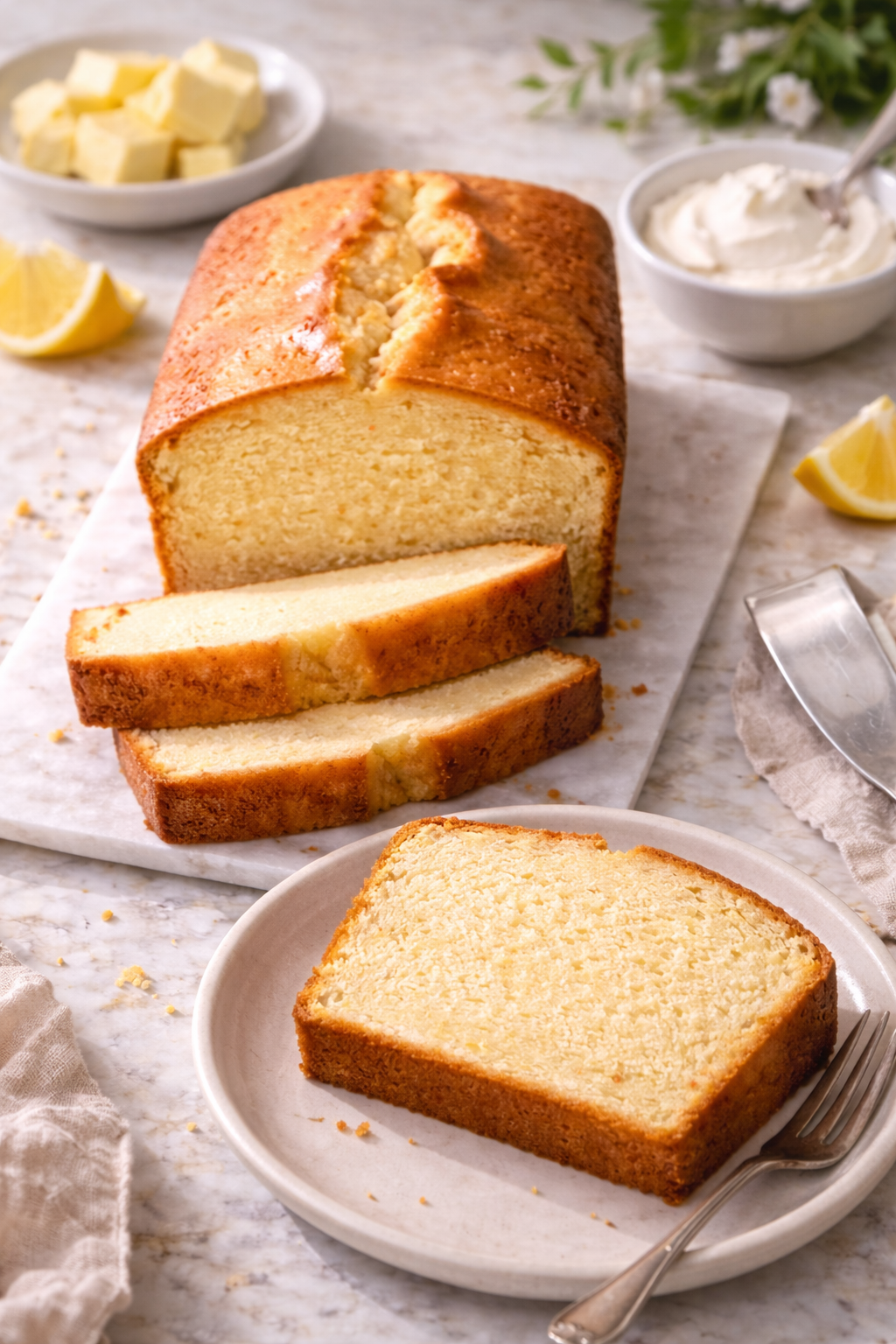
That’s this butter pound cake.
I’m talking about the kind of cake that makes people text you three days later asking for the recipe. The kind where you catch yourself sneaking back to the kitchen for “just one more slice” at midnight. The kind your grandma would’ve been proud of.
And here’s the thing about pound cake: it sounds fancy, but it’s actually one of the easiest cakes you’ll ever make.
No mixers required. No complicated techniques. Just good butter, a few pantry staples, and about an hour of your time.
I’ve made this cake probably 30 times now (not exaggerating), and it’s never let me down. Not when I brought it to a potluck. Not when I made it for my neighbor’s birthday. Not even that time I was half-asleep and accidentally used salted butter instead of unsalted.
It just works.
The texture is dense but tender. The flavor is rich without being heavy. And that golden crust? Pure perfection.
So if you’ve been intimidated by pound cake, or you’ve tried recipes that turned out dry and boring, this one’s for you.
Trust me on this.
What You’ll Need
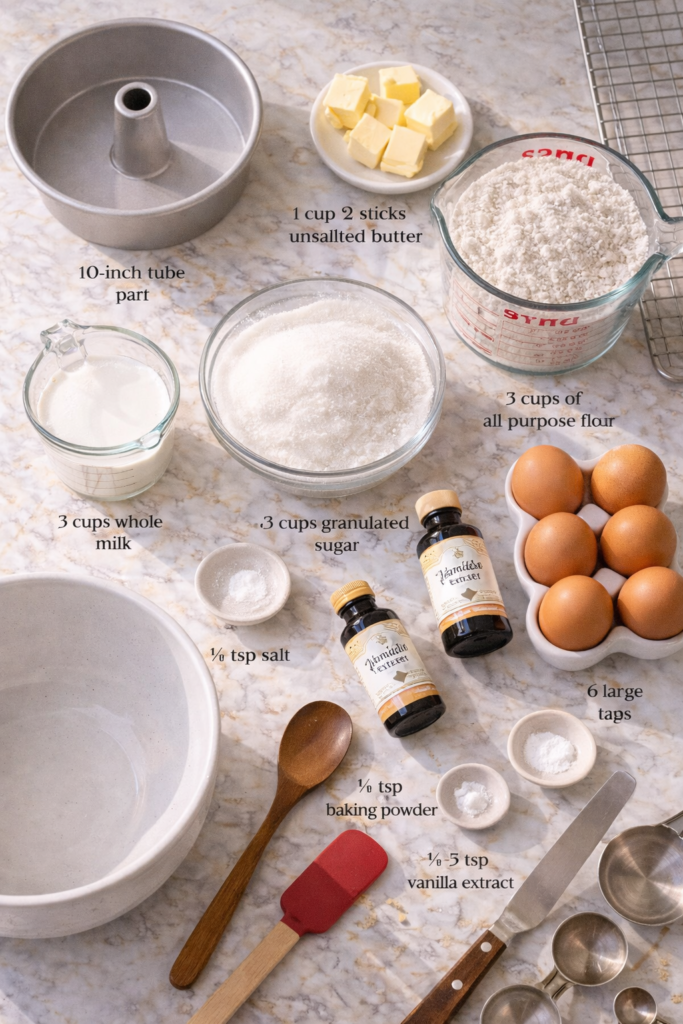
For the Cake:
- 1 cup (2 sticks) unsalted butter, room temperature
- 3 cups all-purpose flour
- 3 cups granulated sugar
- 6 large eggs, room temperature
- 1 cup whole milk, room temperature
- 1 teaspoon vanilla extract
- 1 teaspoon almond extract (optional, but adds amazing depth)
- ½ teaspoon salt
- ½ teaspoon baking powder
For the Glaze (Optional):
- 1 cup powdered sugar
- 2-3 tablespoons milk or cream
- ½ teaspoon vanilla extract
Tools You’ll Need
- 10-inch tube pan or bundt pan
- Large mixing bowl
- Whisk or wooden spoon
- Measuring cups and spoons
- Rubber spatula
- Cooling rack
- Toothpick or cake tester
Pro Tips
Room temperature is everything.
I can’t stress this enough. Cold eggs and butter won’t mix properly, and you’ll end up with a dense, uneven cake. Take everything out of the fridge at least an hour before you start baking.
Don’t skip the pan prep.
Butter every single crevice of your pan, then dust it with flour. I learned this the hard way when half my cake stuck to the pan and I had to serve it in “rustic” pieces at a dinner party.
The toothpick test is your friend.
Pound cake takes a while to bake, and ovens vary wildly. Start checking at 60 minutes, but don’t be surprised if it needs 75-80. You want the toothpick to come out clean or with just a few moist crumbs.
Let it cool completely before removing from the pan.
I know you’re excited. I know it smells amazing. But if you try to flip it out while it’s hot, it will fall apart. Give it at least 15-20 minutes in the pan, then another hour on the cooling rack.
Slice with a serrated knife.
This cake has a tight crumb, so a regular knife will smoosh it. Use a bread knife and a gentle sawing motion for clean, beautiful slices.
How to Make Butter Pound Cake
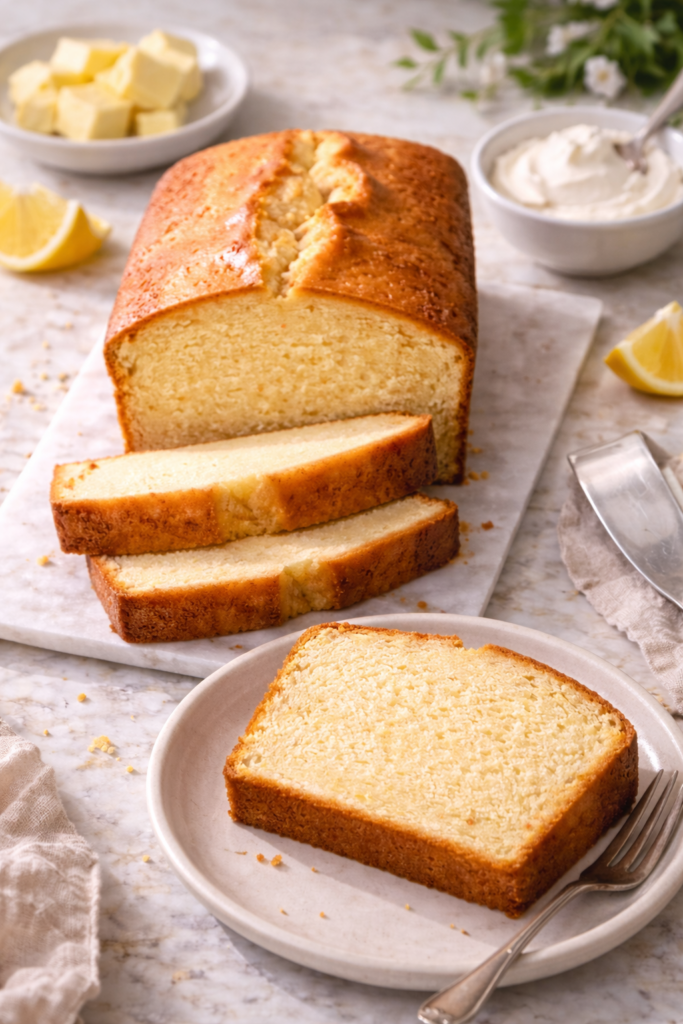
Step 1: Prep your pan and preheat your oven.
Set your oven to 325°F.
Yes, 325°F, not 350°F. Pound cake bakes low and slow.
Generously butter your tube pan or bundt pan. Get into all those grooves and corners. Then dust it with flour, tapping out the excess. Set it aside.
Step 2: Mix the dry ingredients.
In a medium bowl, whisk together the flour, salt, and baking powder.
That’s it. Set it aside.
Step 3: Cream the butter and sugar.
In a large bowl, beat the butter and sugar together until light and fluffy.
This takes about 3-4 minutes if you’re using a mixer, or 5-6 minutes by hand. Your arm will get a workout, but it’s worth it. The mixture should look pale and almost doubled in volume.
Step 4: Add the eggs one at a time.
Crack in one egg and mix until it’s fully incorporated before adding the next.
This prevents the batter from separating and keeps everything smooth and creamy.
Step 5: Alternate adding the dry ingredients and milk.
Start with about a third of the flour mixture. Mix until just combined.
Then add half the milk. Mix again.
Repeat this pattern, ending with the flour mixture.
Here’s the key: don’t overmix. As soon as you stop seeing streaks of flour, stop. Overmixing makes pound cake tough and dense.
Step 6: Add the extracts.
Stir in the vanilla and almond extract.
The almond extract is optional, but it adds this subtle, almost nutty flavor that makes people ask “what’s in this?” in the best way possible.
Step 7: Pour into the pan.
Transfer the batter to your prepared pan and smooth the top with a spatula.
Give the pan a gentle tap on the counter to release any air bubbles.
Step 8: Bake.
Pop it in the oven and set a timer for 60 minutes.
Don’t open the oven door before then. Pound cake is delicate while it’s baking, and a sudden temperature change can make it sink in the middle.
At 60 minutes, check it with a toothpick. If it comes out clean or with just a few crumbs, it’s done. If not, give it another 5-10 minutes and check again.
Step 9: Cool in the pan.
When it’s done, take it out of the oven and let it cool in the pan for 15-20 minutes.
Then carefully flip it onto a cooling rack and let it cool completely.
Step 10: Glaze (optional).
If you’re adding a glaze, whisk together the powdered sugar, milk, and vanilla until smooth.
Drizzle it over the cooled cake and let it set for about 10 minutes before slicing.
Substitutions and Variations
Butter: Salted butter works in a pinch. Just skip the added salt in the recipe.
Milk: You can use 2% milk or even buttermilk. Buttermilk makes it extra tender and adds a subtle tang.
Extracts: Not into almond? Use all vanilla, or try lemon extract for a citrus twist.
Gluten-free: I haven’t tested this personally, but readers have had success using a 1:1 gluten-free flour blend.
Chocolate version: Replace ½ cup of flour with cocoa powder for a chocolate pound cake.
Lemon pound cake: Add the zest of 2 lemons to the batter and use lemon extract instead of almond. Glaze with powdered sugar and lemon juice.
Cream cheese pound cake: Replace 4 tablespoons of butter with 4 ounces of cream cheese for an extra rich texture.
Make Ahead Tips
This cake actually gets better after a day or two.
The flavors meld together and the texture becomes even more tender.
You can bake it up to 3 days in advance. Just wrap it tightly in plastic wrap and store it at room temperature.
If you want to freeze it, wrap it in plastic wrap, then in aluminum foil. It’ll keep for up to 3 months. Thaw it overnight at room temperature before serving.
Leftovers and Storage
Store leftover pound cake in an airtight container at room temperature for up to 5 days.
Or wrap individual slices in plastic wrap and freeze them. They’re perfect for grabbing when you need a quick dessert or afternoon snack.
I like to toast slices in a toaster oven and serve them with butter and jam for breakfast. Or top them with fresh berries and whipped cream for an easy dessert.
Seriously, this cake is so versatile.
Additional Details
Nutritional Information (per slice, based on 16 slices):
- Calories: 320
- Fat: 12g
- Carbohydrates: 48g
- Protein: 5g
- Sugar: 32g
- Sodium: 120mg
Prep Time: 15 minutes
Bake Time: 60-80 minutes
Total Time: 1 hour 20 minutes
Servings: 16 slices
Pairing Suggestions:
This cake is perfect with afternoon tea or coffee. I love it with a strong black coffee in the morning or a cup of Earl Grey in the afternoon.
For dessert, serve it with fresh strawberries and whipped cream. Or make it extra decadent with a scoop of vanilla ice cream.
It also pairs beautifully with fruit compotes. Try it with blueberry, peach, or cherry compote.
Time-Saving Tips:
If you’re short on time, you can use a stand mixer to cut down on mixing time. Just be careful not to overmix.
You can also prep the dry ingredients the night before and store them in an airtight container.
And if you’re really in a rush, skip the glaze. This cake is delicious on its own.
FAQ
Why is my pound cake dry?
Usually this means it was overbaked. Every oven is different, so start checking at 60 minutes and go from there. Also make sure your ingredients are at room temperature, as cold ingredients can affect the texture.
Can I make this in a loaf pan instead?
Yes, but you’ll need to adjust the baking time. Two 9×5-inch loaf pans will work. Start checking them at 45 minutes.
Why did my cake sink in the middle?
This usually happens if you open the oven door too early or if there’s too much leavening. Make sure you’re using exactly ½ teaspoon of baking powder, not more.
Do I have to use both vanilla and almond extract?
Nope. The almond extract adds depth, but the cake is still amazing with just vanilla.
Can I add mix-ins like chocolate chips or nuts?
Absolutely. Fold in up to 1 cup of mix-ins after you add the extracts. Just toss them in a little flour first so they don’t sink to the bottom.
How do I know when it’s done?
A toothpick inserted into the center should come out clean or with just a few moist crumbs. The top should be golden brown and spring back when lightly pressed.
Why is it called pound cake?
Traditional pound cake was made with a pound each of butter, sugar, eggs, and flour. This recipe is a slightly lighter version, but it still has that classic dense, buttery texture.
Can I make cupcakes instead?
Yes! Fill cupcake liners about ⅔ full and bake at 325°F for 20-25 minutes.
Wrapping Up
If you’ve never made pound cake before, this is your sign to try it.
It’s simple, foolproof, and so much better than anything you’ll buy at the store.
Plus, there’s something really satisfying about pulling a beautiful golden cake out of the oven and knowing you made it from scratch.
So grab your butter, preheat that oven, and get baking.
And when you do, come back and let me know how it turned out. Did you add a glaze? Did you try any variations? Did you eat half the cake in one sitting? (No judgment here.)
Drop a comment below and share your experience. I love hearing from you guys, and your feedback helps other readers too.
Happy baking! 🍰