You think you know beef. Then you try braised beef cheeks, and suddenly every other cut feels like it was holding out on you.
Beef cheeks are one of those cuts that professional chefs have been quietly obsessing over for years. And once you make them at home, you’ll understand why.
They’re incredibly tender, fall-apart soft after a long, slow braise, and have this deep, rich, beefy flavor that a ribeye honestly can’t compete with. The collagen in the meat melts down as it cooks, giving the sauce this silky, glossy finish that feels almost too good to be true.
The secret? Time. That’s it.
This isn’t a 30-minute weeknight dinner. This is a “start it in the afternoon and let the oven do the work” kind of meal. And the payoff? Absolutely worth every minute.
What You’ll Need
For the Braise
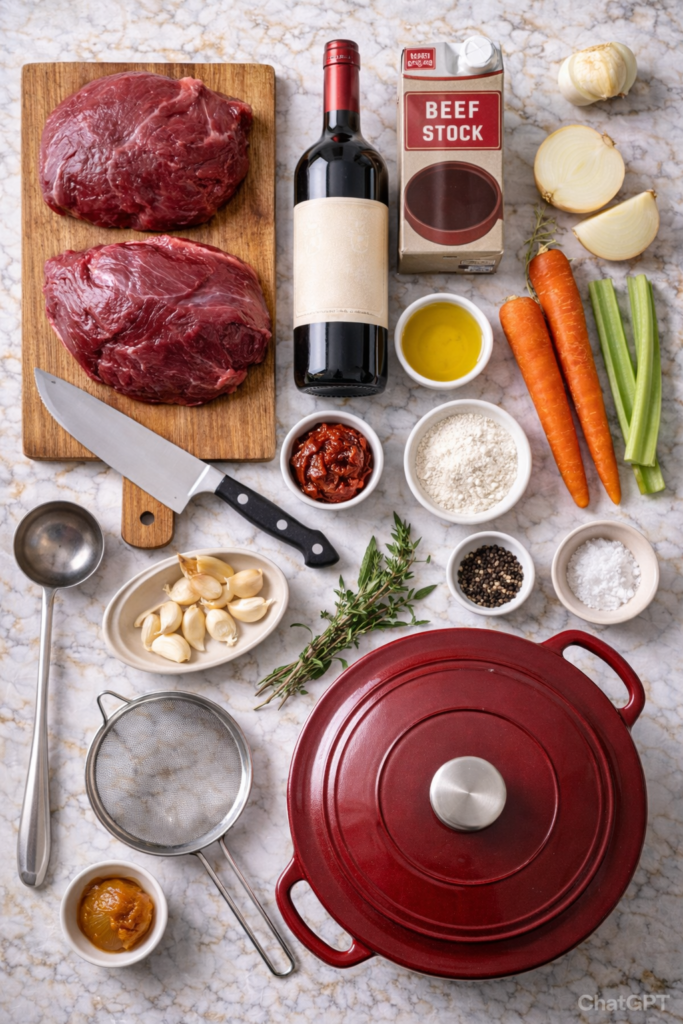
- 2 lbs (900g) beef cheeks, trimmed of excess fat and sinew
- 2 tbsp olive oil
- 1 large onion, roughly chopped
- 2 medium carrots, roughly chopped
- 3 stalks celery, roughly chopped
- 6 garlic cloves, smashed
- 2 tbsp tomato paste
- 1 bottle (750ml) red wine (a full-bodied one like Cabernet Sauvignon or Merlot)
- 2 cups (500ml) beef stock
- 2 sprigs fresh rosemary
- 4 sprigs fresh thyme
- 2 bay leaves
- 1 tsp black pepper, freshly cracked
- Salt, to taste
- 1 tbsp plain flour (for dusting)
For Serving (Optional but Highly Recommended)
- Creamy mashed potatoes or polenta
- Fresh parsley, chopped, for garnish
- Crusty bread, for soaking up every drop of that sauce
Tools You’ll Need
- Large heavy-bottomed pot or Dutch oven (at least 5-quart)
- Sharp chef’s knife
- Cutting board
- Tongs
- Wooden spoon
- Fine mesh strainer (for straining the sauce, optional but great)
- Ladle
- Measuring cups and spoons
Pro Tips
These are the things that make a real difference, especially on your first go.
- Don’t skip the sear. Browning the beef cheeks before braising is non-negotiable. That golden-brown crust builds an enormous amount of flavor. Get your pan screaming hot and don’t move the meat once it hits the oil. Let it sit and build that crust.
- Use a wine you’d actually drink. You don’t need to spend a lot, but cooking with wine you wouldn’t want to sip will absolutely show in the final dish. A $12 bottle works perfectly. A cheap cooking wine doesn’t.
- Low and slow is the only way. Beef cheeks are a tough, working muscle. Rush the cooking time and they’ll be chewy and disappointing. Give them 3 to 3.5 hours at 325°F (160°C) and they’ll be melt-in-your-mouth soft. Patience here is everything.
- Make it a day ahead. Seriously. Braised dishes taste even better the next day once the flavors have had time to develop overnight in the fridge. It also gives you a chance to skim any solidified fat off the top for a cleaner sauce.
- Reduce the sauce. After the cheeks are cooked, strain the braising liquid and simmer it down until it coats the back of a spoon. This concentrates the flavor and gives you a restaurant-quality sauce without much effort.
How to Make Braised Beef Cheeks
Step 1: Prep the Beef
Pat the beef cheeks dry with paper towels. Season generously with salt and pepper on all sides, then dust lightly with flour and shake off any excess.
This helps create a better crust when searing and slightly thickens the sauce later.
Step 2: Sear the Beef
Heat the olive oil in your Dutch oven over high heat.
Once it’s hot and shimmering, add the beef cheeks in a single layer (don’t crowd them, work in batches if needed). Sear for 3-4 minutes per side until deeply browned on all sides. This step takes about 10-12 minutes total.
Remove the beef cheeks and set aside. Don’t clean the pot.
Step 3: Cook the Vegetables
Reduce the heat to medium.
Add the chopped onion, carrots, and celery to the same pot. Cook for about 6-8 minutes, stirring occasionally, until softened and starting to pick up some color from the beef drippings.
Add the smashed garlic cloves and cook for another 2 minutes until fragrant.
Step 4: Add the Tomato Paste
Push the vegetables to the side and add the tomato paste directly to the center of the pot.
Let it cook for 1-2 minutes, stirring it into the vegetables. You want it to slightly caramelize and deepen in color. This is a quick step that adds a noticeable depth to the finished sauce.
Step 5: Deglaze With Wine
Pour in the full bottle of red wine.
Use your wooden spoon to scrape up all the browned bits from the bottom of the pot. Those bits are pure flavor. Let the wine come to a boil and cook for 5 minutes to cook off the raw alcohol.
Step 6: Build the Braise
Add the beef stock, rosemary, thyme, and bay leaves.
Nestle the seared beef cheeks back into the pot. The liquid should come up about two-thirds of the way up the meat. If it doesn’t, add a little more stock or water.
Bring everything to a gentle boil.
Step 7: Braise Low and Slow
Preheat your oven to 325°F (160°C).
Place the lid on the pot and transfer to the oven. Let it braise for 3 to 3.5 hours.
At the 2.5 hour mark, check the beef. It should be very tender and starting to fall apart when poked with a fork. If it still has a bit of resistance, give it another 30-45 minutes.
Step 8: Finish the Sauce
Carefully remove the beef cheeks and set them aside on a plate, covered loosely with foil.
Strain the braising liquid through a fine mesh strainer into a separate saucepan, pressing on the vegetables to extract all the juices. Discard the solids.
Bring the strained sauce to a boil over medium-high heat and let it reduce for 10-15 minutes until it thickens slightly and coats a spoon. Taste and adjust seasoning with salt and pepper.
Step 9: Serve
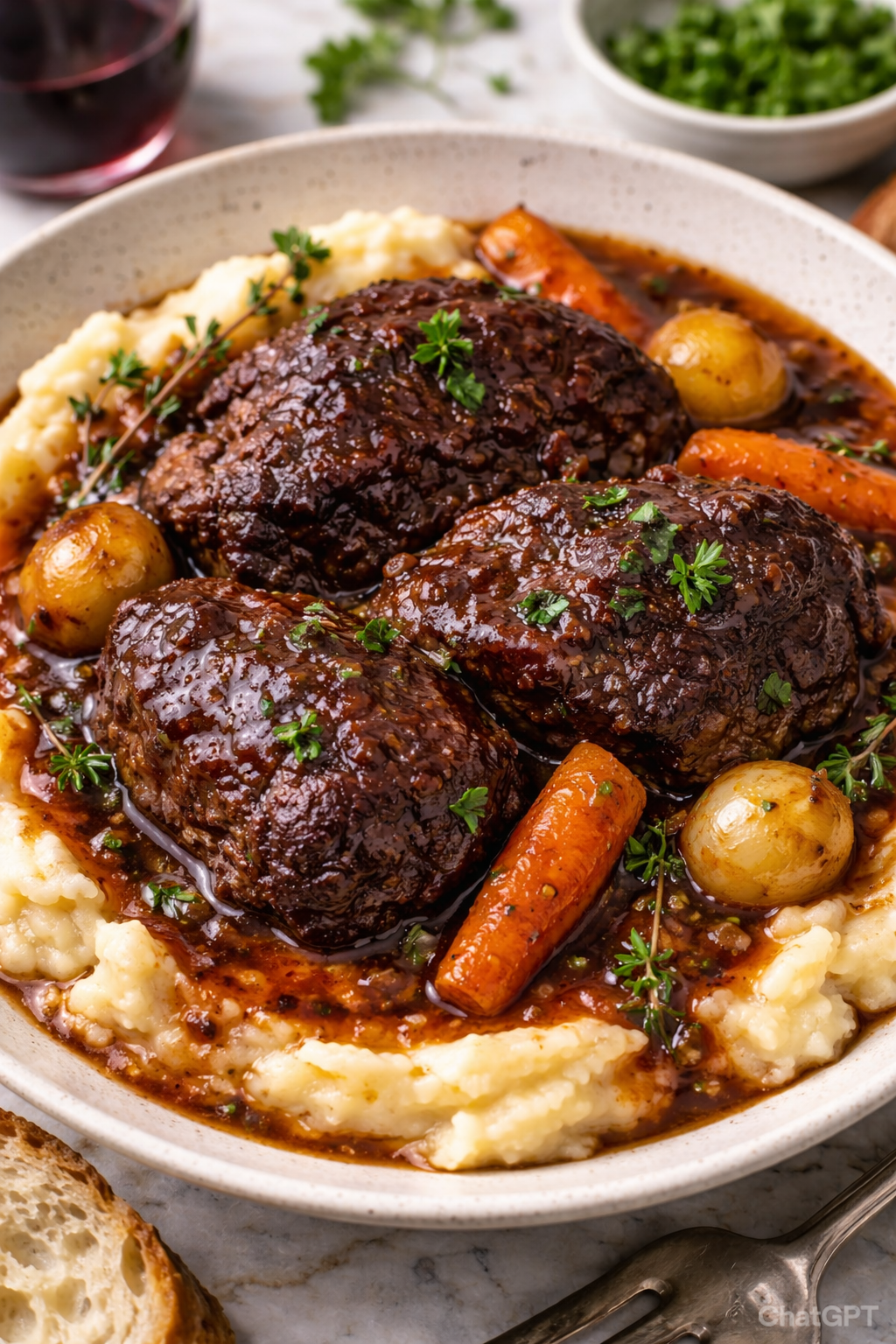
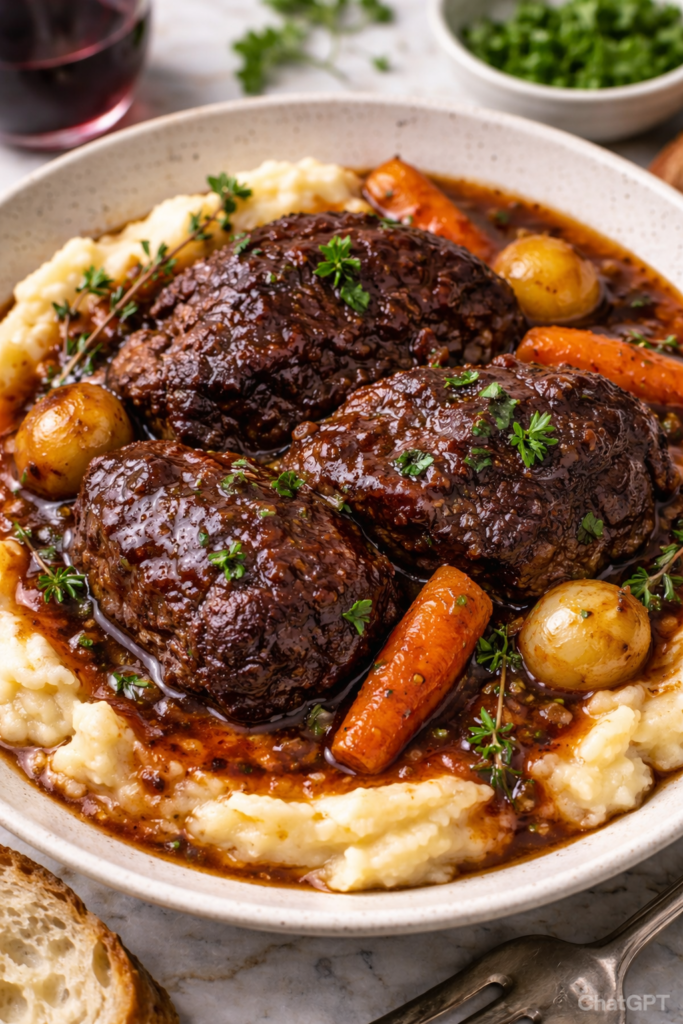
Place the beef cheeks on a bed of creamy mashed potatoes or polenta.
Spoon that gorgeous sauce generously over the top and finish with a little fresh parsley. Have crusty bread nearby. Trust me on this.
Substitutions and Variations
- No beef cheeks? Short ribs or oxtail work beautifully with this exact same method. The cooking time may vary slightly, but the technique is identical.
- Non-alcoholic version: Replace the wine with an equal amount of beef stock plus 2 tbsp of red wine vinegar and 1 tbsp Worcestershire sauce. It won’t be exactly the same, but it still produces a really good braise.
- Different aromatics: Add a strip of orange peel, a cinnamon stick, or a star anise to the braise for a slightly more complex, warm flavor profile. These small additions make a big difference.
- Gluten-free: Skip the flour dusting entirely. The sauce will still reduce and thicken naturally.
Make Ahead Tips
Braised beef cheeks are a make-ahead dream.
Make the entire dish up to 2 days in advance and store it in the fridge with the beef sitting in the sauce. Reheat gently on the stovetop over low heat, adding a splash of stock if needed.
Freezes well for up to 3 months. Thaw overnight in the fridge and reheat slowly.
Nutritional Information (Per Serving, Approximate)
| Nutrient | Amount |
|---|---|
| Calories | ~520 kcal |
| Protein | ~48g |
| Fat | ~22g |
| Carbohydrates | ~10g |
| Sodium | ~680mg |
Note: Values vary depending on trimming and sauce reduction. Does not include serving sides like mashed potatoes.
Diet Notes
- Dairy-free: The braise itself contains no dairy. Just pair with dairy-free mashed potatoes or polenta made with plant-based butter.
- Gluten-free: Skip the flour dusting step. The braise is naturally gluten-free otherwise.
- Lower calorie: Skim the fat from the sauce before reducing, and pair with cauliflower mash instead of regular potatoes.
Meal Pairing Suggestions
Beef cheeks are rich, so you want sides that balance that intensity.
- Creamy mashed potatoes are the classic for good reason. They soak up the sauce perfectly.
- Soft polenta is another great option, especially if you’re going for a slightly more Italian-inspired feel.
- Roasted root vegetables (parsnips, carrots, beets) add earthiness without competing with the beef.
- A simple green salad dressed with a sharp vinaigrette cuts right through the richness and resets your palate between bites.
- Drink pairing: A glass of the same red wine you used for cooking is a natural choice. Cabernet Sauvignon, Merlot, or Malbec all work really well.
Leftovers and Storage
| Storage Method | Duration |
|---|---|
| Refrigerator (airtight container) | Up to 4 days |
| Freezer (with sauce) | Up to 3 months |
Reheating tip: Always reheat gently over low heat with a splash of beef stock. High heat will dry out the meat and break the sauce. Slow and steady keeps them just as tender as day one.
Leftover ideas: Shred the leftover beef and use it in tacos, over pasta, stuffed into a sandwich with a swipe of horseradish cream, or as a filling for a savory pie. The braising liquid is liquid gold on pasta, by the way.
FAQ
Can I make this in a slow cooker? Yes. Sear the beef and cook the vegetables on the stovetop first (don’t skip this), then transfer everything to the slow cooker. Cook on low for 8-10 hours or high for 5-6 hours.
What cut of beef is a beef cheek? It’s literally the cheek muscle of a cow. Because of how much cows chew, this muscle gets a serious workout, which means it’s packed with connective tissue and collagen. That collagen breaks down during a long braise and creates an incredibly silky, tender texture that leaner cuts simply can’t replicate.
My grocery store doesn’t carry beef cheeks. Where do I find them? Ask your butcher directly. They can often order them for you if they’re not on the shelf. Specialty butchers, farmers markets, and some Asian grocery stores also tend to carry them regularly.
Can I use white wine instead of red? You can, but it will produce a lighter, less intense sauce. Red wine gives the braise its deep, rich color and bold flavor profile. For this particular recipe, red wine is the better choice.
The sauce seems too thin. What do I do? Just keep reducing it. Simmer uncovered over medium heat and it will thicken up. If you need it faster, mix 1 tsp of cornstarch with 1 tbsp cold water and stir it into the simmering sauce.
Can I skip the wine entirely? You can replace it with more beef stock, but the complexity won’t be the same. The wine adds acidity and depth that’s hard to replicate. Try the non-alcoholic substitution mentioned above for a closer result.
Wrapping Up
If you’ve been looking for a dish that feels genuinely special without requiring a culinary degree, this is it.
Braised beef cheeks check every box. They’re stunning to serve, genuinely easy once you understand the process, and they taste like something that took far more effort than it actually did. Your guests will be impressed. You’ll feel quietly smug about it, and that’s completely fair.
Make it for a dinner party. Make it for a cozy Sunday with people you love. Or honestly, just make it for yourself and enjoy every single bite.
Once you try them, you’ll wonder why beef cheeks aren’t in your regular rotation. And then you’ll add them permanently.
Give this recipe a try and let us know in the comments below how it turned out! Had any fun variations? Swapped something out? We love hearing from you.