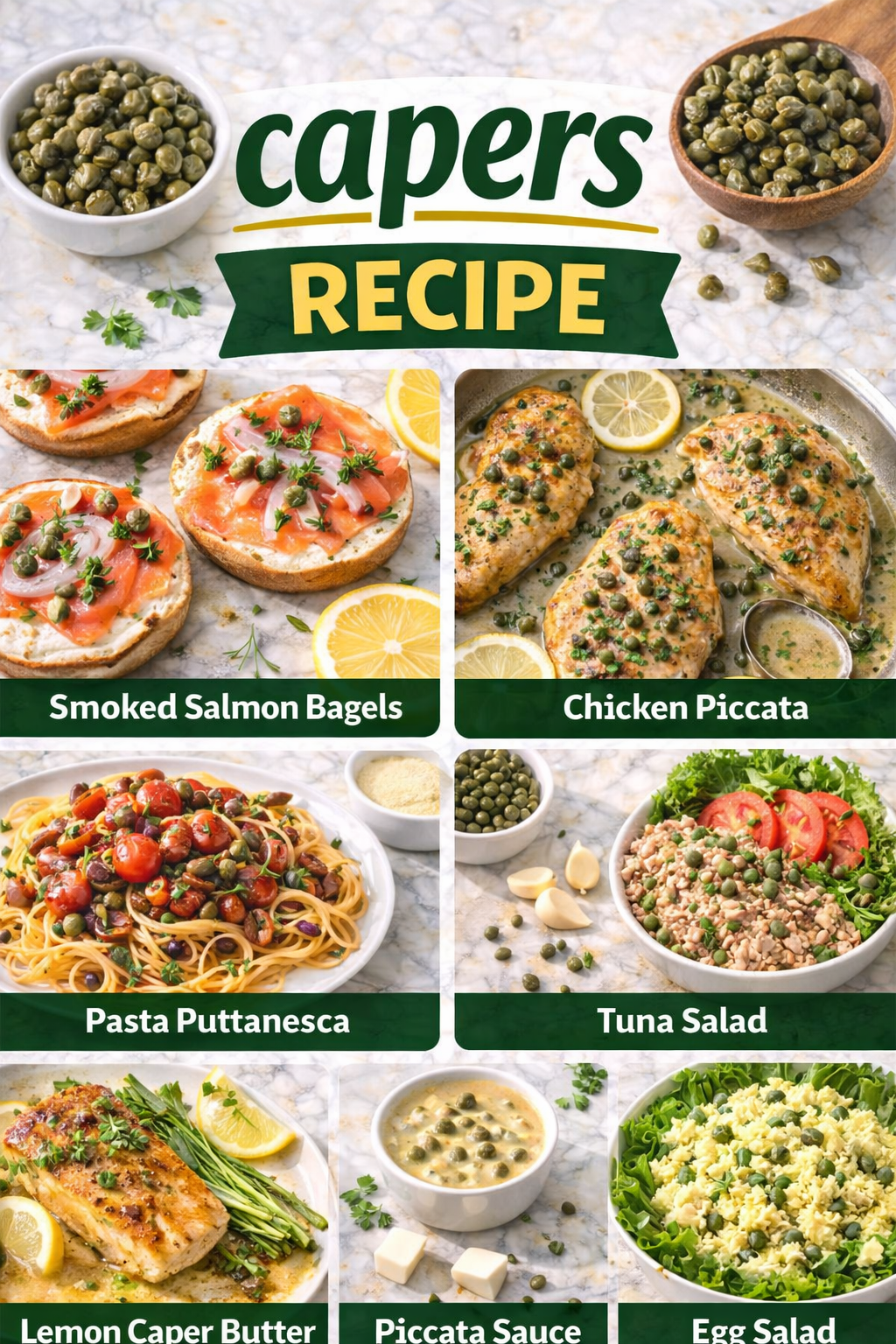
You’ve walked past that little jar of capers at the grocery store about fifty times.
Maybe you picked it up once, squinted at it, put it back down.
Here’s the thing: capers are one of those ingredients that seems intimidating until you actually use one. And once you do? You’ll start putting them on everything. That’s not an exaggeration.
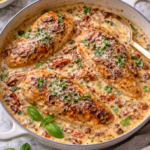
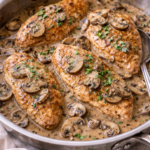
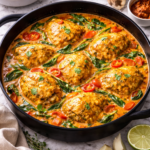
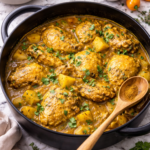
This chicken piccata is the recipe that converts people. Tangy, buttery, bright lemon sauce with little pops of salty flavor from the capers, all poured over perfectly pan-seared chicken.
It takes about 30 minutes. One pan. And it tastes like something you’d order at a nice Italian restaurant.
Let’s get into it.
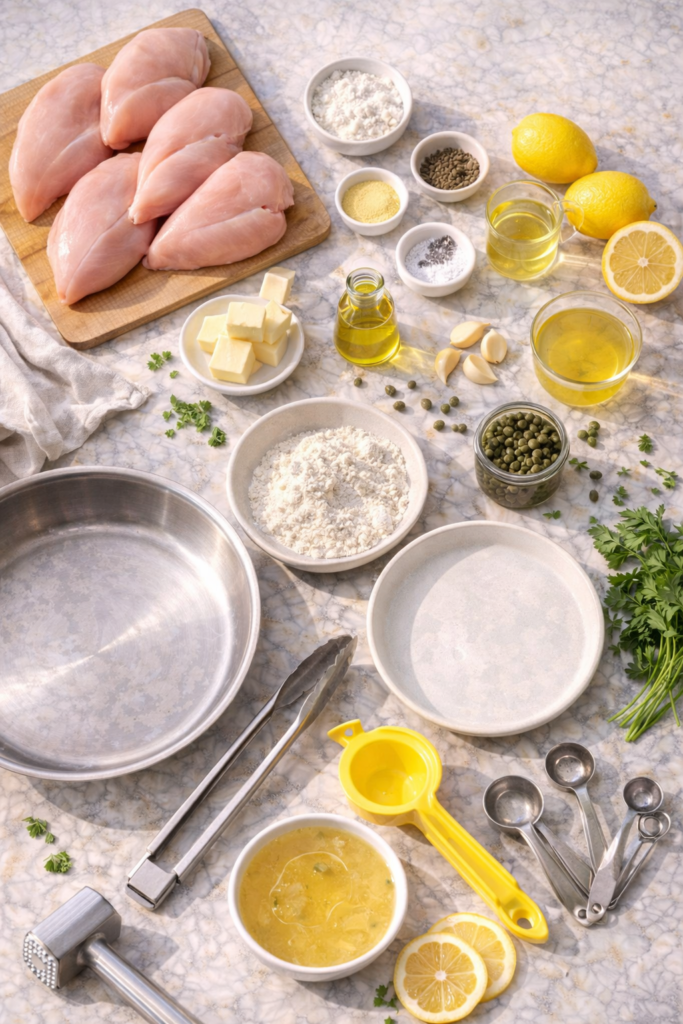
What You’ll Need
For the Chicken:
- 4 boneless, skinless chicken breasts (about 2 lbs)
- 1/2 cup all-purpose flour
- 1 tsp salt
- 1/2 tsp black pepper
- 1/2 tsp garlic powder
- 2 tbsp olive oil
- 2 tbsp unsalted butter
For the Piccata Sauce:
- 2 tbsp unsalted butter
- 4 garlic cloves, minced
- 1/2 cup dry white wine (Pinot Grigio or Sauvignon Blanc works great)
- 1/2 cup fresh lemon juice (roughly 3 lemons)
- 1/2 cup low-sodium chicken broth
- 3 tbsp capers, drained and rinsed
- 2 tbsp fresh flat-leaf parsley, roughly chopped
- Lemon slices for serving
Tools You’ll Need
- Large skillet or wide sauté pan (12-inch is ideal)
- Meat mallet or rolling pin
- 2 shallow bowls or plates for dredging
- Tongs
- Sharp knife and cutting board
- Citrus juicer
- Measuring cups and spoons
- Plastic wrap or a zip-lock bag (for pounding the chicken)
Pro Tips
These are the things I wish someone had told me the first time I made this.
1. Pound the chicken thin. Seriously, don’t skip this. Aim for about 1/2 inch thickness. It cooks faster and more evenly, and you get that beautiful golden crust without the inside staying raw. A rolling pin works if you don’t have a mallet.
2. Don’t crowd the pan. Cook the chicken in batches if needed. If you pile it all in at once, it steams instead of sears. No one wants steamed chicken.
3. Use fresh lemon juice. The bottled stuff tastes flat. Fresh lemon juice is sharp and bright and it’s the whole point of this dish. You’ve already bought the lemons, just squeeze them.
4. Rinse your capers. They’re packed in brine, which can make the sauce too salty. A quick rinse under cold water keeps the flavor without the salt overload.
5. Don’t skip the wine. It deglazes all those brown bits from the bottom of the pan (that’s where all the flavor lives). If you prefer not to cook with wine, chicken broth works, but the depth won’t be quite the same.
How to Make Chicken Piccata
Step 1: Flatten the Chicken
Place each chicken breast between two sheets of plastic wrap.
Pound them to about 1/2 inch thickness using a meat mallet or rolling pin.
This step is oddly satisfying. Take your time with it.
Step 2: Season and Dredge
Mix together the flour, salt, pepper, and garlic powder in a shallow bowl.
Pat the chicken dry with paper towels first (this helps the flour stick and the crust get crispy).
Dredge each breast through the flour mixture, coating both sides. Shake off any excess.
Step 3: Sear the Chicken
Heat 2 tbsp olive oil and 2 tbsp butter in your skillet over medium-high heat.
Once the butter is melted and the pan is hot, add the chicken.
Cook for 3-4 minutes per side until golden brown. Don’t move it around, just let it sit and do its thing.
Transfer to a plate and cover loosely with foil to keep warm.
Step 4: Build the Sauce
In the same pan (don’t wipe it out), reduce heat to medium.
Add the remaining 2 tbsp butter and minced garlic. Cook for about 60 seconds until fragrant.
Pour in the white wine and scrape up any brown bits from the bottom of the pan. Let it reduce for 2 minutes.
Add the chicken broth and lemon juice. Stir and let it simmer for 3-4 minutes until slightly thickened.
Stir in the capers.
Step 5: Finish and Serve
Return the chicken to the pan. Spoon the sauce over each piece.
Let it simmer together for 2 more minutes so the chicken soaks up some of that flavor.
Sprinkle with fresh parsley. Add lemon slices on top.
Serve immediately.
Substitutions and Variations
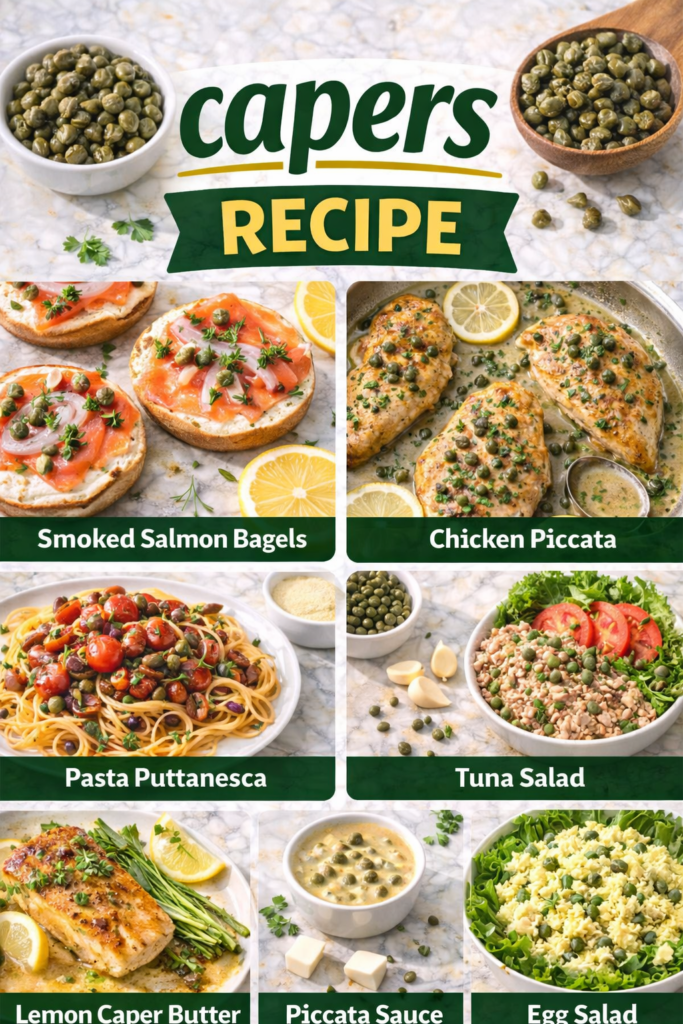
This recipe is pretty flexible once you know the basics.
| Swap | Use Instead |
|---|---|
| Chicken breasts | Chicken thighs (boneless, skinless) |
| White wine | Extra chicken broth + 1 tsp white wine vinegar |
| All-purpose flour | Gluten-free 1:1 flour blend |
| Capers | Chopped green olives (different, but works) |
| Fresh parsley | Fresh basil or chives |
| Butter | Dairy-free butter for a lactose-free version |
Want to make it vegetarian? Swap the chicken for thick slices of cauliflower steak or pan-fried tofu. The sauce is the star anyway.
Make Ahead Tips
If you’re planning this for a dinner party or a busy weeknight:
- Pound and season the chicken up to 24 hours ahead. Store in the fridge, covered.
- Sear the chicken a few hours before and reheat in the sauce right before serving.
- The sauce can be made separately and stored in the fridge for up to 3 days. Just reheat gently and add a splash of broth if it thickens too much.
Meal Pairing Suggestions
Chicken piccata is rich and bright at the same time, so you want sides that play off that.
- Angel hair pasta or linguine tossed in a little olive oil and garlic
- Creamy mashed potatoes to soak up that sauce
- Steamed asparagus or broccolini for something green and simple
- Crusty bread because that sauce deserves to be mopped up
For wine, you’re already cooking with white wine so pour yourself a glass of the same. A crisp Pinot Grigio or Sauvignon Blanc pairs really well.
Nutritional Breakdown (Per Serving, Approximate)
| Nutrient | Amount |
|---|---|
| Calories | ~380 kcal |
| Protein | 42g |
| Carbohydrates | 12g |
| Fat | 18g |
| Sodium | 620mg |
| Fiber | 0.5g |
These numbers are estimates based on standard ingredients. Actual values will vary.
Leftovers and Storage
Good news: this reheats really well.
Fridge: Store leftovers in an airtight container for up to 3 days. Keep the chicken and sauce together so the chicken stays moist.
Freezer: You can freeze the cooked chicken with the sauce for up to 2 months. Let it thaw overnight in the fridge before reheating.
To reheat: Warm gently in a skillet over low heat with a splash of chicken broth to loosen the sauce. Avoid the microwave if you can, it dries the chicken out.
FAQ
What exactly are capers? Capers are the unripened flower buds of a Mediterranean plant called Capparis spinosa. They’re pickled or salt-cured and have this sharp, briny, slightly floral flavor. Fun fact: the larger ones are called caper berries and are sold on the stem. 🌿
Can I make this without alcohol? Yes. Replace the white wine with an equal amount of chicken broth plus a splash of white wine vinegar (about 1 tsp). You’ll get a similar acidity without the wine.
My sauce isn’t thickening. What do I do? Let it simmer a little longer on medium heat. If it’s still too thin, mix 1 tsp cornstarch with 1 tbsp cold water and stir it in. It’ll thicken up quickly.
Is chicken piccata actually Italian? It is, technically. “Piccata” is an Italian word meaning “larded” – referring to a cooking method for thin slices of meat with a lemon-butter sauce. The version most people know today is an Italian-American adaptation.
Can I use salted capers instead of brined capers? Yes, but rinse them really well. Soak them in cold water for about 10 minutes to remove most of the salt before using.
Can I double the recipe? Absolutely. Just cook the chicken in batches and use a larger pan or make the sauce in two rounds. Don’t try to cram everything into one small skillet.
Wrapping Up
If capers have been sitting on the edge of your cooking radar for a while, this is your sign to finally bring them into the mix.
Chicken piccata is one of those recipes that sounds fancy but truly isn’t. It’s weeknight food dressed up a little. And once you nail it, it’ll go into regular rotation without you even thinking about it.
Make it this week. Then come back here and tell me what you thought – especially if you tried any of the substitutions. I love hearing how you made it your own. Drop your experience (or any questions) in the comments below!