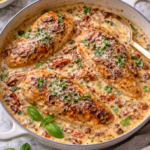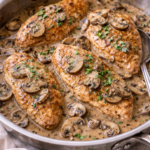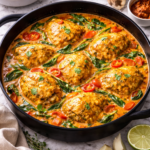
You know that dish that makes people ask, “Wait, you made this yourself?”
Chicken piccata is that dish.
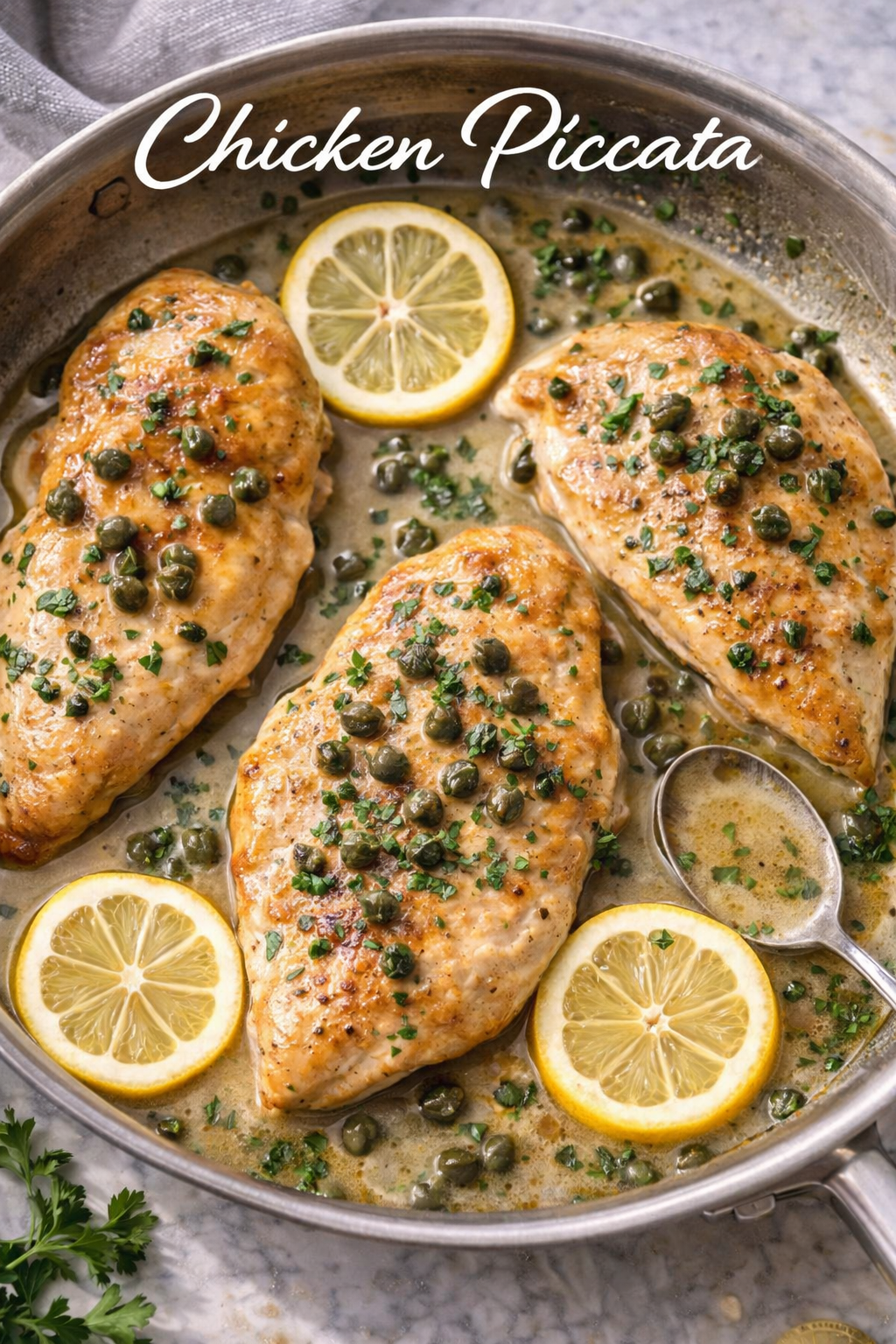
It’s pan-seared chicken in a buttery lemon-caper sauce that comes together in about 30 minutes. And once you taste that sauce — bright, tangy, and rich all at once — you’ll understand why this Italian classic has been on menus for decades.
The sauce alone is worth making this for. Seriously.
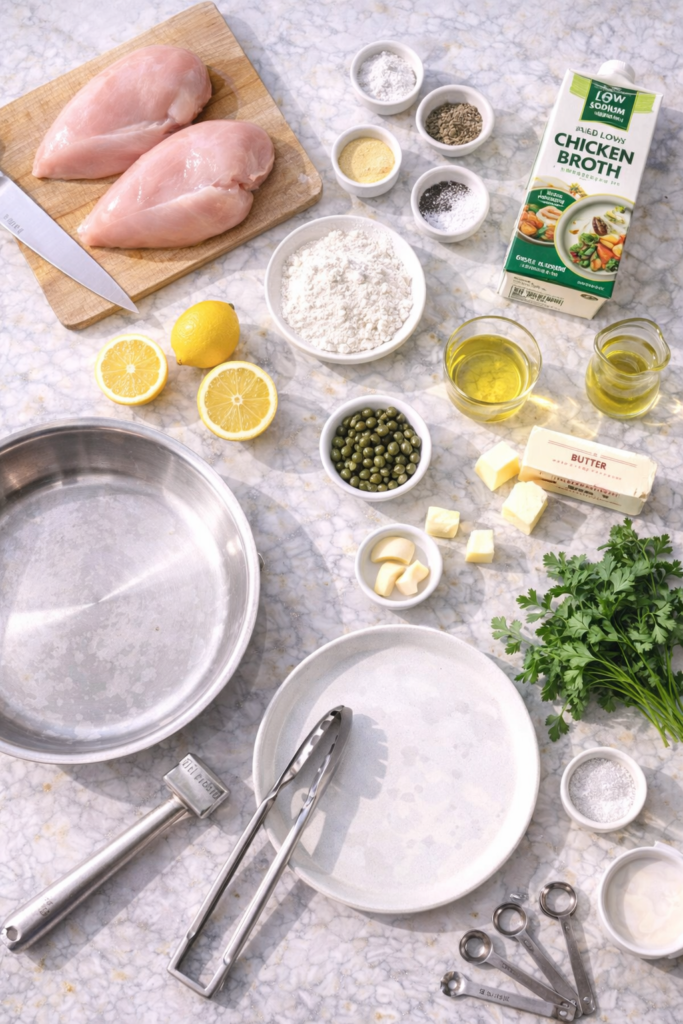
What You’ll Need
For the Chicken:
- 2 large boneless, skinless chicken breasts (about 1.5 lbs total)
- ½ cup all-purpose flour
- 1 tsp salt
- ½ tsp black pepper
- ½ tsp garlic powder
- 3 tbsp olive oil
- 2 tbsp unsalted butter
For the Piccata Sauce:
- 3 garlic cloves, minced
- ½ cup dry white wine (Pinot Grigio or Sauvignon Blanc work great)
- ½ cup low-sodium chicken broth
- 3 tbsp fresh lemon juice (about 1 large lemon)
- 2 tbsp capers, drained and rinsed
- 3 tbsp unsalted butter, cold and cubed
- 2 tbsp fresh flat-leaf parsley, roughly chopped
- Lemon slices for serving
Tools You’ll Need
- Large skillet or stainless steel pan (12-inch recommended)
- Meat mallet or rolling pin
- Shallow dish for dredging
- Tongs
- Microplane or zester (optional, for extra lemon zest)
- Sharp knife + cutting board
- Measuring cups and spoons
Pro Tips
These are the things I wish someone had told me the first time I made this.
- Pound the chicken thin. This is non-negotiable. You want each piece about ¼ inch thick so it cooks evenly and fast. Thick chicken = uneven cooking = dry edges. Not ideal.
- Use a stainless steel pan over non-stick. You want those golden bits on the bottom of the pan (the fond) because that’s where the flavor for your sauce lives. Non-stick won’t give you that.
- Cold butter goes in last. Adding cold, cubed butter at the very end (off the heat) is what makes the sauce silky and glossy instead of greasy. Don’t skip this step.
- Don’t skip the wine. It deglazes the pan and adds a depth that chicken broth alone just can’t replicate. If you truly can’t use wine, see the substitutions below, but the wine version is just better.
- Let the chicken rest. Even just 3 minutes after cooking makes a difference in how juicy each bite is.
Substitutions and Variations
No white wine? Sub it with extra chicken broth and a small splash of white wine vinegar (about 1 tsp) to mimic that acidity.
Gluten-free? Swap the all-purpose flour for a 1:1 gluten-free flour blend or even almond flour. Both work.
Dairy-free? Use a good quality dairy-free butter (like Miyoko’s). The sauce won’t be quite as rich, but still very tasty.
Want more protein? This works beautifully with thin-cut pork chops or even firm tofu (pressed and sliced thin) if you’re going the plant-based route.
Craving extra flavor? Add a tsp of Dijon mustard to the sauce. It deepens the whole thing without tasting like mustard.
Make Ahead Tips
You can pound and dredge the chicken up to 4 hours ahead of time.
Just lay the flour-coated pieces on a wire rack (not stacked), cover loosely, and refrigerate. This actually helps the coating stick better when it hits the hot pan.
The sauce is best made fresh — it only takes about 5 minutes, so it’s not a big deal.
Additional Details
Nutritional Breakdown (Per Serving, Approx.)
| Nutrient | Amount |
|---|---|
| Calories | ~420 kcal |
| Protein | 38g |
| Fat | 24g |
| Carbohydrates | 10g |
| Sodium | 580mg |
Based on 4 servings using the full recipe.
Meal Pairing Suggestions
- Pasta (angel hair or linguine is classic) tossed in a little olive oil and garlic
- Risotto if you want to make it feel restaurant-level
- Steamed asparagus or broccolini for something lighter
- Crusty bread for soaking up that sauce — a must, honestly
Diet Modifications
- Low-carb/Keto: Skip the flour dredge and use almond flour
- Paleo: Use tapioca flour and ghee instead of butter
- Lower sodium: Use unsalted capers and homemade chicken broth
How to Make Chicken Piccata
Step 1: Prep the chicken
Slice each chicken breast in half horizontally to create 4 thinner pieces. Place between two sheets of plastic wrap or in a zip-lock bag and pound to about ¼ inch thick.
Step 2: Dredge
Mix flour, salt, pepper, and garlic powder in a shallow dish. Coat each chicken piece lightly, shaking off any excess. You don’t want a thick crust here — just a light dusting.
Step 3: Sear the chicken
Heat olive oil and 2 tbsp butter in a large skillet over medium-high heat. Once hot, add the chicken in a single layer (don’t crowd the pan — cook in batches if needed). Sear for 3-4 minutes per side until golden brown and cooked through. Transfer to a plate and tent loosely with foil.
Step 4: Build the sauce
In the same pan over medium heat, add the minced garlic and cook for about 30 seconds until fragrant. Pour in the white wine and let it bubble for 1-2 minutes, scraping up all those golden bits from the bottom. Add the chicken broth and lemon juice and let it simmer for 2-3 minutes until slightly reduced. Stir in the capers.
Step 5: Finish with butter
Turn the heat to low. Add the cold, cubed butter one piece at a time, swirling the pan gently as each piece melts in. This is what makes it glossy and restaurant-quality. Taste and adjust salt if needed.
Step 6: Serve
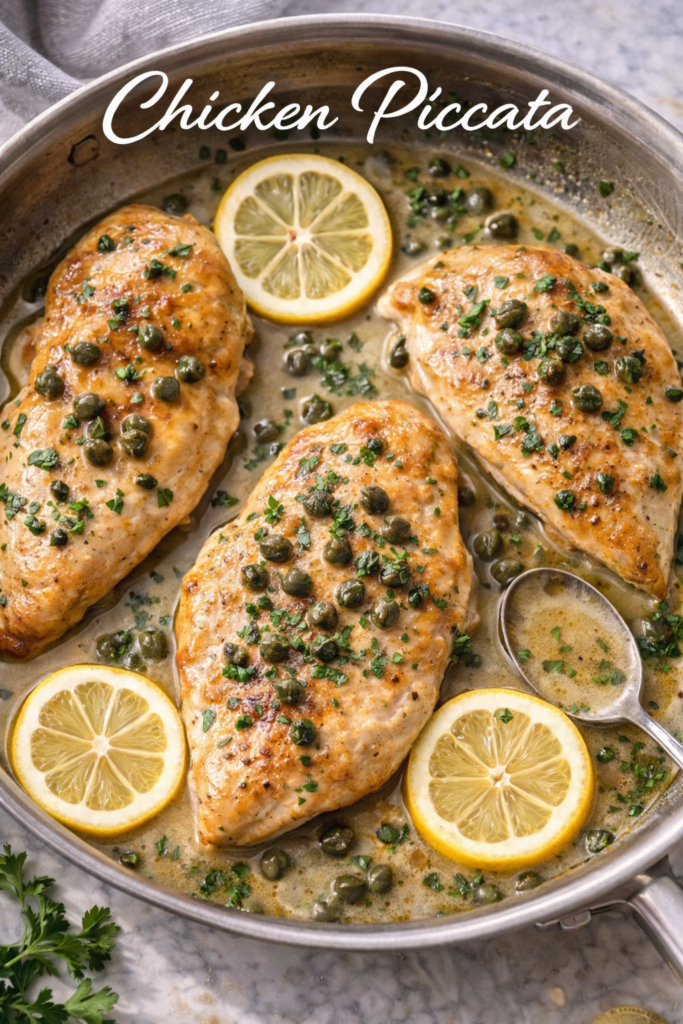
Return the chicken to the pan for just 1 minute to warm through and coat in the sauce. Plate immediately, spoon extra sauce on top, scatter fresh parsley, and add lemon slices on the side.
Leftovers and Storage
Fridge: Store in an airtight container for up to 3 days. Keep the sauce and chicken together so the chicken absorbs even more flavor overnight.
Reheat: Gently on the stovetop over low heat with a small splash of chicken broth to revive the sauce. Microwave works in a pinch but can make the chicken a little rubbery.
Freezer: The cooked chicken freezes fine, but the sauce doesn’t hold up as well after freezing (the butter can separate). Better to make the sauce fresh if serving from frozen.
FAQ
Can I use chicken thighs instead of breasts?
Yes. Boneless, skinless thighs work great and are actually a bit more forgiving if you overcook them slightly. They’ll need an extra 1-2 minutes per side.
My sauce broke (it looks greasy and separated). What happened?
This usually means the heat was too high when you added the butter. Keep it on low and add the butter slowly, one cube at a time, swirling as you go.
Can I double this recipe?
Absolutely. Just cook the chicken in batches so you don’t steam it instead of sear it. The sauce scales up easily.
What does “piccata” actually mean?
In Italian, “piccata” refers to a method of cooking — pounding, dredging, and then cooking in a sauce. The lemon-caper combo is the American-Italian version that most people know today.
Is this dish kid-friendly?
If your kids like lemon, yes. The capers can be a bit of an acquired taste, so feel free to reduce them or leave them out for picky eaters.
Wrapping Up
Chicken piccata is one of those recipes that earns a permanent spot in your rotation after just one try.
The sauce is that good. 🍋
It’s fast, it’s impressive, and once you nail the technique, you’ll make it on autopilot. Try it this week and let me know in the comments how it went — and if you discovered any variations or swaps that worked really well, I’d love to hear those too.