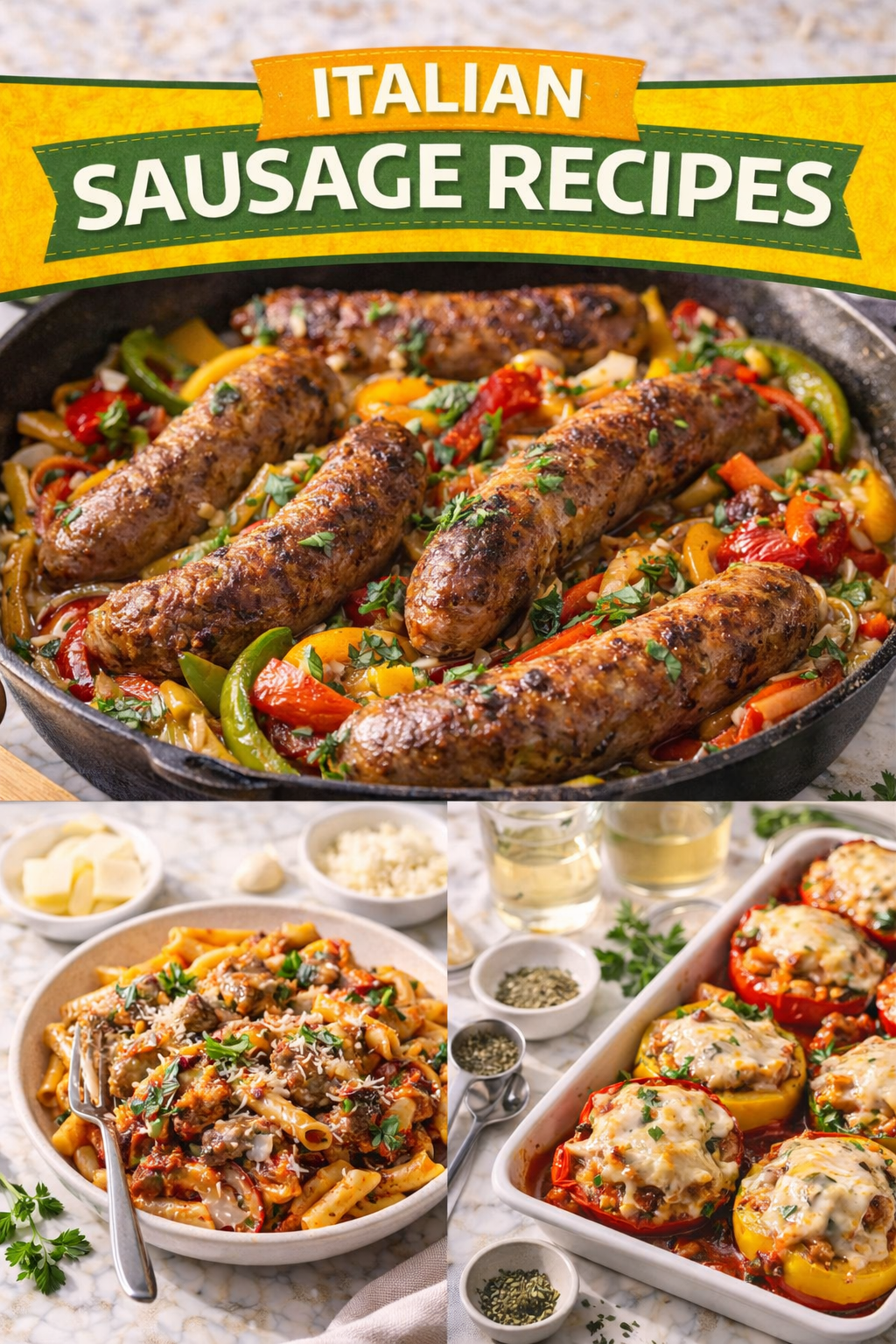
Did you know that in Italy, they don’t actually call these “Italian sausages”?
They just call them sausages. But here in the States, we’ve turned this simple dish into something special.
And after making these probably 50 times in the last year, I can tell you this version beats any restaurant I’ve tried. The secret isn’t some fancy technique. It’s just knowing when to stop messing with the pan and let everything do its thing.
I first learned to make these from my neighbor Tony, who grew up in Brooklyn with grandparents from Calabria. He watched me struggling with my sausages one day (they kept splitting open and drying out) and just shook his head. Came back ten minutes later with a written note that said “STOP STABBING THEM” in all caps.
He was right. I was poking holes in the sausages like some kind of kitchen serial killer.
So if you’ve been frustrated with dry, split-open sausages or peppers that turn to mush, you’re in the right place. This recipe is stupid simple and incredibly forgiving. You’re basically just letting good ingredients hang out in a pan together.
Let’s get into it.
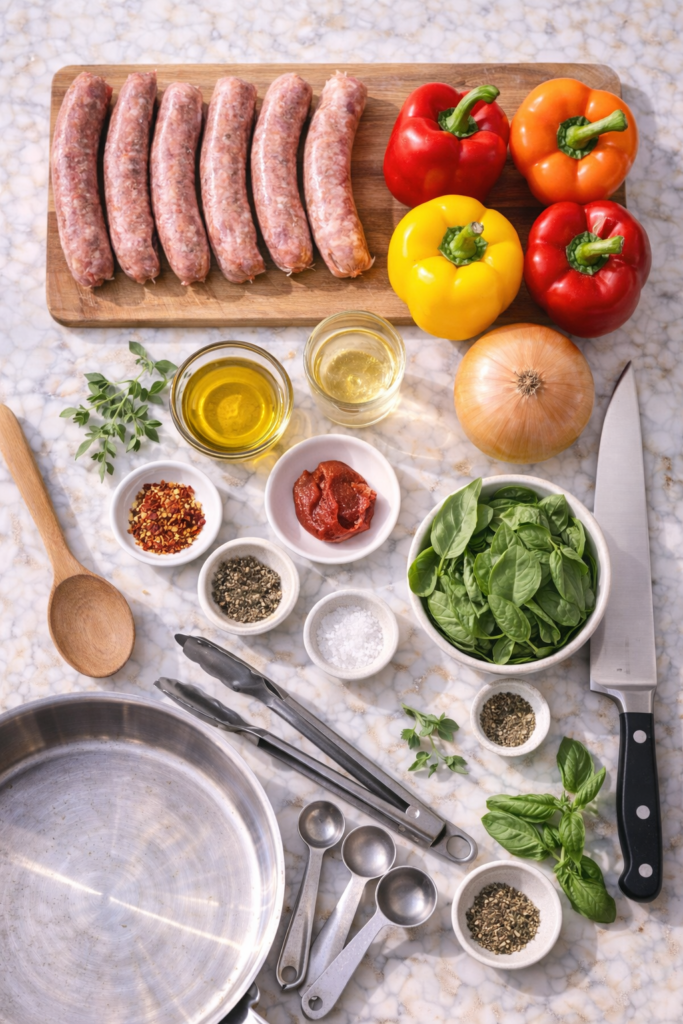
What You’ll Need
For the Sausages & Vegetables
| Ingredient | Amount | Notes |
|---|---|---|
| Italian sausages (sweet or hot) | 6 links (about 1.5 lbs) | Sweet for mild, hot for spicy, or mix both |
| Bell peppers | 3 large | Red, yellow, or orange (not green – they’re bitter) |
| Large onion | 1 | Yellow or white works best |
| Garlic cloves | 4 | Smashed, not minced |
| Olive oil | 3 tablespoons | Extra virgin if you have it |
| Dry white wine | ½ cup | Can sub with chicken broth |
| Tomato paste | 2 tablespoons | Adds depth |
| Fresh oregano | 2 teaspoons | Or 1 tsp dried |
| Red pepper flakes | ½ teaspoon | Optional, for extra heat |
| Salt | To taste | Start with ½ teaspoon |
| Black pepper | ½ teaspoon | Freshly ground |
| Fresh basil | ¼ cup chopped | For garnish |
Tools You’ll Need
- Large skillet or sauté pan (12-inch is perfect)
- Tongs
- Sharp knife
- Cutting board
- Wooden spoon
That’s it. No special equipment needed.
Pro Tips
Don’t pierce the sausages. I learned this the hard way. Those little holes let all the juices escape, and you end up with dry hockey pucks. Let them cook whole.
Cut your peppers thick. Aim for ½-inch strips. They’ll soften as they cook, and thin strips turn into sad, mushy strings. You want some texture left.
Let the sausages rest. After cooking, give them 5 minutes before slicing. The juices redistribute and you get way more flavor in every bite.
Use a meat thermometer. Internal temp should hit 160°F. This takes the guesswork out and you won’t end up with raw middles or overcooked outsides.
Save that fond. Those brown bits stuck to the pan after browning the sausages? That’s pure flavor. The wine will deglaze it all up.
Step-by-Step Instructions
Step 1: Prep Your Vegetables
Slice the bell peppers into ½-inch strips. Cut the onion into similar-sized strips so everything cooks evenly.
Smash the garlic cloves with the flat side of your knife. No need to chop them finely.
This takes maybe 10 minutes. Put on some music and enjoy the process.
Step 2: Brown the Sausages
Heat 1 tablespoon of olive oil in your large skillet over medium-high heat.
Add the sausages. Don’t crowd the pan. If they’re touching too much, work in batches.
Let them sit for 3-4 minutes per side until they get a nice brown crust. You’re not cooking them through yet, just building flavor.
Here’s where people mess up: They keep flipping and moving the sausages around. Just let them be. Set a timer if you need to.
Transfer the browned sausages to a plate. They’ll look golden and smell incredible.
Step 3: Cook the Peppers and Onions
Add the remaining 2 tablespoons of olive oil to the same pan. All those brown bits are about to become magic.
Toss in the peppers and onions. Season with salt and pepper.
Cook for about 8-10 minutes, stirring occasionally, until they start to soften and get some color. You want them tender but not falling apart.
Add the smashed garlic and red pepper flakes. Cook for another minute until you can smell the garlic.
Step 4: Deglaze and Add Tomato Paste
Push everything to the sides of the pan and add the tomato paste to the center. Let it cook for about 1 minute. This deepens the flavor and gets rid of that raw taste.
Pour in the wine (or broth). Use your wooden spoon to scrape up all those delicious brown bits stuck to the pan.
Let it bubble for 2 minutes to cook off the alcohol.
Step 5: Finish Cooking
Nestle the sausages back into the pan, right into that pepper and onion mixture.
Sprinkle the oregano over everything.
Lower the heat to medium-low, cover the pan, and let it all simmer together for 15-20 minutes.
The sausages will finish cooking through, and all those flavors will meld into something beautiful. Your kitchen will smell like an Italian grandmother’s house.
Check the internal temperature of the sausages. You’re looking for 160°F.
Step 6: Rest and Serve
Take the pan off the heat and let everything rest for 5 minutes.
Top with fresh basil right before serving.
You can serve the sausages whole or slice them on an angle. I like slicing them because you get more surface area covered in those peppers and onions.
Substitutions and Variations
Different proteins: Chicken sausages work great if you want something lighter. Turkey sausages too. Just adjust cooking time since they cook faster.
Vegetarian version: Use plant-based Italian sausages. I’ve tried the Beyond Meat ones and they’re pretty solid in this recipe.
Add veggies: Throw in some sliced mushrooms or zucchini with the peppers. Cherry tomatoes added in the last 5 minutes are incredible.
Spice level: Mix sweet and hot sausages for a balanced heat. Or go all hot if you’re brave.
Different herbs: Fresh thyme works instead of oregano. So does Italian seasoning if that’s what you have.
Make it saucy: Double the wine and add a 14-oz can of crushed tomatoes for a more sauce-heavy version. Perfect over pasta.
Make Ahead Tips
The whole dish reheats beautifully, so it’s perfect for meal prep.
Cook everything completely, let it cool, then store in an airtight container in the fridge for up to 4 days.
To reheat, just warm it in a covered pan over medium heat for about 10 minutes. Add a splash of water or broth if it looks dry.
You can also prep the peppers and onions the night before. Store them sliced in the fridge and they’ll be ready to go.
Serving Suggestions
This dish is crazy versatile. Here’s how I serve it:
On crusty bread: Slice a good Italian or French bread, toast it lightly, and pile everything on top. This is peak comfort food.
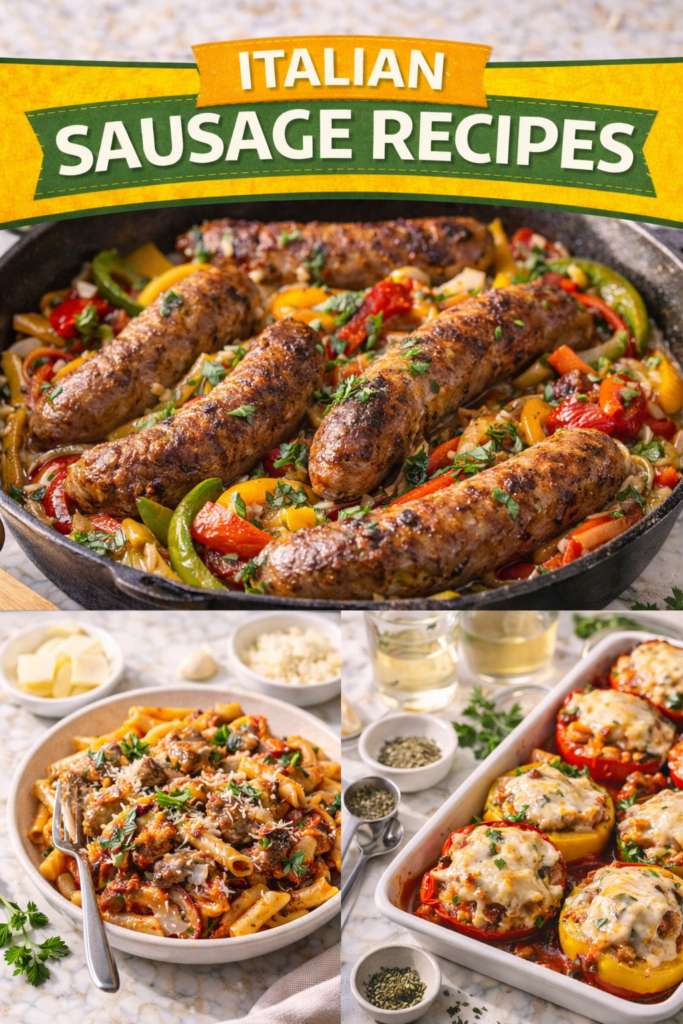
Over pasta: Penne or rigatoni work perfectly. Toss the pasta with the peppers, onions, and any pan juices. Slice the sausages on top.
With polenta: Creamy polenta underneath with this on top? Chef’s kiss. The polenta soaks up all those juices.
In hoagie rolls: Classic sausage and peppers sandwich. Add some melted provolone if you’re feeling fancy.
With roasted potatoes: Crispy potatoes on the side make this a complete meal.
Over rice: Simple white rice works, or try it with a lemony rice pilaf.
I usually do the bread route on weeknights and save the pasta version for when we have people over.
Nutritional Information (Per Serving, Serves 6)
| Nutrient | Amount |
|---|---|
| Calories | 385 |
| Protein | 18g |
| Carbohydrates | 12g |
| Fat | 28g |
| Saturated Fat | 9g |
| Fiber | 3g |
| Sugar | 7g |
| Sodium | 720mg |
Note: This varies based on the type of sausage you use. Turkey or chicken sausages will be lower in fat and calories.
Leftovers and Storage
Store leftovers in an airtight container in the fridge for up to 4 days.
The flavors actually get better the next day after everything has time to hang out together overnight.
For freezing, let everything cool completely, then transfer to a freezer-safe container. It’ll keep for up to 3 months.
To reheat from frozen, thaw overnight in the fridge, then warm in a covered pan over medium heat. Or reheat directly from frozen (just add 10 extra minutes to the reheating time).
I don’t recommend freezing if you’re planning to serve on bread, though. The bread gets soggy. Freeze the sausage and peppers separately and toast fresh bread when you’re ready to eat.
Leftover ideas:
- Chop everything up and use it as a pizza topping
- Mix with scrambled eggs for breakfast
- Toss with pasta and add some cream for a quick dinner
- Stuff into bell peppers with rice and cheese
Pairing Suggestions
Wine: A medium-bodied red like Chianti or Montepulciano d’Abruzzo. If you used white wine in the cooking, a crisp Pinot Grigio works too.
Beer: An Italian lager or amber ale balances the richness.
Sides: Simple arugula salad with lemon vinaigrette, garlic bread, roasted broccolini, or a caprese salad.
For a crowd: Serve with an antipasto platter, some olives, and good cheese.
FAQ
Can I use green bell peppers?
You can, but they’re more bitter than red, yellow, or orange peppers. If you do use them, mix them with sweeter peppers to balance the flavor.
Do I have to use wine?
Nope. Chicken broth works fine. You lose a little depth of flavor, but it’s still delicious. A splash of white wine vinegar in the broth helps mimic that acidity.
Can I make this in the oven instead?
Yes. Brown the sausages and cook the vegetables on the stovetop first, then transfer everything to a baking dish. Cover with foil and bake at 375°F for 25-30 minutes.
My sausages split open. What did I do wrong?
Either the heat was too high, or you pierced them before/during cooking. Also, if you’re using really cheap sausages with thin casings, they’re more likely to split. Invest in decent quality.
Can I add hot sauce?
Go for it. A few dashes of your favorite hot sauce in the last 5 minutes adds another layer of heat. Frank’s RedHot or Calabrian chili paste work great.
How do I keep the peppers from getting mushy?
Don’t overcook them in the initial sauté. You want them softened but still with some structure. They’ll continue cooking when you add the sausages back.
Can I double this recipe?
Yes, but you’ll need a bigger pan or two pans. Don’t overcrowd, or everything will steam instead of browning.
What’s the difference between sweet and hot Italian sausage?
Sweet sausage has fennel and sometimes a touch of sugar. Hot sausage has red pepper flakes mixed into the meat. Both have the same herbs like garlic and parsley.
Do I need to remove the sausage casings?
No. The casings add texture and help hold everything together. Only remove them if the recipe specifically calls for crumbled sausage.
Can I prep this the night before and cook it the next day?
Yes. Prep all your vegetables and keep them in the fridge. Brown the sausages and store them separately. The next day, just pick up from step 3.
Wrapping Up
This Italian sausages with peppers and onions recipe is one of those dishes that makes you look like you know what you’re doing in the kitchen, even if you’re just winging it half the time.
It’s simple, forgiving, and the kind of meal that makes your house smell amazing for hours afterward.
The key is really just leaving things alone. Let the sausages brown without fussing. Let the peppers soften at their own pace. Let everything simmer together without constantly stirring.
Give this a try for your next weeknight dinner or weekend gathering. And if you end up making it, drop a comment below and let me know how it turned out. Did you go sweet sausages or hot? Serve it on bread or over pasta?
I love hearing how people make this recipe their own.