It’s 6 p.m. on a Saturday and you’re staring down a dinner that needs to feed people you actually like. Something that feels like it took real effort. Something that tastes like love.
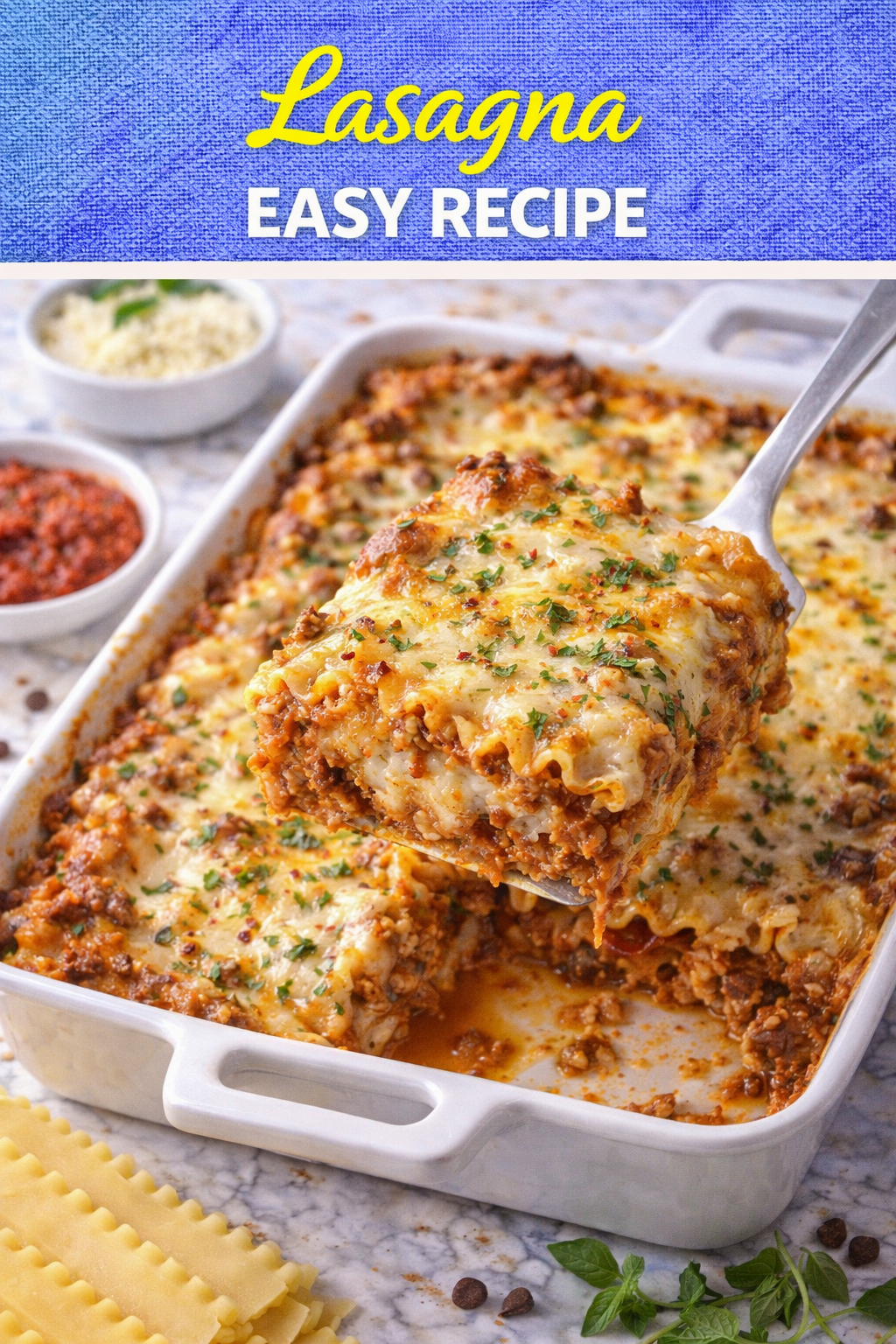
Lasagna.
But here’s what stops most people: they think lasagna means spending all day on the stove. Layers of this, hours of that, a sauce simmering since morning. The kind of project that makes you reconsider your life choices halfway through.
What if I told you that’s completely wrong?
A real, genuinely incredible lasagna comes together in less time than you’d think. The secret isn’t complexity. It’s knowing which corners are actually worth NOT cutting, and which ones are just busywork.
This version has layers that matter. A meat sauce that tastes like it actually simmered, even though it hasn’t. Béchamel that’s silky instead of gloppy. Ricotta that’s properly seasoned instead of bland filler. And one specific technique at the end that guarantees your edges don’t come out dry and your noodles stay tender.
Let’s build something your dinner table is going to remember.
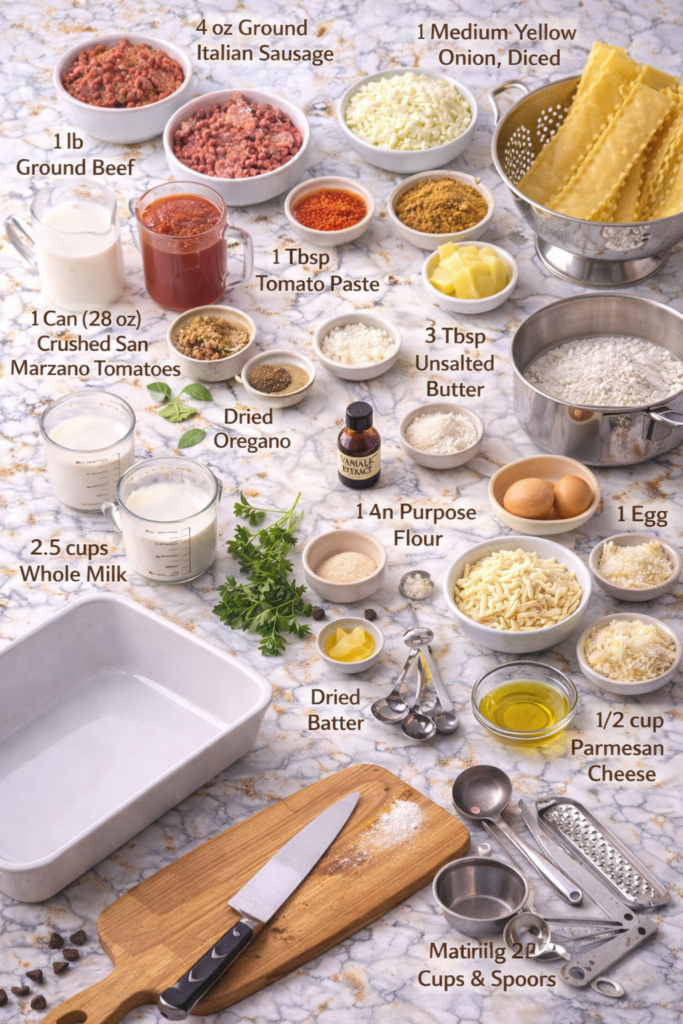
What You’ll Need
For the Meat Sauce
- 2 tablespoons olive oil
- 1 lb (450g) ground beef (80/20)
- 4 oz (115g) ground Italian sausage (optional, but worth it)
- 1 medium yellow onion, finely diced
- 4 garlic cloves, minced
- 1 tablespoon tomato paste
- 1 can (28 oz) crushed San Marzano tomatoes
- 1/2 cup whole milk
- 1 teaspoon dried oregano
- 1/2 teaspoon dried basil
- 1 bay leaf
- Salt and black pepper to taste
- Pinch of sugar (optional, balances acidity)
For the Béchamel Layer
- 3 tablespoons unsalted butter
- 3 tablespoons all-purpose flour
- 2.5 cups whole milk (warmed)
- 1/4 teaspoon freshly grated nutmeg
- Salt and white pepper to taste
For Assembly
- 15 oz ricotta cheese
- 1 egg
- 2 cups shredded mozzarella (whole milk, not low-fat)
- 1/2 cup Parmesan cheese, freshly grated
- 2 tablespoons fresh parsley, chopped
- 1 lb lasagna noodles (fresh or dried)
- Extra Parmesan for topping
Tools You’ll Need
- Large heavy-bottomed pot or Dutch oven (for sauce)
- Large pot for boiling noodles
- 9×13 baking dish
- Medium saucepan (for béchamel)
- Large mixing bowl
- Whisk
- Wooden spoon
- Sharp chef’s knife and cutting board
- Measuring cups and spoons
- Cheese grater
- Colander
- Ladle
Pro Tips
1. Add milk to your meat sauce. Most people skip this. It sounds weird. Don’t. A splash of whole milk mellows the tomato acidity and creates richness without needing hours of simmering. It’s the reason your sauce tastes like it’s been cooking all day when it’s only been 30 minutes.
2. Make your béchamel right, or don’t bother. Cold milk hitting a roux turns lumpy fast. Warm your milk first, then whisk it in slowly. The result is a silky layer that binds the whole dish together instead of a grainy mess that slides around.
3. Don’t skimp on the ricotta seasoning. A lot of ricotta comes unseasoned, which means your lasagna ends up tasting flat in the middle. Season it like you mean it. Salt. Pepper. Fresh herbs. Taste it and adjust.
4. Layer with intention. Thin sauce on the bottom (so noodles don’t stick to the pan), then noodles, then ricotta mixture, then béchamel, then mozzarella. This pattern matters. The béchamel acts as a barrier between the ricotta and meat sauce, which keeps everything distinct instead of blending into one muddy layer.
5. Cover it while it bakes. Lasagna uncovered dries out. Foil for the first 25 minutes, then uncover for the last 10-15 to get that bubbly, golden top.
Substitutions and Variations
| Original | Swap For | Notes |
|---|---|---|
| Ground beef + sausage | All ground beef or ground turkey | Turkey is leaner; beef is richer |
| San Marzano tomatoes | Crushed Roma or fire-roasted | Flavor will shift slightly but still great |
| Whole milk ricotta | Part ricotta, part cottage cheese | Lighter, tangier result |
| Fresh pasta sheets | No-boil noodles | Saves time; quality is comparable now |
| Béchamel | Skip it entirely, add more ricotta | More rustic, less silky |
| Mozzarella | Half mozzarella, half fontina | Deeper, nuttier flavor |
| Beef/sausage | Mushrooms + lentils | Vegetarian version that’s genuinely satisfying |
For a vodka-sauce twist, add 1/4 cup vodka after the tomato paste and let it reduce for 2 minutes. For extra richness, stir a tablespoon of cream cheese into the béchamel while it’s still hot.
Make Ahead Tips
- Meat sauce: Make up to 3 days ahead. Actually tastes better the next day. Refrigerate in an airtight container.
- Béchamel: Make up to 2 days ahead, but it thickens as it cools. Thin it with a splash of milk when reheating.
- Assembled (unbaked): Build the entire lasagna the morning of, cover with plastic wrap, and bake when ready. Add 10 extra minutes to baking time if it’s cold from the fridge.
- Full lasagna (baked): Lasagna freezes beautifully for up to 3 months. Cool completely, wrap tightly in plastic then foil, and label with the date. Thaw overnight in the fridge before reheating.
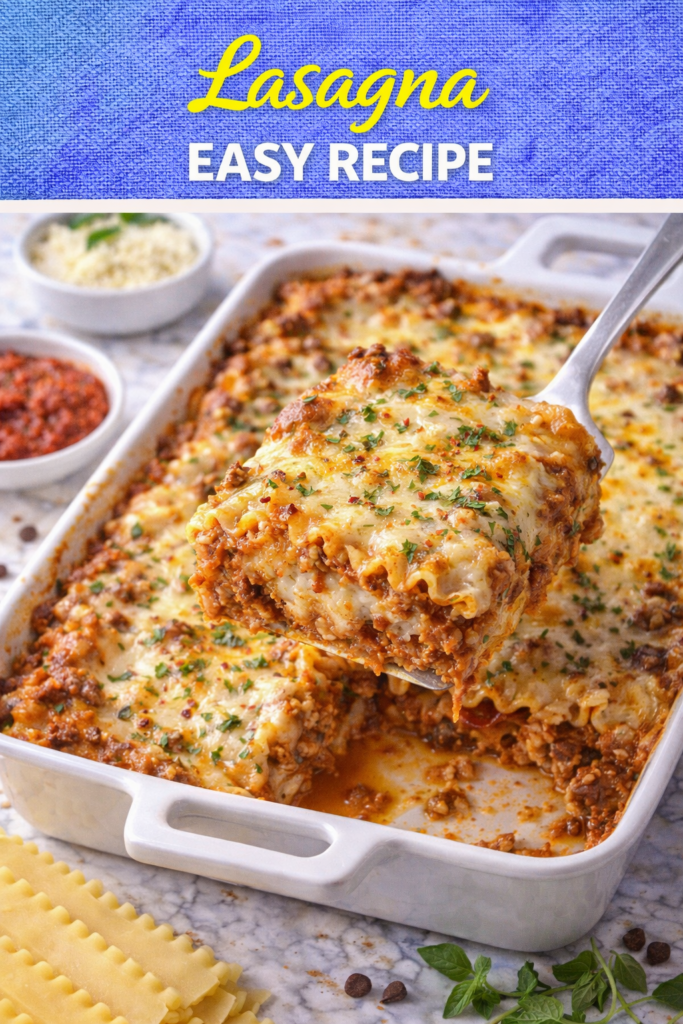
How to Make It
Step 1: Build the Meat Sauce
Heat olive oil in your pot over medium-high heat.
Add diced onion and cook for 4-5 minutes until softened. Add minced garlic and cook for 1 minute, stirring constantly.
Add ground beef and Italian sausage, breaking it up with your spoon as it browns. This takes about 6-8 minutes. Drain any excess fat if needed.
Stir in tomato paste and let it cook for 2 minutes. This caramelizes it slightly and deepens the flavor.
Pour in the crushed tomatoes. Add dried oregano, basil, bay leaf, and a pinch of sugar if your tomatoes are very acidic.
Bring to a simmer and let it bubble gently for 15 minutes. The sauce doesn’t need to cook longer; you’re building flavor, not reducing for hours.
Stir in the milk. Season with salt and black pepper to taste. Remove from heat and let it cool slightly. Remove the bay leaf.
Step 2: Make the Béchamel
While the sauce cooks, warm your milk in a small saucepan (don’t boil it, just warm).
In another medium saucepan, melt butter over medium heat. Once foaming, whisk in flour. Cook for 1 minute, stirring constantly. This is your roux.
Slowly pour in the warm milk while whisking constantly. This prevents lumps. Take your time here.
Keep whisking until the sauce thickens, about 5-7 minutes. It should coat the back of a spoon.
Season with nutmeg, salt, and white pepper. Remove from heat and let cool.
Step 3: Cook Your Noodles
Bring a large pot of well-salted water to a boil. Cook lasagna noodles according to package directions, but pull them out 1 minute early (they’ll finish cooking in the oven).
Drain and lay them flat on parchment paper or clean kitchen towels so they don’t stick together.
Step 4: Season Your Ricotta Mixture
In a large mixing bowl, combine ricotta, egg, 1.5 cups mozzarella, Parmesan, and fresh parsley.
Season generously with salt and black pepper. Taste it. It should taste clearly seasoned, not bland.
Step 5: Assemble the Lasagna
Preheat your oven to 375°F (190°C).
Spread a thin layer of meat sauce on the bottom of your 9×13 baking dish. This prevents sticking.
Layer noodles (overlap them slightly).
Spread 1/3 of the ricotta mixture.
Add 1/3 of the remaining meat sauce.
Spread 1/3 of the béchamel.
Sprinkle some of the reserved mozzarella.
Repeat layers two more times, ending with béchamel and mozzarella on top.
Step 6: Bake
Cover with foil and bake for 25 minutes. The foil traps steam and keeps the noodles tender.
Remove foil and bake for another 10-15 minutes until the top is golden and bubbling around the edges.
Let it rest for 5 minutes before cutting. This stops it from falling apart on the plate.
Nutritional Breakdown (Per Serving)
Based on 8 servings:
| Nutrient | Amount |
|---|---|
| Calories | ~480 |
| Protein | ~32g |
| Carbohydrates | ~35g |
| Fat | ~22g |
| Fiber | ~2g |
| Sodium | ~620mg |
This is a proper meal in one bite. Protein-rich from the meat and cheese. Carbs from the pasta for sustained energy. The fat makes everything taste incredible.
What to Serve With It
- Simple green salad with lemon vinaigrette
- Garlic bread or toasted ciabatta for soaking up sauce
- Roasted broccoli or sautéed spinach
- Full-bodied red wine like Barolo, Chianti, or a good Cabernet
- Fresh fruit for after (your stomach will thank you)
Leftovers and Storage
- Fridge: Store covered in an airtight container for up to 4 days.
- Freezer: Lasagna freezes beautifully for 3 months. Cool completely before wrapping. Wrap in plastic then foil for best results.
- Reheating: Thaw overnight if frozen. Bake at 325°F for 25-30 minutes covered, until heated through.
- Pro move: Reheat individual portions covered with foil in a skillet over low heat. Faster and you have more control.
FAQ
Can I use no-boil noodles? Absolutely. They work equally well. No need to pre-cook them. Add an extra 5 minutes to your baking time so they have time to soften.
My lasagna came out watery. Your meat sauce likely had too much liquid or your béchamel wasn’t thick enough. Next time, let the meat sauce reduce for an extra 5-10 minutes uncovered. For the béchamel, whisk longer until it clearly coats a spoon.
Can I make this vegetarian? Yes. Skip the meat and use 1 lb sliced mushrooms (cremini or portobello) sautéed until golden, plus 1 cup cooked lentils. Brown the mushrooms in olive oil first, then proceed with the sauce as written.
Can I freeze it before baking? Yes, and this is actually the smart move for a weeknight. Assemble everything, cover tightly with plastic then foil, and freeze for up to 3 months. Bake straight from frozen at 375°F for 50-60 minutes covered, then 15 minutes uncovered.
My edges dried out. You probably didn’t cover it with foil long enough, or your oven runs hot. Next time, cover the entire thing for 30 minutes, not just 25. You can also drape foil loosely over just the edges if the top is browning too fast.
Should I use fresh or dried basil and oregano? Dried is actually better here. Fresh basil gets bitter when cooked, and oregano is more concentrated when dried. Use the measurements as written.
Wrapping Up
Lasagna isn’t a fancy dish. It’s honest food that asks you to slow down and layer it right. And when you do, when you get that first slice with every layer intact, ricotta creamy, sauce deep and rich, cheese melted but not burnt, noodles tender enough to cut with your fork…
That’s when you understand why people have been making this for centuries.
It’s simple. It works. And it tastes like you cared enough to get the details right.
Make this soon and come back to tell me how it went. Did you add sausage? Did you try the vodka variation? Did the béchamel trick work for you? I genuinely want to know.