Can takeout cravings and healthy eating coexist?
I used to think choosing between flavor and my fitness goals meant picking one or the other. Then I discovered this cauliflower fried rice recipe that completely changed my mind.
This isn’t one of those sad, bland “diet” meals that leaves you hungry an hour later. This is the real deal: crispy, savory, packed with vegetables, and comes together in just 20 minutes. You get all the satisfaction of Chinese takeout without the carb crash or the guilt.
I’ve been making this at least twice a week for the past three months and I’m still not tired of it. My husband doesn’t even realize he’s eating cauliflower half the time.
Let me show you exactly how to make it.
What You’ll Need
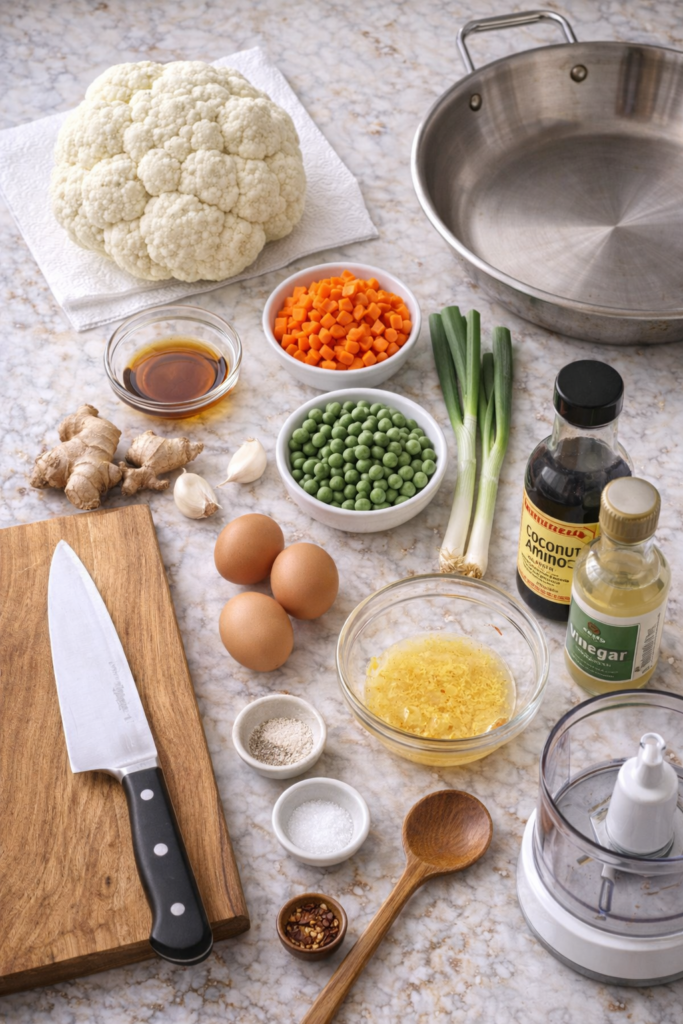
For the Cauliflower Rice:
- 1 large head cauliflower (about 6 cups riced)
- 3 tablespoons sesame oil (divided)
- 3 cloves garlic, minced
- 1 tablespoon fresh ginger, grated
- 1 cup diced carrots
- 1 cup frozen peas
- 3 green onions, sliced (white and green parts separated)
- 2 large eggs, beaten
- 3 tablespoons coconut aminos (or low-sodium soy sauce)
- 1 tablespoon rice vinegar
- 1/2 teaspoon white pepper
- Salt to taste
- Red pepper flakes (optional, for heat)
Optional Add-ins:
- 1 cup cooked chicken, shrimp, or tofu (adds protein)
- 1/2 cup edamame
- 1/2 cup diced bell peppers
- Sesame seeds for garnish
Tools You’ll Need
- Large skillet or wok (12-inch works best)
- Food processor or box grater
- Sharp knife and cutting board
- Small bowl for whisking eggs
- Rubber spatula or wooden spoon
- Paper towels
Pro Tips
1. Get your cauliflower bone dry.
This is the single most critical step. After ricing your cauliflower, spread it on paper towels and press out as much moisture as possible. If your cauliflower is wet, you’ll end up with mushy rice instead of crispy, restaurant-quality grains. I sometimes even let it air-dry for 10-15 minutes.
2. Cook in batches if your pan isn’t huge.
Overcrowding = steaming. You want high heat and space for that beautiful char. I learned this the hard way after making soggy cauliflower rice one too many times.
3. Add the eggs separately.
Push your rice to the sides of the pan, pour the beaten eggs into the center, and scramble them before mixing everything together. This gives you those perfect ribbons of egg throughout the dish instead of weird clumps.
4. Season at the end.
Coconut aminos and soy sauce can make your cauliflower release more water if added too early. Wait until the last 2-3 minutes of cooking to add your sauces.
5. Don’t skip the white pepper.
I know it seems like a random ingredient, but white pepper gives this dish that authentic Chinese restaurant flavor that black pepper just can’t replicate. You can find it at any grocery store in the spice aisle.
Substitutions and Variations
Cauliflower: Fresh is ideal, but frozen riced cauliflower works in a pinch. Just make sure to thaw and drain it really well. You can also use a mix of cauliflower and broccoli rice for extra nutrients.
Sesame oil: If you don’t have sesame oil, use avocado oil and add 1/2 teaspoon of toasted sesame seeds at the end for that nutty flavor.
Coconut aminos: Regular soy sauce or tamari work perfectly. Coconut aminos are just slightly sweeter and lower in sodium.
Vegetables: Literally any vegetable works here. I’ve used zucchini, mushrooms, snap peas, cabbage, and water chestnuts. Clean out your fridge!
Protein: Keep it vegetarian or add whatever protein you have on hand. Leftover rotisserie chicken is my go-to lazy option.
Spicy kick: Add sriracha, sambal oelek, or double the red pepper flakes if you like heat.
Make Ahead Tips
You can rice your cauliflower up to 3 days in advance and store it in an airtight container in the fridge. Just make sure it’s completely dry before storing.
I sometimes meal prep this entire recipe on Sunday nights. It reheats beautifully in a skillet with a tiny bit of extra sesame oil. The microwave works too, but you lose some of that crispiness.
The sauce mixture (coconut aminos, rice vinegar, white pepper) can be whisked together and stored in a jar for quick weeknight cooking.
How to Make Low-Carb Cauliflower Fried Rice
Step 1: Prep your cauliflower
Remove the leaves and core from your cauliflower head. Chop it into florets. Working in batches, pulse the florets in your food processor until they resemble rice grains. Don’t over-process or you’ll end up with cauliflower mush. Each pulse should be just 1-2 seconds.
If you don’t have a food processor, use the large holes on a box grater. It takes longer but works just as well.
Spread your riced cauliflower on paper towels and press down firmly to remove moisture. Let it sit while you prep everything else.
Step 2: Prep your ingredients
Mince your garlic and grate your ginger. Dice your carrots into small pieces (about the size of a pea). Slice your green onions, keeping the white and green parts separate. Beat your eggs in a small bowl.
This might seem like extra work, but having everything ready before you start cooking makes the actual cooking process so much faster and less stressful.
Step 3: Cook the aromatics
Heat 2 tablespoons of sesame oil in your large skillet or wok over medium-high heat. Once the oil is shimmering (that means it’s hot enough), add the white parts of your green onions, garlic, and ginger.
Stir constantly for about 30 seconds until fragrant. Your kitchen will smell incredible right about now.
Step 4: Add the hard vegetables
Toss in your diced carrots and cook for 2-3 minutes until they start to soften slightly. You want them to have a little bite still.
Add your frozen peas and cook for another minute. The frozen peas will help cool down the pan slightly so your cauliflower doesn’t burn when you add it.
Step 5: Cook the cauliflower rice
Add the remaining tablespoon of sesame oil to the pan, then add your cauliflower rice. Spread it out in an even layer and let it sit undisturbed for 2 minutes. This is how you get that crispy, charred texture.
Stir everything together and let it cook for another 3-4 minutes, stirring occasionally. You want some of the cauliflower to get those beautiful golden brown spots.
Step 6: Add the eggs
Push all the cauliflower rice to the edges of your pan, creating a well in the center. Pour your beaten eggs into that center space.
Let them sit for about 10 seconds, then scramble them with your spatula. Once they’re mostly cooked, mix everything together so the egg ribbons distribute throughout the rice.
Step 7: Season and finish
Pour in your coconut aminos and rice vinegar. Add the white pepper and salt to taste. Stir everything together and cook for another 1-2 minutes.
Taste and adjust seasoning if needed. I usually add a pinch more salt and sometimes a splash more coconut aminos.
Remove from heat and stir in the green parts of your sliced green onions. Add red pepper flakes if you want some heat.
Step 8: Serve immediately
This dish is best served hot right out of the pan. Garnish with extra green onions and sesame seeds if you’re feeling fancy.
The whole thing from start to finish takes about 20 minutes once you get the hang of it.
Nutritional Information
Per serving (serves 4):
- Calories: 145
- Total carbs: 12g
- Net carbs: 8g
- Protein: 6g
- Fat: 9g
- Fiber: 4g
- Sugar: 5g
Compare that to regular fried rice which can have 300+ calories and 50g of carbs per serving. You’re saving yourself over 150 calories and 40g of carbs while still getting a delicious, filling meal.
This fits perfectly into keto, low-carb, paleo, whole30, and gluten-free diets.
What to Serve With Cauliflower Fried Rice
This works as a complete meal on its own if you add protein, but it also makes a fantastic side dish.
I love pairing it with:
- Grilled teriyaki chicken thighs
- Pan-seared salmon with a ginger glaze
- Mongolian beef
- Crispy tofu
- Egg drop soup
- Asian cucumber salad
You can also turn it into a burrito bowl situation by adding some sriracha mayo and sliced avocado on top. Not traditional, but definitely delicious.
Leftovers and Storage
Store leftovers in an airtight container in the fridge for up to 4 days. The texture holds up surprisingly well.
To reheat, I prefer using a skillet over medium heat with a tiny drizzle of sesame oil. This brings back some of that crispy texture. Heat for 3-4 minutes, stirring occasionally.
You can microwave it, but it’ll be softer. Still tastes good, just not quite as restaurant-quality.
This also freezes decently for up to 2 months. Let it thaw in the fridge overnight before reheating. The texture won’t be quite as crispy, but the flavor stays great.
Why This Recipe Actually Works
I’ve tried a lot of cauliflower rice recipes that promised the world and delivered sadness.
This one works because we’re using high heat, minimal moisture, and the right ratio of vegetables to cauliflower. The sesame oil adds richness without heaviness. The ginger and garlic bring that authentic Asian flavor profile. The white pepper ties everything together.
Also, we’re not trying to make this taste exactly like regular fried rice. It tastes like its own delicious thing that happens to scratch the same itch as takeout.
The 8g of net carbs per serving means you can actually eat a full, satisfying portion without derailing your health goals. That’s huge when you’re trying to stick to a low-carb lifestyle long-term.
Common Mistakes to Avoid
Skipping the moisture removal step. I can’t stress this enough. Wet cauliflower = mushy disaster.
Using low heat. You need that high heat for the crispy texture and caramelization.
Adding too many wet ingredients. Keep the sauces minimal and add them at the end.
Not seasoning enough. Cauliflower is pretty bland on its own. Don’t be shy with your seasonings.
Forgetting to separate your green onions. The white parts need to cook longer than the green parts.
Frequently Asked Questions
Can I use store-bought riced cauliflower?
Yes! Just make sure it’s completely thawed and drained if frozen. Fresh pre-riced cauliflower from the refrigerated section works even better. Skip the moisture-removal step if it’s already pretty dry.
How do I know when the cauliflower is done?
It should be tender but still have a slight bite to it, similar to al dente rice. You’ll see some golden brown spots on the edges. Total cooking time is usually 5-7 minutes.
Can I make this without eggs?
Absolutely. Just skip step 6 and continue with the rest of the recipe. You’ll lose some protein but the dish still tastes great.
Why does my cauliflower rice taste bitter?
This usually happens if you burn the garlic or ginger. Make sure you’re cooking them just until fragrant (about 30 seconds) before adding other ingredients.
Is this really low-calorie enough for weight loss?
At 145 calories per generous serving, this is definitely weight-loss friendly. Add a protein source and you’ve got a complete meal under 350 calories that will keep you full for hours.
Can I double this recipe?
You can, but you’ll need to cook it in two batches. Overcrowding the pan leads to steaming instead of frying.
What’s the difference between coconut aminos and soy sauce?
Coconut aminos are made from coconut sap and are slightly sweeter with less sodium. Soy sauce works perfectly fine as a substitute. Use what you have!
How can I make this spicier?
Add sriracha, sambal oelek, or red pepper flakes to taste. I like to put out hot sauce on the side so everyone can adjust to their preference.
Wrapping Up
This cauliflower fried rice has honestly transformed my relationship with low-carb eating.
I no longer feel like I’m missing out when everyone else is ordering Chinese food. I just make this instead and feel completely satisfied.
The 20-minute cook time means it fits into even my craziest weeknights. The low calorie count means I can have seconds without guilt. The flavor means I actually look forward to eating it.
Give this recipe a try this week and see how it changes your weeknight dinner game. Then come back and tell me what you thought in the comments below.
Did you add extra vegetables? Try a different protein? Make it spicier? I want to hear everything!