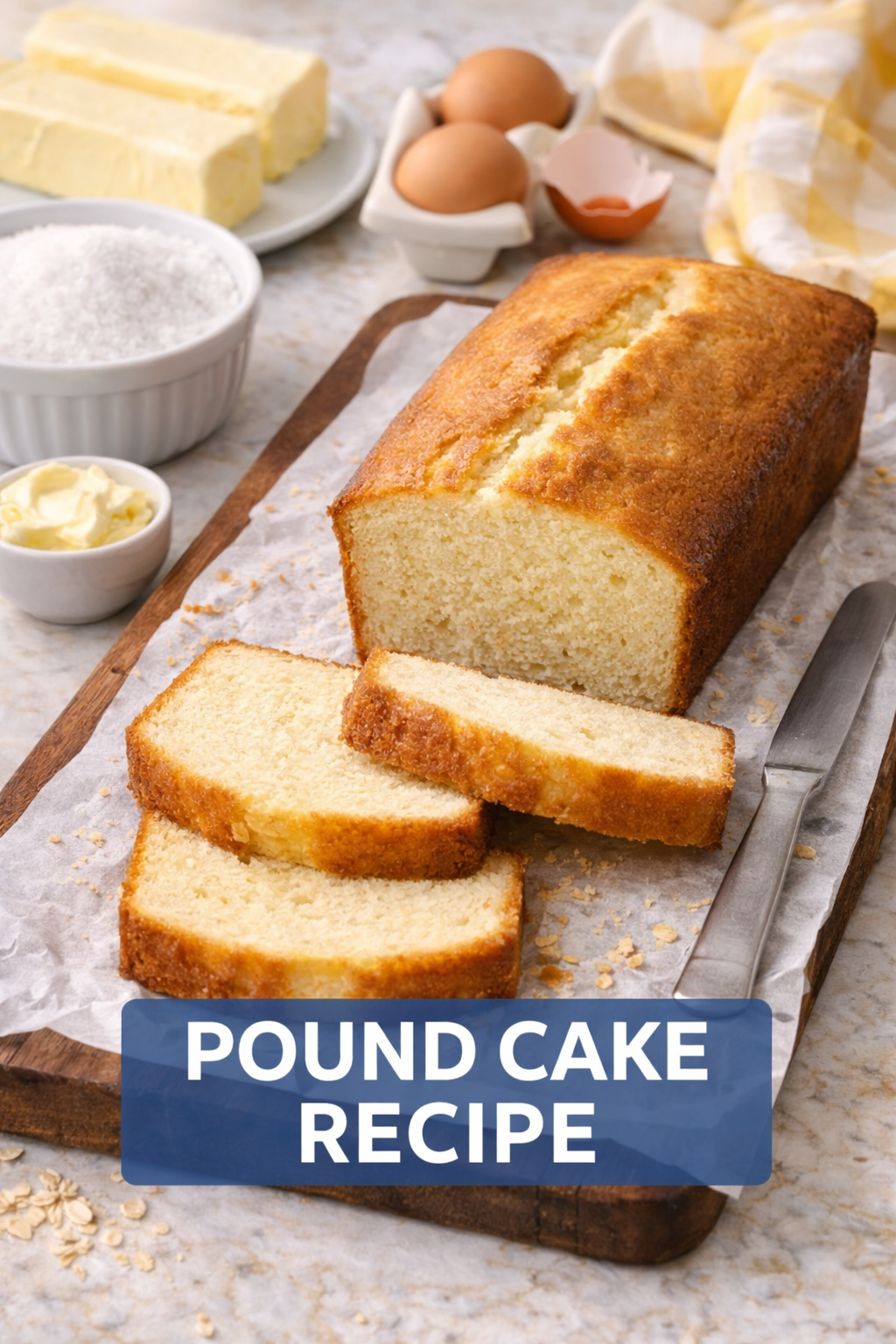
My grandmother used to say you could judge a baker by their pound cake.
No fancy frosting to hide behind. No layers to distract. Just you, butter, and the truth.
I spent years trying to nail this recipe. The kind that’s got that golden crust, tight crumb, and buttery flavor that makes you close your eyes on the first bite. The kind that tastes like it came from a Southern church potluck, even if you’re baking it in a tiny city apartment.
After burning through at least 20 pounds of butter (yes, really), I finally cracked it.
This isn’t one of those “moist” cakes that’s actually just underbaked. This is a proper pound cake with a tender, close crumb that slices clean and tastes even better the next day.
And here’s the thing nobody tells you: pound cake is actually one of the most forgiving cakes you can make. Once you understand the technique, it’s nearly impossible to mess up.
Let me show you how.
What You’ll Need
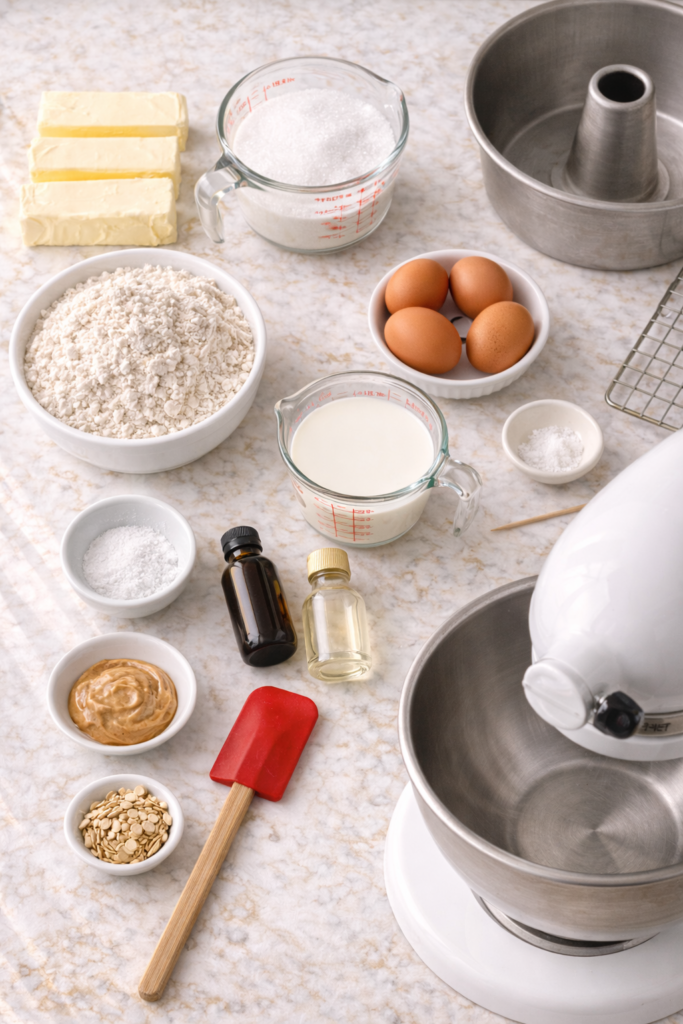
The Cake:
- 1 pound (4 sticks) unsalted butter, room temperature
- 3 cups granulated sugar
- 6 large eggs, room temperature
- 4 cups all-purpose flour
- ¾ cup whole milk, room temperature
- 1 tablespoon vanilla extract
- ½ teaspoon almond extract
- ½ teaspoon salt
Tools You’ll Need:
- 10-inch tube pan or bundt pan
- Stand mixer or hand mixer
- Large mixing bowls
- Rubber spatula
- Wire cooling rack
- Toothpick or cake tester
Pro Tips From Years of Trial and Error
Temperature is everything. Your butter, eggs, and milk need to be genuinely room temperature. Not “I set them out 20 minutes ago” temperature. Real room temperature means they’ve been sitting out for at least 2 hours. Cold ingredients won’t emulsify properly, and you’ll end up with a dense, heavy cake.
Don’t rush the creaming. When you cream the butter and sugar, you’re building the structure of your cake. This should take a full 5-7 minutes. Your arm might get tired if you’re using a hand mixer, but push through. The mixture should look pale, fluffy, and almost doubled in volume.
Add eggs one at a time, and mean it. I know it’s tempting to crack all the eggs in at once, but don’t. Each egg needs to be fully incorporated before you add the next one. If your mixture starts looking curdled or separated, don’t panic. Add a tablespoon of your flour, and it’ll come back together.
Mix the flour just until combined. The second you add flour to your batter, gluten starts forming. You want some gluten for structure, but too much makes your cake tough. Mix on low speed just until you can’t see dry flour anymore, then stop. Seriously, step away from the mixer.
The toothpick test isn’t always reliable. For pound cake, you want a few moist crumbs on your toothpick, not a completely clean one. A clean toothpick usually means you’ve overbaked it. The cake will continue cooking for a few minutes after you remove it from the oven.
Substitutions and Variations
Butter: You really can’t substitute the butter here. Margarine or oil will give you a completely different texture. If you absolutely must, use European-style butter with higher fat content for an even richer cake.
Sugar: You can swap up to half the granulated sugar for light brown sugar for a deeper, almost caramel flavor. Don’t use all brown sugar or your cake will be too dense.
Milk: Whole milk gives the best texture, but 2% works in a pinch. You can also use buttermilk for a tangier flavor (just add ¼ teaspoon baking soda to the dry ingredients).
Extracts: The almond extract is optional but adds incredible depth. You can use all vanilla if you prefer, or try lemon extract for a citrus version.
Flavor Variations:
- Lemon Pound Cake: Add zest of 2 lemons and replace almond extract with lemon extract
- Cream Cheese Pound Cake: Replace 1 stick of butter with 8 oz cream cheese
- Chocolate Pound Cake: Replace 1 cup flour with ¾ cup cocoa powder
- Coconut Pound Cake: Replace milk with coconut milk and add 1 cup shredded coconut
Make Ahead Tips
The beautiful thing about pound cake is it actually gets better after a day or two.
Bake it up to 3 days ahead and store it wrapped tightly in plastic wrap at room temperature. The flavors develop and the texture becomes even more tender.
You can also freeze the baked cake for up to 3 months. Wrap it in plastic wrap, then aluminum foil, then place in a freezer bag. Thaw overnight in the fridge, then bring to room temperature before serving.
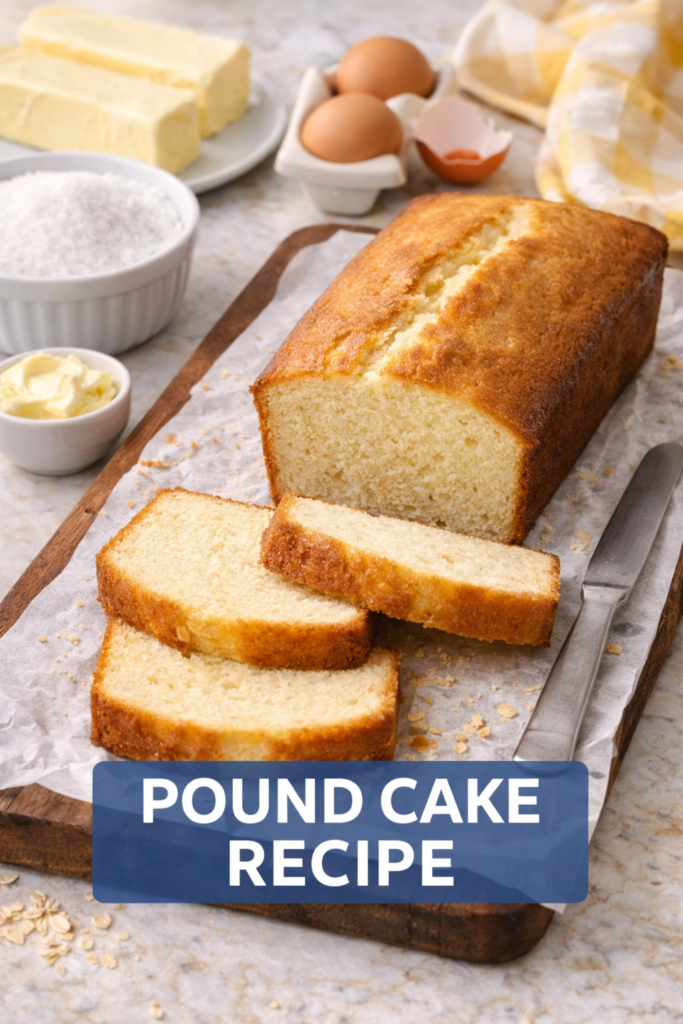
How to Make Perfect Pound Cake
Step 1: Prep Everything
This is not the time to wing it. Get your ingredients measured and your pan ready before you start mixing.
Preheat your oven to 325°F. Yes, 325°F, not 350°F. Lower temperature = more even baking = no burnt edges with a raw center.
Grease your tube pan like your life depends on it. I use butter and then dust with flour, making sure to get every single crevice. Miss a spot and your cake will stick. Trust me on this.
Step 2: Cream the Butter and Sugar
Cut your butter into chunks and toss it in your mixer bowl with the sugar.
Beat on medium-high speed for 5-7 minutes. Set a timer. This is where beginners usually give up too early.
You’ll know it’s ready when the mixture is pale yellow, fluffy, and has increased in volume. It should look like frosting.
Step 3: Add the Eggs
Turn your mixer to medium-low. Crack one egg into a small bowl (so you don’t accidentally add shell to your batter), then add it to the mixing bowl.
Beat until that egg is completely incorporated. The mixture should look smooth and cohesive.
Repeat with the remaining 5 eggs, one at a time. This will take patience, but it’s worth it.
Step 4: Mix the Dry Ingredients
In a separate bowl, whisk together your flour and salt. Whisking helps distribute the salt evenly and breaks up any lumps in the flour.
Step 5: Combine Everything
With your mixer on the lowest speed, add about one-third of the flour mixture. Mix just until you can barely see it.
Pour in half the milk. Mix until combined.
Add another third of the flour, then the remaining milk, then the final third of flour. Mix each addition just until incorporated.
Add both extracts with the last addition of flour.
Scrape down the sides and bottom of the bowl with a rubber spatula. Give it a few gentle stirs by hand to make sure everything is evenly mixed.
Step 6: Bake
Pour the batter into your prepared pan. Smooth the top with your spatula.
Tap the pan on the counter a few times to release any air bubbles.
Bake for 75-90 minutes. I know that’s a big range, but ovens vary wildly. Start checking at 75 minutes.
The cake is done when the top is deep golden brown, the edges have pulled away slightly from the pan, and a toothpick inserted in the center comes out with just a few moist crumbs.
Step 7: Cool Properly
This is where people mess up all the time.
Leave the cake in the pan on a wire rack for exactly 15 minutes. Not 5, not 30. Fifteen.
After 15 minutes, run a thin knife around the edges and center tube. Invert onto the wire rack.
Let it cool completely before slicing. This takes at least 2 hours. I know it’s torture, but cutting into a warm pound cake will give you a gummy texture.
The Secret to Perfect Slices
Use a serrated knife and a gentle sawing motion. Don’t press down hard or you’ll compress the cake.
For clean slices, wipe your knife between cuts.
A proper pound cake should have a fine, even crumb with no tunnels or large air pockets. The texture should be tender but firm enough to hold its shape.
Leftovers and Storage
Room temperature storage is your friend here. Wrap the cake tightly in plastic wrap or store in an airtight container.
It’ll stay fresh for 4-5 days at room temperature. The flavor actually deepens over the first couple days.
Don’t refrigerate unless it’s summer and your kitchen is over 80°F. The fridge will dry it out.
Freeze individual slices wrapped in plastic wrap and foil for easy grab-and-go treats. They thaw in about 30 minutes on the counter.
Serving Suggestions
Plain pound cake is perfection on its own, but here are some ideas:
Classic Style: Dust with powdered sugar and serve with fresh berries and whipped cream
Breakfast Mode: Toast slices and spread with butter and jam
Fancy Version: Make a simple glaze with powdered sugar and lemon juice
Southern Style: Serve with macerated strawberries and their juices
Indulgent: Top with vanilla ice cream and chocolate sauce
Frequently Asked Questions
Why did my pound cake sink in the middle?
Usually this means you opened the oven door too early or your oven temperature was too high. The cake rose too quickly, then collapsed when the structure wasn’t strong enough to support it. It could also mean you overmixed the batter after adding the flour.
Can I make this in a different pan?
You can use two 9×5-inch loaf pans instead. Bake for 50-60 minutes and check early. A bundt pan works great too. Avoid using a regular cake pan because the batter is quite thick and needs the structure of a tube or loaf pan.
My cake is dry. What happened?
You probably overbaked it or didn’t measure your flour correctly. Are you scooping directly from the bag? That packs in way too much flour. Always spoon flour into your measuring cup and level it off. Also, remember that the toothpick should have a few moist crumbs, not come out completely clean.
Why is my cake dense and heavy?
Cold ingredients are usually the culprit. When your butter, eggs, and milk are different temperatures, they don’t emulsify properly. The other common cause is not creaming the butter and sugar long enough. Those 5-7 minutes of creaming are creating air pockets that make your cake light and tender.
Can I reduce the sugar?
Pound cake is called pound cake because it’s traditionally one pound each of butter, sugar, eggs, and flour. The sugar isn’t just for sweetness. It helps tenderize the cake and contributes to the texture. You can reduce it by up to ½ cup without major issues, but any more and you’re making a different cake.
How do I get that beautiful golden crust?
The crust develops from the sugar caramelizing during baking. Make sure your oven is properly preheated and that you’re baking at 325°F. Higher temperatures will burn the outside before the inside is done.
My cake stuck to the pan. Help!
Prevention is easier than fixing, so really grease and flour that pan well next time. If it’s already stuck, let the cake cool completely in the pan, then try using a thin spatula to gently pry it away from the edges. Sometimes warming the outside of the pan with a warm, damp towel helps loosen it.
Wrapping Up
There’s a reason pound cake has been around for centuries.
It’s simple, it’s reliable, and it’s absolutely delicious when done right.
The recipe I’ve shared with you today is the result of years of testing, tweaking, and way too many trips to buy more butter. But that’s the point. You don’t have to do all that trial and error because I already did it for you.
Make this cake on a Sunday afternoon. Slice it Monday morning for breakfast. Share it with neighbors who’ll ask for the recipe. Bring it to potlucks where it’ll disappear in minutes.
And then come back here and tell me about it. Did you try the lemon version? Did your kids fight over the last slice? Did you burn the first one and nail the second? (We’ve all been there.)
Drop a comment below and let me know how it turned out. And if you’ve got questions while you’re baking, I’m here.
Now get in that kitchen and make something delicious. 🧈