You know that feeling when you order Thai curry at a restaurant and it’s so good you immediately start planning your next visit before you’ve even finished eating?
This is that recipe.
Thai chicken curry is one of those dishes that feels fancy but is secretly so simple it’ll make you question why you ever ordered takeout in the first place.
And I’ll say this upfront: once you make this at home, restaurant Thai curry will never fully satisfy you again. You’ve been warned. 😅
What Makes Thai Curry So Addictive?
It’s the combination. You’ve got creamy coconut milk, bold red curry paste, a little heat, and that perfect balance of salty, sweet, and savory all in one pot.
No single ingredient does all the heavy lifting. It’s the whole thing together that makes it unforgettable.
Fun fact: Thai cuisine is famous for hitting all five flavor profiles in a single dish — sweet, salty, sour, bitter, and spicy. Your taste buds are literally getting a full workout. 🤯
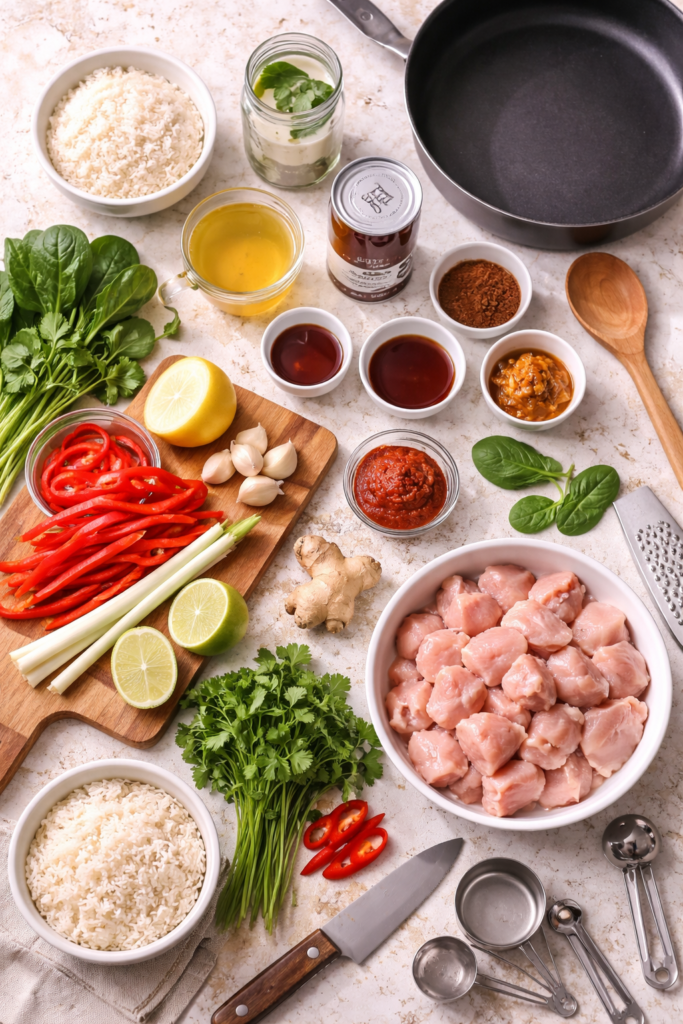
What You’ll Need
For the Curry:
- 1.5 lbs (680g) boneless, skinless chicken thighs, cut into bite-sized pieces
- 2 tablespoons red curry paste (Mae Ploy or Maesri brand recommended)
- 1 can (13.5 oz / 400ml) full-fat coconut milk
- 1 cup chicken broth
- 1 tablespoon fish sauce
- 1 tablespoon soy sauce
- 1 tablespoon brown sugar
- 1 tablespoon fresh lime juice
- 2 tablespoons coconut oil (or vegetable oil)
- 1 medium yellow onion, diced
- 4 garlic cloves, minced
- 1 tablespoon fresh ginger, grated
- 1 red bell pepper, sliced
- 1 cup baby spinach or Thai basil (or both)
- 1 stalk lemongrass, bruised (optional but highly recommended)
- 2 kaffir lime leaves (optional)
- Cooked jasmine rice, for serving
- Fresh cilantro and lime wedges, for garnish
- Sliced red chili, for garnish (optional)
Tools You’ll Need
- Large deep skillet or wok
- Wooden spoon or silicone spatula
- Sharp chef’s knife
- Cutting board
- Box grater or microplane (for ginger)
- Can opener
- Measuring spoons and cups
- Ladle
- Serving bowls
Pro Tips
These are the things I wish someone had told me the first time I made this.
- Use chicken thighs, not breasts. Thighs stay juicy even if you cook them a little longer. Chicken breast can go rubbery fast in a curry. Don’t risk it.
- Fry the curry paste first. This is the step most people skip and it changes everything. Toast it in oil for 1-2 minutes before adding anything else. It blooms the spices and deepens the entire flavor.
- Full-fat coconut milk only. The light version will give you a watery, sad curry. Full-fat is what creates that thick, silky sauce.
- Don’t boil after adding coconut milk. Keep it at a gentle simmer. Hard boiling can cause the coconut milk to split and you’ll lose that creamy texture.
- Taste as you go. Thai curry is all about balance. Too salty? Add lime. Too sour? Add a pinch of sugar. Too thick? Add a splash of broth. You’re the chef — adjust it to you.
Substitutions and Variations
Protein swaps:
- Shrimp (cook for just 3-4 minutes at the end)
- Tofu (press it well and pan-fry before adding)
- Chickpeas for a fully plant-based version
Vegetable swaps:
- Zucchini, broccoli, snap peas, or baby corn all work great
- Sweet potato adds a nice heartiness (add it early so it has time to soften)
Curry paste options:
- Green curry paste gives a brighter, slightly more herbal flavor
- Yellow curry paste is milder and slightly sweeter
- Red is the classic — bold, rich, and deeply savory
Coconut milk alternatives:
- Coconut cream for an even richer sauce
- Unsweetened oat milk works in a pinch but the flavor changes significantly
Fish sauce alternative:
- Soy sauce or tamari for a fully vegetarian/vegan version
Make Ahead Tips
This curry actually tastes better the next day. The flavors have more time to meld together and it gets even more delicious.
- Make the curry base ahead: Cook everything up to the point of adding chicken, then refrigerate the base for up to 2 days.
- Cook the full curry ahead: It keeps well in the fridge for 3-4 days.
- Cook your rice fresh. Day-old rice gets a little gummy in the fridge. Fresh jasmine rice is always worth the extra 15 minutes.
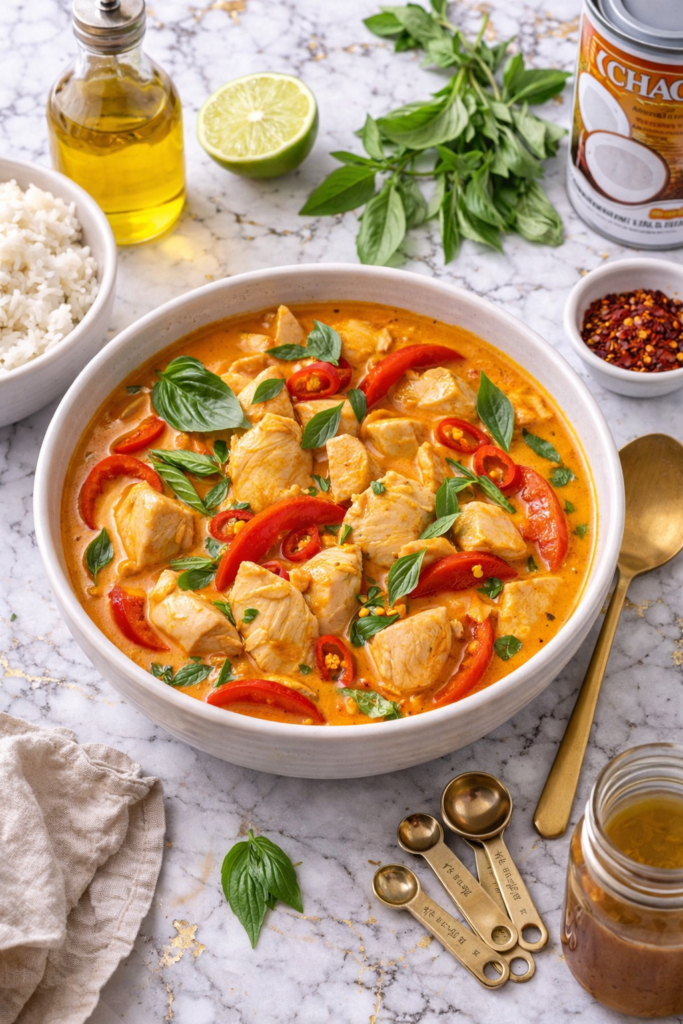
How to Make Thai Chicken Curry
Total time: ~35 minutes | Serves: 4
Step 1: Prep your ingredients
Get everything chopped, measured, and ready before you start cooking. Curry moves fast once you start and you don’t want to be frantically mincing garlic while your paste is burning.
Step 2: Fry the curry paste
Heat coconut oil in a large skillet or wok over medium heat. Add the curry paste and stir constantly for about 1-2 minutes until it’s fragrant and slightly darkened. This is where the magic starts.
Step 3: Cook the aromatics
Add the diced onion and cook for 3 minutes until softened. Toss in the garlic and ginger and stir for another 60 seconds. Your kitchen is going to smell incredible at this point.
Step 4: Add the chicken
Add the chicken pieces and stir to coat them in the curry paste. Cook for 4-5 minutes until the outside is no longer pink. It doesn’t need to be fully cooked through yet.
Step 5: Add the liquids
Pour in the coconut milk and chicken broth. Add the lemongrass and kaffir lime leaves if using. Stir everything together and bring to a gentle simmer.
Step 6: Season and simmer
Add the fish sauce, soy sauce, and brown sugar. Stir to combine. Let it simmer on low-medium heat for 12-15 minutes until the chicken is fully cooked and the sauce has slightly thickened.
Step 7: Add the vegetables
Toss in the sliced bell pepper and spinach (or Thai basil). Stir and cook for just 2-3 more minutes until the pepper is tender but still has a slight bite.
Step 8: Finish and taste
Squeeze in the lime juice. Taste and adjust — more fish sauce if it needs salt, more lime if it needs brightness, a pinch more sugar if it’s too spicy. Remove the lemongrass stalk and lime leaves before serving.
Step 9: Serve
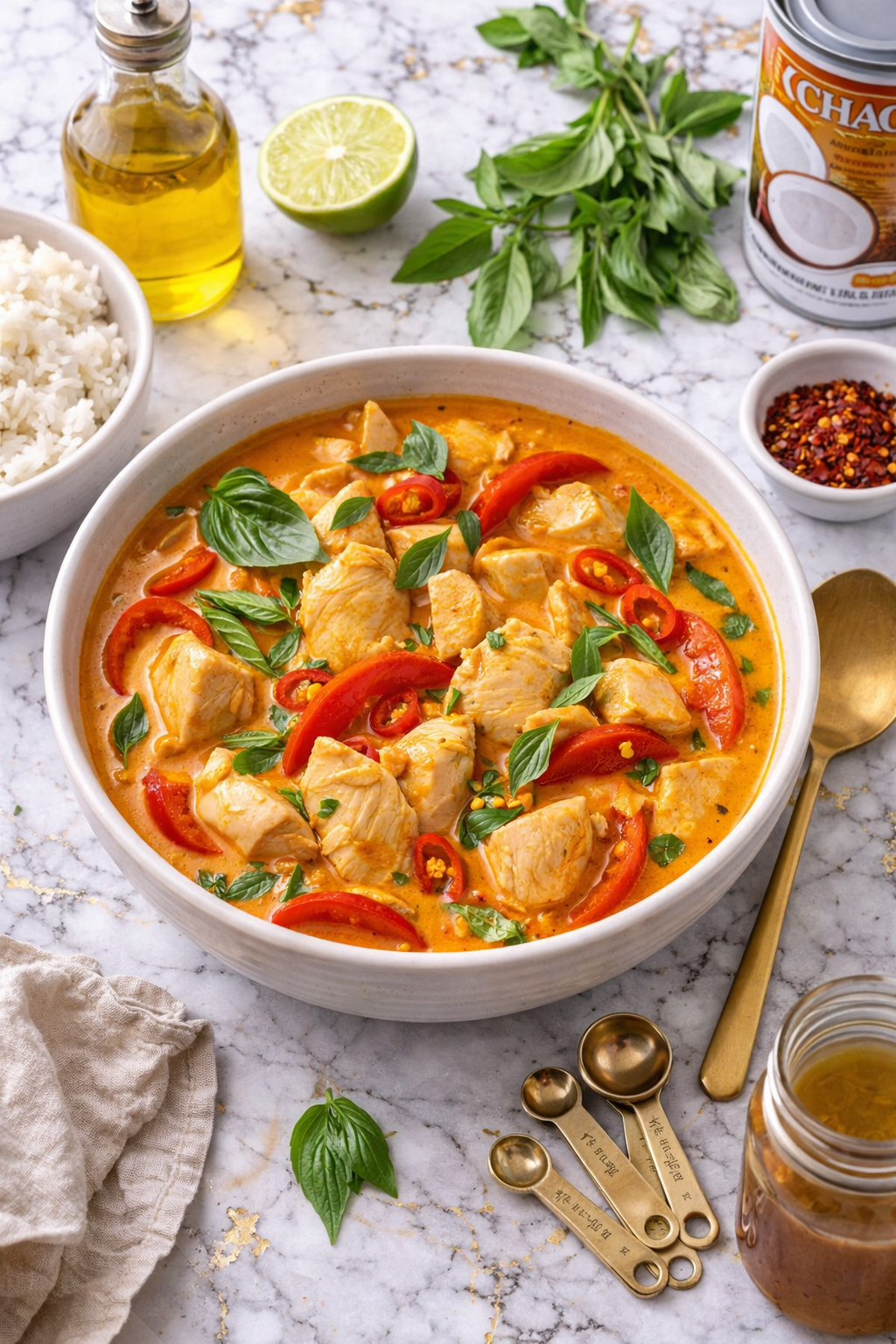
Ladle over jasmine rice. Top with fresh cilantro, sliced red chili, and an extra squeeze of lime. That’s it. Dinner is done.
Nutritional Breakdown (Per Serving, Approximate)
| Nutrient | Amount |
|---|---|
| Calories | ~420 kcal |
| Protein | 32g |
| Fat | 24g |
| Carbohydrates | 18g |
| Fiber | 2g |
| Sodium | ~780mg |
| Sugar | 6g |
Note: Values are estimates based on standard ingredients. Using light coconut milk or omitting rice will change these numbers.
Meal Pairing Suggestions
- Jasmine rice is the classic — slightly fragrant and perfect for absorbing the sauce
- Thai cucumber salad on the side balances the richness of the curry
- Roti or naan for scooping if you want something heartier
- Mango sticky rice for dessert if you really want to commit to the theme 🥭
Leftovers and Storage
Fridge: Store in an airtight container for up to 4 days. The flavor genuinely improves overnight.
Freezer: Curry freezes really well for up to 3 months. Skip freezing the rice — cook it fresh when you reheat.
Reheating: Warm on the stovetop over low heat with a splash of coconut milk or broth to loosen the sauce. Microwave works in a pinch, just stir halfway through.
One important thing: If you froze it, thaw it overnight in the fridge rather than going straight from freezer to stovetop. It reheats more evenly that way.
FAQ
Can I use store-bought curry paste?
Absolutely. Mae Ploy and Maesri are both excellent and widely available. Homemade paste is great, but for a weeknight dinner, jarred paste is totally the move.
How spicy is this?
That depends on your curry paste. Two tablespoons of red curry paste gives a medium heat. Start with one tablespoon if you’re heat-sensitive and add more to taste.
Can I make this dairy-free?
It already is! Coconut milk is the base, so there’s no dairy involved at all.
My sauce is too thin — what do I do?
Let it simmer uncovered for a few more minutes. It’ll reduce and thicken on its own. You can also mix 1 teaspoon of cornstarch with 2 teaspoons of cold water and stir it in.
My sauce is too thick — what do I do?
Add a splash of chicken broth or water and stir until it reaches the consistency you want.
Can I double the recipe?
Yes, easily. Just use a bigger pot. The cook times stay roughly the same.
Is this kid-friendly?
Swap out half (or all) of the red curry paste for yellow curry paste, which is milder. Skip the fresh chili garnish and it becomes a pretty approachable dinner for kids who aren’t into spicy food.
Wrapping Up
There’s a reason Thai chicken curry has been a weeknight staple in homes around the world for generations.
It’s fast, it’s flexible, and the flavor it delivers for the amount of effort involved is kind of ridiculous.
This recipe is one of those that earns a permanent spot in your rotation. Make it once and you’ll know exactly what I mean.
Now, go make it — and when you do, drop a comment below and tell me how it turned out. Did you swap anything? Add anything? Make it spicier? I genuinely want to know. 👇